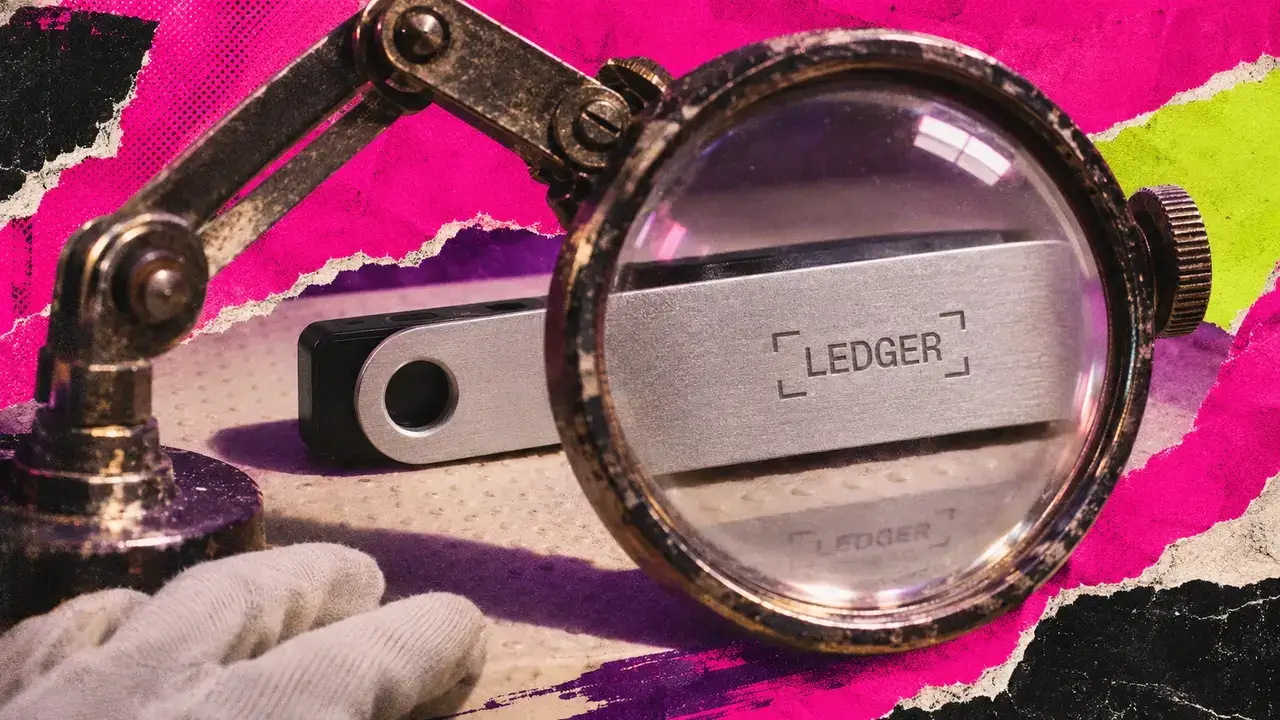
Hardware wallets were supposed to be the final boss of security. We were told that as long as your keys never touched a computer, your assets were safe. But the recent wave of hardware tampering incidents—initially spotted in Dubai and now reportedly surfacing in Berlin—has shattered the illusion that a sealed box equals a safe device. For those of us building in this space, this isn't just a glitch in the system; it is a fundamental shift in how we have to think about the physical supply chain of trust.
The Anatomy of the Implant
The situation involves Ledger devices that have been intercepted and modified before they reach the customer. These are not simple software hacks. We are talking about physical implants soldered onto the circuit boards. These malicious chips are designed to compromise the device's entropy or capture the recovery phrase, effectively handing the keys to a third party before the user even powers the device on for the first time.
Reports indicate that these tampered devices are appearing in major global tech hubs. While Ledger has maintained that their secure element remains unhackable via software, that doesn't matter much if a physical middleman has altered the hardware environment the secure element lives in. It is a reminder that in crypto, the weakest link is rarely the math; it is the human hands the product passes through between the factory and your front door.
The Founder's Dilemma
If you are a founder or a developer, this should make you uncomfortable. We spend millions on audits and formal verification for smart contracts, yet many of us store our company treasuries on devices we bought on Amazon or picked up at a retail shop. We have relied on tamper-evident stickers and plastic wrap—security measures that are laughably easy to replicate for a sophisticated bad actor.
This is a classic supply chain attack. It mimics the strategies used by state actors against telecommunications infrastructure, but applied to the individual user level. If these reports from Berlin are accurate, it suggests that the groups doing this are scaling their operations. They aren't just hitting one specific shipping route; they are targeting distribution nodes across the globe.
What This Means for Hardware Manufacturers
Ledger is currently offering factory inspections for suspected devices and advising users who have interacted with a compromised wallet to migrate their funds immediately. While this is a necessary reactive step, it highlights a massive flaw in the current hardware business model. We cannot expect users to be electrical engineers capable of verifying the placement of every capacitor on a PCB.
For builders, this opens up a new vertical for innovation. We need better ways to verify hardware integrity that don't rely on the user's eyesight. We might see a rise in multi-signature setups that involve diverse hardware vendors—specifically to mitigate the risk of a single supply chain being compromised. If you have all your assets on one brand of wallet, you are betting everything on one company's logistics security. That is no longer a safe bet.
The Logistics of Paranoia
The advice being circulated right now is simple but painful: if you suspect your device has been out of your sight or arrived in anything less than pristine condition, it is trash. Actually, it is worse than trash—it is a trap. The challenge is that these implants are becoming so small and so well-integrated that most people wouldn't know what to look for even if they opened the casing.
This moves the security conversation from "how good is the encryption?" to "who handled the box?" It forces a level of paranoia that is difficult for the average user to maintain. But for those of us managing significant capital, this is the new baseline. You don't buy hardware from third-party resellers. You don't buy it from a store in a mall. You buy it directly from the manufacturer, and even then, you should be wary of the shipping carrier.
Building for the Physical World
As we move toward a more AI-integrated crypto landscape, the physical security of our signing devices becomes even more critical. An AI agent can only be as secure as the hardware it uses to sign transactions. If the physical substrate is compromised, the entire stack above it—no matter how many layers of encryption you add—is meaningless.
We need to stop thinking about crypto as a purely digital phenomenon. It is an industry built on physical atoms. When those atoms are rearranged by a malicious actor in a warehouse in Dubai or Berlin, the digital security follows suit. We are seeing the limits of the "trust me, it's a cold wallet" marketing angle. True cold storage is starting to look a lot more like air-gapped systems built from generic, open-source hardware rather than proprietary, mass-produced consumer electronics.
Takeaway for Builders
The lesson here isn't that Ledger is bad; it's that hardware is hard and physical logistics are vulnerable. If you are building tools for users, assume their hardware might be compromised. Don't rely on a single device for significant actions. Encourage multi-device, multi-vendor security models. The era of trusting a shrink-wrapped box is over. If you can't verify the hardware at the atomic level, you have to architect your software to assume the hardware is lying to you.
- Diversify: Never keep 100% of assets on a single hardware vendor's ecosystem.
- Verify: Use the manufacturer’s genuine check tools, but treat them as a minimum requirement, not a guarantee.
- Direct Only: Only procure hardware directly from the source, avoiding all intermediaries.
The transition from Dubai to Berlin shows this isn't an isolated incident. It's a professionalized criminal enterprise targeting the physical layer of the blockchain. It’s time we started treating it with that level of seriousness.
Read the original at CryptoSlate →