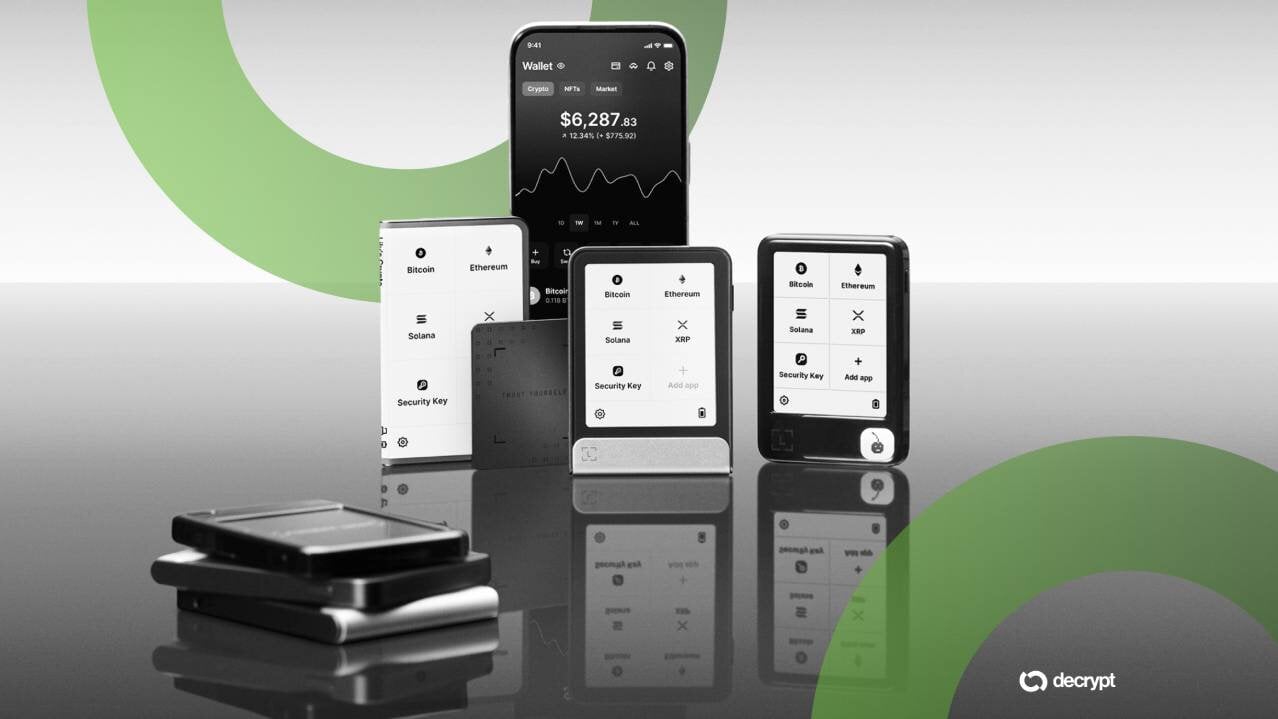
I have spent enough time in this industry to know that the phrase 'don't sell your Bitcoin' is less of a financial strategy and more of a religious dogma for most holders. But life happens. Founders need to cover payroll, developers need to pay rent, and sometimes you just need liquidity without triggering a tax event that will haunt you for the next three years.
Ledger just announced a way to do exactly that. At TOKEN2049 in Singapore, they unveiled a partnership with Morpho to allow users to borrow stablecoins against their Bitcoin holdings directly through the Ledger Live interface. On the surface, it sounds like the holy grail of self-custody: keeping your private keys while accessing the value of your stack. But as someone who has watched 'bulletproof' lending protocols melt down in real time, I think we need to look at what is happening under the hood.
The Logistics of the Loan
The workflow Ledger is pitching is simple. You have Bitcoin. You want USDT or USDC. Instead of sending your coins to a centralized exchange—where they become an entry on a database and technically belong to the exchange—you use this new feature. The system uses Morpho, a decentralized lending protocol, to handle the heavy lifting.
The critical part for hardware wallet fans is the signing process. Every transaction, every approval, and the final commitment of funds happens on the physical device. You aren't just clicking a button on a website; you are physically verifying the intent to lock up your collateral. For a builder, this is the UX we should be aiming for—integrating complex DeFi primitives into a hardware-verified flow.
The Wrapped Bitcoin Problem
Here is where the skepticism kicks in. You cannot natively lend Bitcoin on a smart contract protocol like Morpho because Bitcoin doesn't support the kind of complex smart contracts needed for automated liquidations. To make this work, your Bitcoin has to be converted into a wrapped version, like wBTC or a similar derivative, to live on an EVM-compatible chain.
This is the hidden trade-off. When you wrap Bitcoin, you are moving away from the pure security of the Bitcoin blockchain and into a world of bridge risks and custodian trust. If the entity holding the actual Bitcoin for the wrapped token gets hacked or goes bust, your 'collateral' in the lending protocol becomes a worthless receipt. Ledger is trying to make this seamless, but builders need to remember that abstraction often hides risk rather than removing it.
Why This Matters for Founders
For those of us building in the space, this move highlights a shift in how we handle treasury management. In the 2017 era, you sold your tokens to fund development. In the 2021 era, you staked them. Now, we are entering an era where the hardware wallet is becoming a full-service financial terminal.
If you are a founder holding a significant amount of BTC, the ability to pull a loan for operating expenses without selling is a massive tool for capital efficiency. It allows you to stay long on the asset while still having the cash flow to pay your team. However, the volatility of Bitcoin remains the biggest threat. If the price drops 30% while you are asleep, and your hardware wallet is tucked away in a safe, you might not be able to add collateral fast enough to prevent a liquidation.
The Decentralization Paradox
Ledger is often criticized by the hardcore privacy crowd, especially after their 'Recover' feature controversy. By moving into lending, they are further blurring the line between a simple key management tool and a financial services platform. This partnership with Morpho is a bet that users care more about convenience and 'vetted' protocols than they do about absolute sovereign purity.
Morpho is a solid choice for this. Unlike older lending models that use a single, massive pool of assets, Morpho uses a more modular approach. It allows for better interest rates by matching lenders and borrowers more efficiently. But for the end user, the complexities of peer-to-peer matching are irrelevant. They just want to know if their money is safe.
The Reality of Liquidations
We have to talk about the downside. Every lending product is a liquidation engine in disguise. Ledger’s interface will likely give you warnings, but the protocol doesn't care about your feelings or your long-term thesis. If the value of your Bitcoin collateral falls below a certain threshold relative to your stablecoin debt, the smart contract will automatically sell your assets to pay back the loan.
For builders, the lesson here is about building safety rails. If you are developing a DeFi integration, how are you communicating the 'point of no return' to your users? Ledger has a responsibility to make these liquidation levels crystal clear, especially for retail users who might not understand how fast a crypto market can move against them.
Final Thoughts for the Builder Community
This isn't just another feature release. It is a sign that the industry is trying to solve the 'utility' problem of Bitcoin. For years, Bitcoin has been criticized as a pet rock—it just sits there. Products like this turn the rock into a tool.
However, my advice to anyone looking at this is to treat it with the same caution you would any other DeFi protocol. Hardware security does not protect you from smart contract bugs, bridge failures, or market volatility. It only protects your keys.
- Check the collateral ratios: Don't borrow the maximum amount. Give yourself a 50% cushion.
- Understand the wrapping: Know exactly which version of Bitcoin you are holding and who controls the bridge.
- Verify the source: Ensure you are using the official Ledger Live application to avoid phishing attempts.
The convergence of AI and Crypto is going to require massive amounts of liquidity for compute and development. Being able to tap into Bitcoin wealth without exiting the ecosystem is a net positive for the building community. Just make sure you don't lose the house trying to renovate the kitchen.
Read the original at Decrypt →