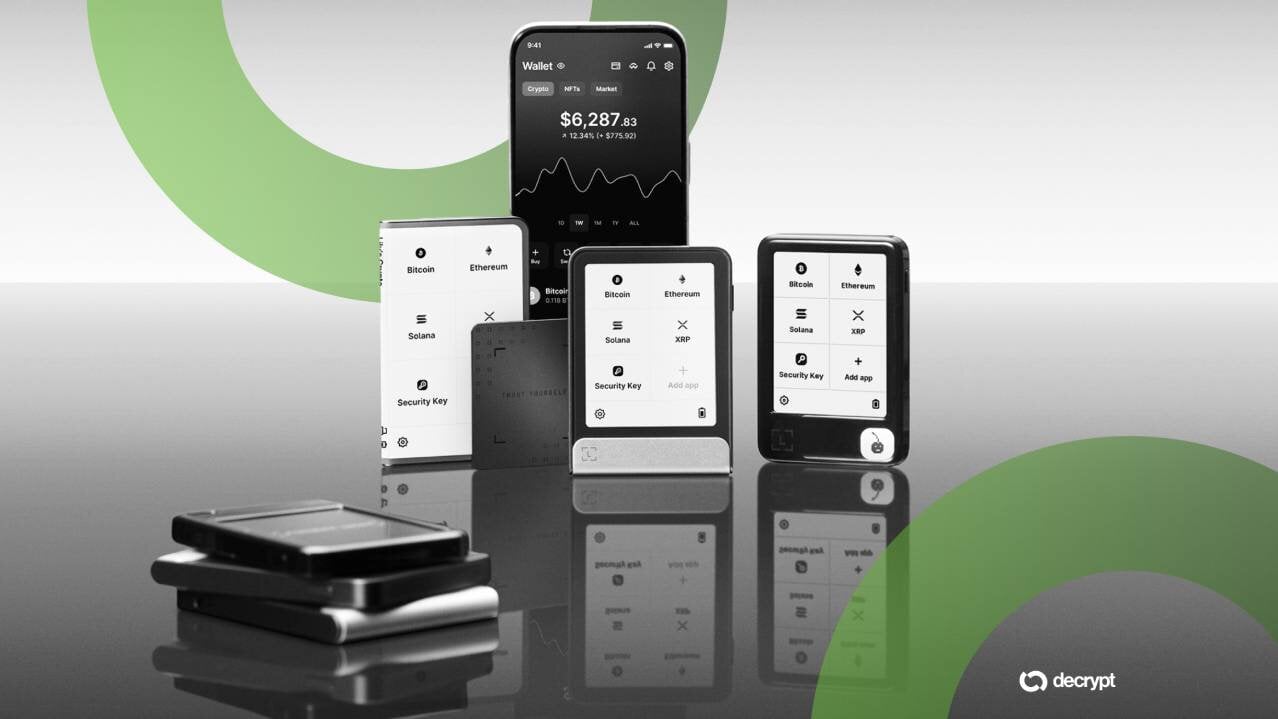
Hardware wallets have always been the final boss of crypto security. We tell everyone to get their coins off exchanges and onto a physical device. It is the gold standard for self-custody. But recent news from Ledger confirms a nightmare scenario for builders and holders: the supply chain is no longer a theoretical risk. It is a live battlefield.
The Geographic Spread
For a few weeks, we heard whispers about compromised devices in Southeast Asia. The narrative was that this was a localized issue, perhaps a rogue distributor or a specific regional logistics hub. Ledger has now shattered that illusion. They have confirmed tampered devices in Berlin and are currently investigating suspicious units in Dubai.
This is not a local glitch. This is a global distribution problem. When security implants start showing up in major European and Middle Eastern tech hubs, it suggests the attackers have a sophisticated, multi-point infiltration strategy. It is no longer just about where the device was manufactured, but every hand it touched between the factory floor and your front door.
How the Attack Works
The technical details are unsettling because of their simplicity. These aren't software hacks that you can patch with a firmware update. We are talking about physical hardware implants—spy chips or modified circuitry designed to exfiltrate keys or bypass security protocols before the user even initializes the device.
If you are a founder or a developer, you know the "Root of Trust" is everything. If the physical silicon is compromised before the user sets up their seed phrase, the entire security model collapses. You aren't building on a foundation of sand; you're building on a foundation that belongs to someone else.
The False Sense of Security
The problem with hardware wallets is the psychological gap they create. When a user holds a heavy, metallic device with a screen, they feel safe. They assume that because it is offline, it is invincible. Attackers are exploiting this exact bias. They know that once a user trusts the physical device, they will lower their guard during the most critical moment: the generation of the private key.
What This Means for Builders
If you are building decentralized applications or wallet interfaces, you can no longer assume that a "connected hardware wallet" equals a "verified user." We have to start thinking about defense-in-depth at the hardware level. This means more transparent boot processes and potentially moving toward multi-vendor multisig setups as the default for high-value accounts.
- Don't trust single points of failure: Even if the device says Ledger or Trezor on the box, the hardware itself is a variable.
- Supply chain transparency: We need better ways to verify that a device hasn't been opened or modified. Plastic wrap and holographic stickers are a joke in 2024.
- User education: We have to teach people that the danger starts the moment they click "buy" on a website, not just when they enter their seed phrase.
The Logistics Nightmare
Ledger is in a tough spot. They are a hardware company in a world where hardware is increasingly easy to intercept. Every time a package sits in a customs warehouse or a third-party logistics center, it is vulnerable. For a company that trades on the promise of "unhackable" security, this is a crisis of identity.
But this isn't just a Ledger problem. It is a global electronics problem. If state actors or highly organized criminal syndicates are willing to intercept and modify individual packages, the entire concept of mail-order security is under fire. We might be heading toward a future where the only way to get a truly secure device is to buy it in person, from a verified source, with zero middle-men.
Developing Skepticism
I have always been a bit of a skeptic when it comes to the "set it and forget it" mentality in crypto. This news confirms that skepticism is a feature, not a bug. If you bought a device recently and it didn't come directly from the manufacturer—or even if it did, but the packaging looked slightly off—you have to assume it is compromised. In the world of self-custody, there is no such thing as being too paranoid.
The Path Forward
We need to stop looking at hardware wallets as magic wands. They are tools, and like any tool, they can be sabotaged. The industry needs to move toward open-source hardware designs that allow users to verify the internal components themselves. We also need to see a massive shift toward multisig. If you are holding significant capital on a single hardware wallet, you are participating in a single-point-of-failure lottery.
Expect more reports to surface in other cities soon. This doesn't look like a one-off heist; it looks like a coordinated probe of the global crypto infrastructure. The Berlin and Dubai confirmations are likely just the tip of the iceberg.
The most dangerous vulnerability in any system is the one you assume has already been solved. Hardware was supposed to be our solved problem. It’s clearly not.
The Final Takeaway
Security is a moving target. If you are a builder, design your systems to survive a compromised device. If you are a holder, stop relying on a single piece of plastic and silicon to protect your life savings. The supply chain has been breached, and the "Berlin spread" is a warning shot to the entire industry that the physical world is just as dangerous as the digital one.
Read the original at Decrypt →