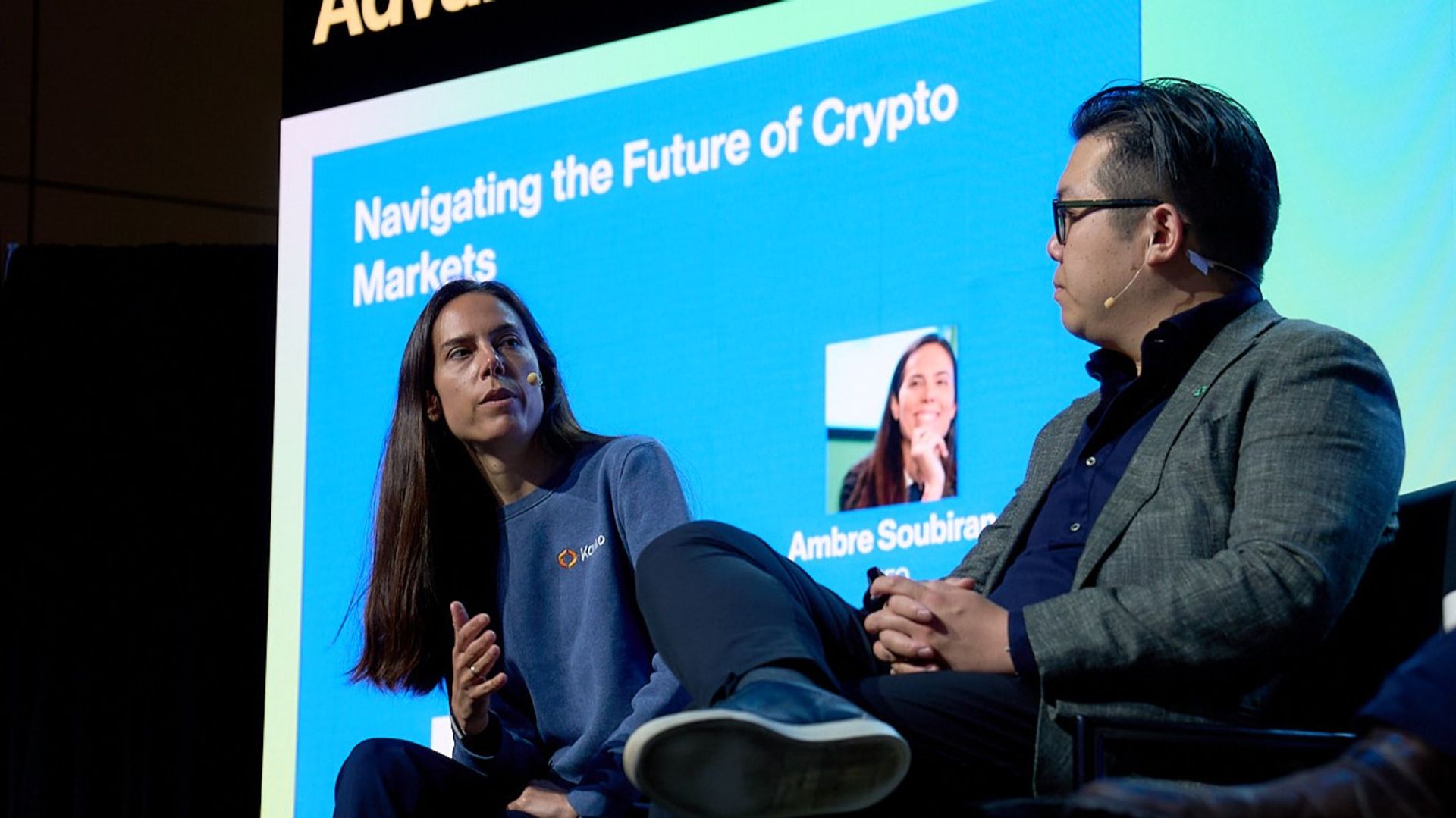
When the dust settles on any gold rush, the people who actually made money were usually the ones selling the shovels. In the digital asset space, those shovels are made of data. Kaiko, a firm that has spent years quietly building the plumbing for crypto market information, just announced an extension of its Series B funding to $110 million. The names on the check tell you everything you need to know about where we are in the cycle: S&P Global and BNP Paribas.
The Institutional Stamp of Approval
We have moved past the era where a few venture capitalists in Patagonia vests could move the needle on infrastructure. Seeing S&P Global join this round is significant. This is a company that defines risk and credit for the entire traditional financial world. Their involvement suggests that they no longer view crypto as a fringe experiment, but as a legitimate asset class that requires the same rigorous, sub-second data standards as the S&P 500 or the bond markets.
For builders, this is a signal to stop worrying about the flavor-of-the-week meme coin and start looking at the structural integrity of the market. BNP Paribas, one of Europe’s largest banks, joining in reinforces this. These institutions aren’t looking for 100x gains on a token; they are looking for a reliable data feed they can plug into their legacy systems without it breaking or providing garbage information.
Why Data Matters More Than Ever
In the early days of crypto, you could get by with a basic API connection to a single exchange. Those days are over. The market is fragmented across hundreds of centralized and decentralized platforms. If you are building a DeFi protocol, a tax reporting tool, or a portfolio management suite, your product is only as good as the numbers you feed it.
Kaiko is positioning itself as the bridge. They provide normalized, granular data that makes sense to a traditional banker. By securing this level of funding, they are effectively building a moat around the concept of “truth” in the crypto markets. If everyone from the big banks to the regulators starts using the same data provider, that provider becomes the de facto standard.
The Founder's Reality Check
As a founder, it is easy to get distracted by the high-level numbers. $110 million is a lot of runway. But we have to look at why this money was raised as an extension rather than a new Series C. It suggests that the market for private equity is still cautious, preferring to add to existing winners rather than pricing entirely new rounds at astronomical valuations. It is a sign of a maturing, more disciplined environment.
If you are building in the AI or crypto space right now, the lesson is clear: focus on utility and reliability. Kaiko doesn’t have a flashy consumer app. They don’t have a social media influencer campaign. They have a product that institutional giants are willing to bet nine-figure sums on because it solves a fundamental problem—information asymmetry.
The Convergence of AI and Market Intelligence
While the source focuses on the funding, the underlying implication for AI builders is massive. We are seeing a massive demand for high-quality datasets to train financial LLMs. You cannot build a reliable AI trading assistant or a risk assessment bot on top of spotty, manipulated, or incomplete data. The companies that control the clean data streams will eventually control the AI layer that sits on top of them.
- Infrastructure is the new alpha: The biggest gains in the next five years will likely come from the companies providing the underlying tech, not the assets themselves.
- Legacy integration is mandatory: If your project can't talk to a traditional bank's tech stack, your addressable market is tiny.
- Data integrity is a product feature: Users are becoming more sophisticated and will pay a premium for verified, institutional-grade information.
What This Means for the Builders
Stop trying to build the next exchange. Instead, look at the gaps in the current infrastructure. We need better ways to track cross-chain liquidity. We need better ways to audit smart contracts in real-time. We need better ways to report on-chain activity to off-chain tax authorities. These are the “boring” problems that attract $110 million rounds.
The entry of S&P Global into this space should be a wake-up call for anyone still treating crypto like a casino. The adults have entered the room, and they are bringing their own spreadsheets. They aren't here to gamble; they are here to build the infrastructure that allows them to manage the gamble for everyone else.
The most valuable commodity in a volatile market isn't the asset itself, but the certainty of the information surrounding it.
Kaiko’s successful extension proves that despite the regulatory hurdles and the noise of the bear markets, the long-term thesis for digital assets remains intact for the biggest players in finance. For the rest of us, the goal is to build something that these giants eventually find indispensable.
Read the original at CoinDesk →