The Math of a Sinking Fund
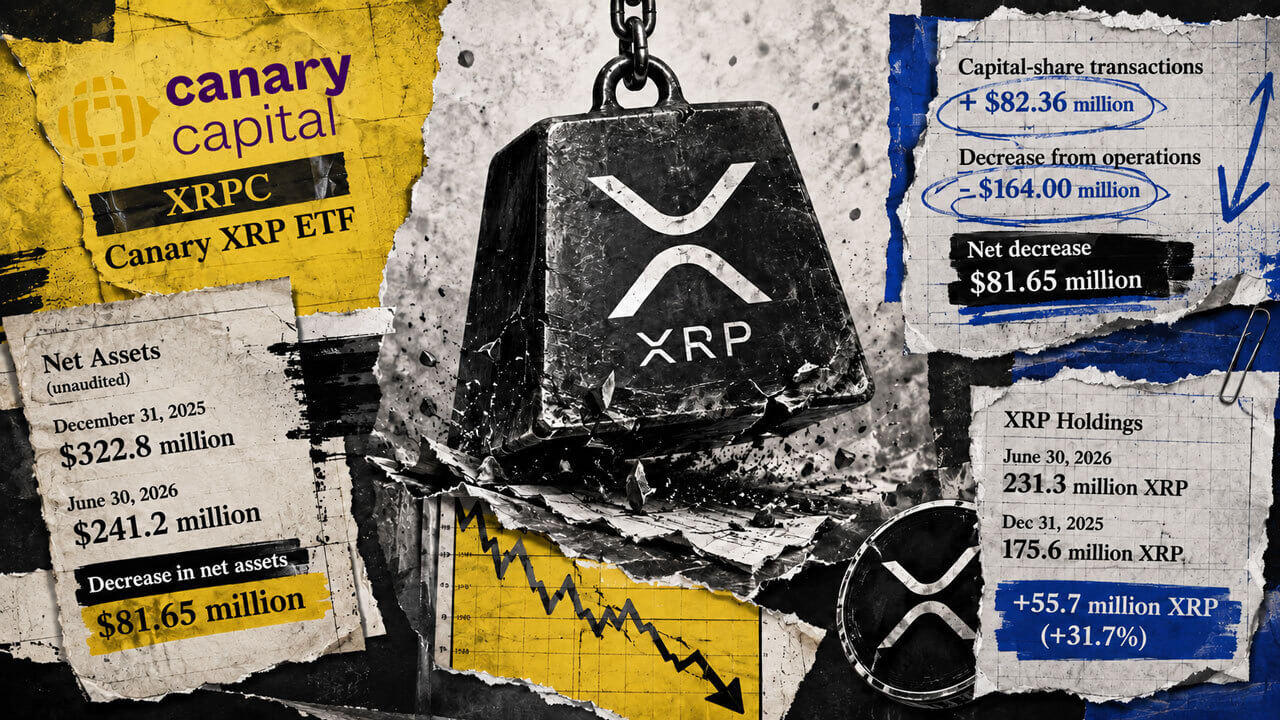
In the venture world, we talk a lot about product-market fit. In the exchange-traded fund world, the equivalent is asset-inflow fit. Canary Capital recently found out that even when you have the former, the market can still strip you of the latter. The latest filings show that while investors were busy dumping $82 million into Canary’s XRP Trust, the underlying asset was busy losing value even faster.
By the time the dust settled on the reporting period, the fund had lost nearly double the amount of capital that had actually come in through the door. It is a classic crypto paradox: you are winning the battle for adoption while losing the war against the chart. For builders and founders in this space, this is a sobering reminder that liquidity and interest do not always translate to net asset value stability.
The Disconnect Between Interest and Price
On paper, Canary Capital had a great quarter. They saw a 31.7% increase in the actual amount of XRP tokens held by the fund. That is a significant metric because it shows institutional or accredited interest is not just a theory; people are actually buying the vehicle. However, the unrealized depreciation of those tokens erased the gains and then some. Specifically, the price drops wiped out roughly $160 million in value, overshadowing the $82 million in new cash.
This happens because ETFs and trusts are passive instruments. They don't hedge for you. They are purely reflective of the token's performance. For a founder building on the XRP Ledger or looking to integrate Ripple-adjacent tech, this volatility is the primary hurdle to mainstream business integration. If a fund designed for professional investors can lose twice its inflow value in a single reporting window, small businesses will continue to view the underlying tech as a high-risk gamble rather than a utility.
Why the Inflows Matter for Builders
You might look at these numbers and think XRP is a dead end. That is the wrong takeaway. The real story here is the $82 million. In a market where regulators are still hovering and the legal status of various tokens is debated in every courtroom from New York to D.C., people are still willing to put eight figures into an XRP-specific vehicle. That represents a floor of institutional belief.
If you are building in AI or Web3, you have to look at these inflows as a signal of persistence. The holders are not just retail traders on a mobile app; they are accredited participants who are willing to weather a 100% loss of their principal's equivalent value just to have a seat at the table. This tells me that the infrastructure being built around these tokens is stickier than the price action suggests.
The ETF Hype Cycle Meets Reality
We saw this same dance with Bitcoin and Ethereum. The hype leading up to a fund launch creates a vacuum of expectation. Once the fund is live, the reality of the broader macro economy takes over. XRP has always been a unique beast in the crypto world because its primary utility—cross-border payments and settlement—is often at odds with its status as a speculative asset. When the price drops this sharply despite heavy inflows, it suggests that the market is still treating it as a high-beta trade rather than a functional currency.
For those of us on the development side, this is actually a gift. It flushes out the tourists. The people who bought into the Canary Trust at the top and watched their value get halved are likely frustrated, but the fund managers are still holding those tokens. The circulating supply is being locked up in these institutional wrappers, which, theoretically, should lead to less volatility over a ten-year horizon. We just happen to be in the messy middle of that transition.
Strategic Skepticism
I have always been a bit skeptical of the "ETF will save us" narrative. While these vehicles provide a bridge for traditional capital, they also provide a more efficient way for that capital to exit or short the market. In Canary's case, the timing was simply brutal. They caught the tail end of a downward trend while their marketing was hitting its stride.
Builders should take note: your treasury management cannot rely on the success of these funds. If you are a startup holding XRP or any volatile asset, you have to realize that even a "successful" fundraise or inflow period for the ecosystem can result in a net loss for your balance sheet. You have to build for the utility of the network, not the performance of the fund.
The Long-Term Outlook
Despite the ugly numbers on the balance sheet, the increase in token holdings is the metric to watch. If the number of tokens held by Canary had dropped alongside the price, we would be talking about an exit. Since the token count rose by nearly a third, we are talking about accumulation. Smart money is buying the dip; they just happened to buy a dip that kept dipping.
The Founder Takeaway
- Liquidity is not a shield: Just because a fund is growing doesn't mean the asset is safe. Institutional interest can grow even as the price craters.
- Build for the floor, not the ceiling: Your dApp or service needs to function regardless of whether the underlying token is at $0.50 or $1.50.
- Watch the token count: Inflow of assets is a better sentiment indicator for builders than the current fiat value of the fund.
At the end of the day, Canary Capital's situation is a microcosm of the entire crypto industry. We are attracting the right people and the right capital, but we are still at the mercy of a market that doesn't quite know how to price these assets yet. We have to keep building through the red numbers, because the blue numbers in the 'shares outstanding' column suggest the demand isn't going anywhere.
Read the original at CryptoSlate →