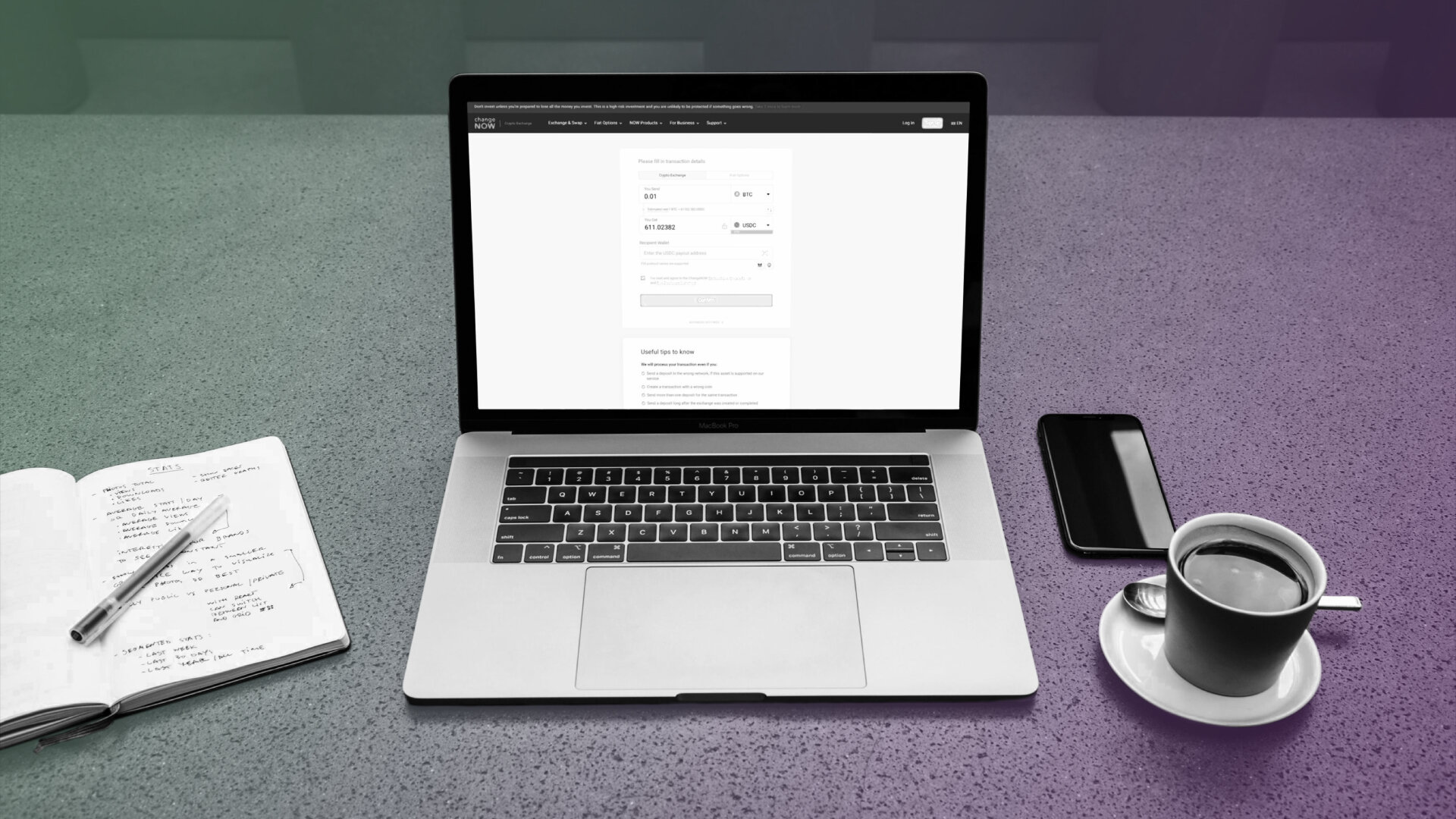
We have spent the last decade making crypto look like a science project. If you wanted to swap one asset for another in the early days, you needed a PhD in command-line interfaces or the patience to let a centralized exchange hold your hand while charging you a premium for the privilege. Today, the industry is obsessed with abstraction—the idea that a user shouldn't have to care about the plumbing. ChangeNOW has positioned itself as the poster child for this approach, but as a builder, I always want to know what is happening under the hood when a platform promises it is just one click away.
The Illusion of Simplicity
ChangeNOW operates on a non-custodial basis, which is a fancy way of saying they don't want to hold your keys, and you shouldn't want them to. Their CSO, Pauline Shangett, has been vocal about the infrastructure required to make this work. The frontend is almost aggressively simple: you pick your coins, you hit a button, and the trade happens. For a founder building a dApp or a wallet, this is the gold standard for user experience. But simplicity on the surface usually means massive complexity in the back, and that is where the trading engine comes in.
The system is effectively a massive aggregator. It is not a single pool of liquidity. Instead, the engine connects to a variety of decentralized and centralized liquidity providers, scanning for the best rates in real time. This isn't just about finding the cheapest price; it is about finding the path of least resistance. When a user initiates a swap, the engine has to calculate slippage, network fees, and speed across multiple chains simultaneously. In the time it takes you to refresh a browser tab, this engine has already run several thousand permutations of how that trade could settle.
Solving the Liquidity Fragmentation Problem
The biggest headache for any builder in the current cycle is fragmentation. We have liquidity scattered across Ethereum, Solana, L2s, and legacy chains like Bitcoin. If you are building a product that requires cross-chain functionality, you are usually faced with two bad choices: build a bridge (and inherit all the security risks) or force the user to jump through several hoops. ChangeNOW is essentially selling a managed solution to this fragmentation.
Their engine handles the settlement by acting as the coordinator. By plugging into over 900 assets and dozens of blockchains, they are trying to solve the problem of liquidity silos. For the founder, the takeaway here isn't just that a swap service exists; it's the realization that cross-chain interoperability is becoming a commoditized service. You no longer have to build the infrastructure for every chain you want to support; you can leverage an engine that has already done the heavy lifting of connecting to those different environments.
The Tradeoff: Speed vs. Decentralization
Here is where I get skeptical. Whenever someone offers a seamless experience, they are making a tradeoff. In ChangeNOW’s case, the speed comes from their ability to route through centralized exchanges when necessary to find liquidity. While the service is non-custodial—meaning your funds are only in their hands for the duration of the swap—it uses some centralized piping to ensure the transaction doesn't fail.
For the pure decentralization maximalist, this is a compromise. But for a builder trying to get a product to market that actual humans will use, this is a necessary evil. Users do not care about the ideological purity of their swap; they care that the money showed up in their wallet when they expected it to. ChangeNOW’s engine is designed to prioritize that reliability. The infrastructure is built to absorb the volatility and the technical hiccups that usually kill a transaction on a standard DEX.
Security in the Midst of Velocity
Speed is the enemy of security. When you are moving assets as fast as this engine claims to do, you open yourself up to risks. Shangett has noted that their system incorporates automated risk management and AML checks. This is the part of the plumbing that most users never see, but it is the most critical for the platform’s survival. If you are a builder integrating an API like this, you are delegating your compliance and security monitoring to that provider.
That is a massive leap of faith. The engine has to be able to detect suspicious patterns without slowing down the user experience. If the trade hangs for ten minutes while an algorithm double-checks a wallet address, the seamless experience is dead. The balance they are striking is one of automated gatekeeping—trying to keep the bad actors out while keeping the wheels spinning for everyone else.
The Builder Perspective
If you are looking at this from a founder's eyes, the lesson isn't just about ChangeNOW. It is about the shift toward intent-centric design. We are moving away from a world where the user specifies every step of a transaction (I want to go to this DEX, use this bridge, and swap for this token) and toward a world where the user simply expresses an intent (I want this much ETH on Base).
The engine ChangeNOW has built is an early version of an intent solver. It takes the desired outcome and figures out the most efficient way to make it happen. As an industry, we need more of this. We have enough protocols; we don't have enough bridges between them that actually work for normal people. Whether you use their specific API or build your own version, the goal is the same: eliminate the technical overhead for the end user.
Final Reality Check
We shouldn't pretend that these engines are magic. They are complex pieces of software that depend on other people's liquidity and other people's APIs. When a major exchange goes down, these engines feel the heat. When a chain gets congested, the quotes get worse. The promise of seamlessness is only as good as the underlying market conditions.
However, the existence of these high-velocity trading engines shows how far we have come from the days of manual order books and insecure bridges. ChangeNOW is betting that the future of crypto isn't in the hands of power users who love to tinker with gas fees, but in the hands of builders who can hide all that complexity behind a clean interface. If they are right, the battle for the next billion users won't be won by the chain with the best tech, but by the engine with the best routing.
The Takeaway
- Liquidity is the product: The backend is just a delivery mechanism for the ability to move value instantly.
- Abstraction is non-negotiable: If your product requires the user to understand the tech, you have already lost.
- Reliability beats purity: Most users prefer a non-custodial swap that works every time over a perfectly decentralized one that fails half the time.
Read the original at Decrypt →