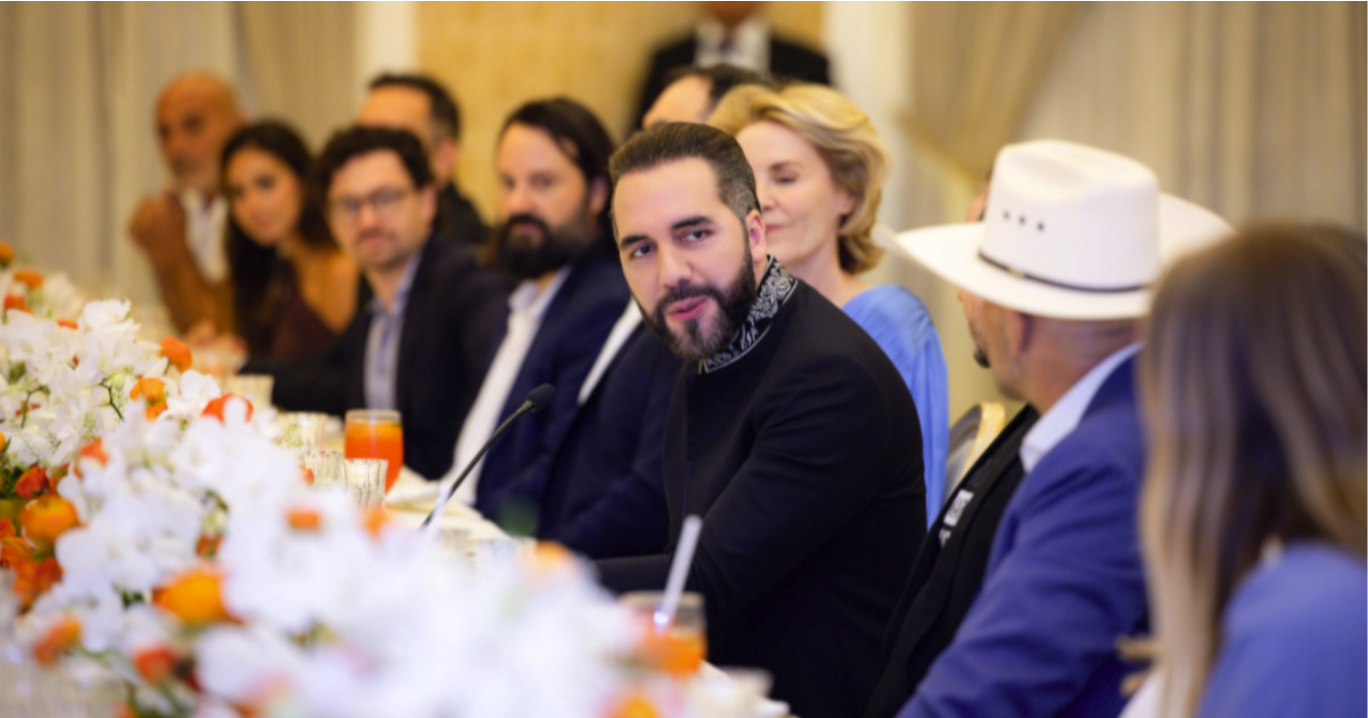
I spent a lot of time talking to founders who think the government is the enemy. In most cases, they are right. But every few years, a crack appears in the traditional structure where a nation-state decides to act like a startup. Right now, that startup is El Salvador. Recently, President Nayib Bukele opened the doors of Casa Presidencial to about thirty figures in the Bitcoin space, ranging from institutional investors like Ricardo Salinas Pliego to the boots-on-the-ground miners who actually keep the lights on.
The Reality of State-Level Adoption
When you strip away the social media hype and the laser-eye profile pictures, the meeting at Casa Presidencial wasn't about idealism. It was about infrastructure. We have moved past the phase where El Salvador is just "the country that bought Bitcoin." We are now in the phase where they have to figure out how to keep the machines running and the people working. The guests included names like Parker Lewis and Mike Peterson, people who understand that Bitcoin isn't just a currency—it is a massive consumer of energy and a magnet for human capital.
For a builder, this matters because it represents a shift in how we view jurisdictional arbitrage. If you are building a mining operation or a financial services layer, you aren't just looking for a low tax rate anymore. You are looking for a seat at the table where energy policy is being written. The dinner guests spent a significant amount of time discussing power generation. This is the bottleneck for every major technology trend right now, from Bitcoin mining to Artificial Intelligence compute.
Energy as the New Currency
El Salvador has a unique advantage with its geothermal potential, but potential doesn't power ASICs. The discussion at the dinner table made it clear that Bukele is looking for ways to scale energy production to meet the demands of global compute. If El Salvador can solve the energy problem, they become more than a tourist destination for Bitcoiners; they become a critical node in the global digital economy.
Mining is the bridge here. By creating a consistent, localized demand for electricity, Bitcoin mining allows a country to build out energy infrastructure that would otherwise be too expensive or risky to finance. Once that power exists, it can be diverted to schools, hospitals, and other industries. It is a flywheel that most Western politicians are too short-sighted to see. The builders in the room weren't just there to shake hands; they were there to talk about how to turn volcanic heat into stable hash power.
The Immigration Arbitrage
Another core pillar of the conversation was immigration. For decades, the story of El Salvador was one of exodus—people leaving to find safety and work in the North. Bukele is trying to flip that script. By creating a regulatory environment that favors Bitcoiners and tech entrepreneurs, he is attempting to attract a new class of digital immigrants. These are people with capital, technical skills, and a global network.
From a founder’s perspective, this is a massive experiment in brain gain. Most countries are busy creating friction for high-skilled workers through bureaucracy and high taxes. If El Salvador can successfully streamline the process for developers and investors to move their lives and businesses there, they will gain a competitive edge that lasts decades. The guests at the dinner, including some of the wealthiest individuals in Latin America, are the early signals of this shift.
A Dose of Skepticism
Now, I’m an optimist, but I’m also a realist. We have to be honest about the risks. Relying on a single leader’s vision is dangerous for any ecosystem. While the current administration is welcoming, the long-term success of this Bitcoin experiment depends on these policies becoming institutionalized. It can't just be about Bukele; it has to be about the laws, the courts, and the grid.
There is also the question of scale. El Salvador is a small nation. Can it really compete with the massive energy subsidies in places like the UAE or the established tech hubs in the US? The dinner at Casa Presidencial suggests they are going to try by being more agile and more accessible than the giants. They are betting that being first and being friendly will outweigh being big.
What This Means for Builders
If you are building in the Bitcoin or AI space, you need to watch El Salvador’s energy policy more closely than their Twitter feed. The real work is happening in the engine room—figuring out how to integrate Bitcoin into the national grid and how to make the country a friction-less zone for talent.
The takeaway for founders is clear: the era of "waiting for permission" in your home country might be coming to an end. There are now places where the head of state will sit down with you to discuss how to better support your industry. That doesn't mean you should pack your bags tomorrow, but it does mean you should be diversifying your jurisdictional risk.
- Energy is the primary constraint for all future tech growth.
- Jurisdictional competition is heating up, and small nations are moving faster than large ones.
- Founders should look for environments where the government treats them as partners rather than tax targets.
The meeting at Casa Presidencial was a signal that El Salvador is doubling down. They aren't backing away from the Bitcoin experiment; they are looking for ways to industrialize it. As a builder, your job is to figure out if you want to be part of that infrastructure or just a spectator watching from the sidelines.
Read the original at Bitcoin Magazine →