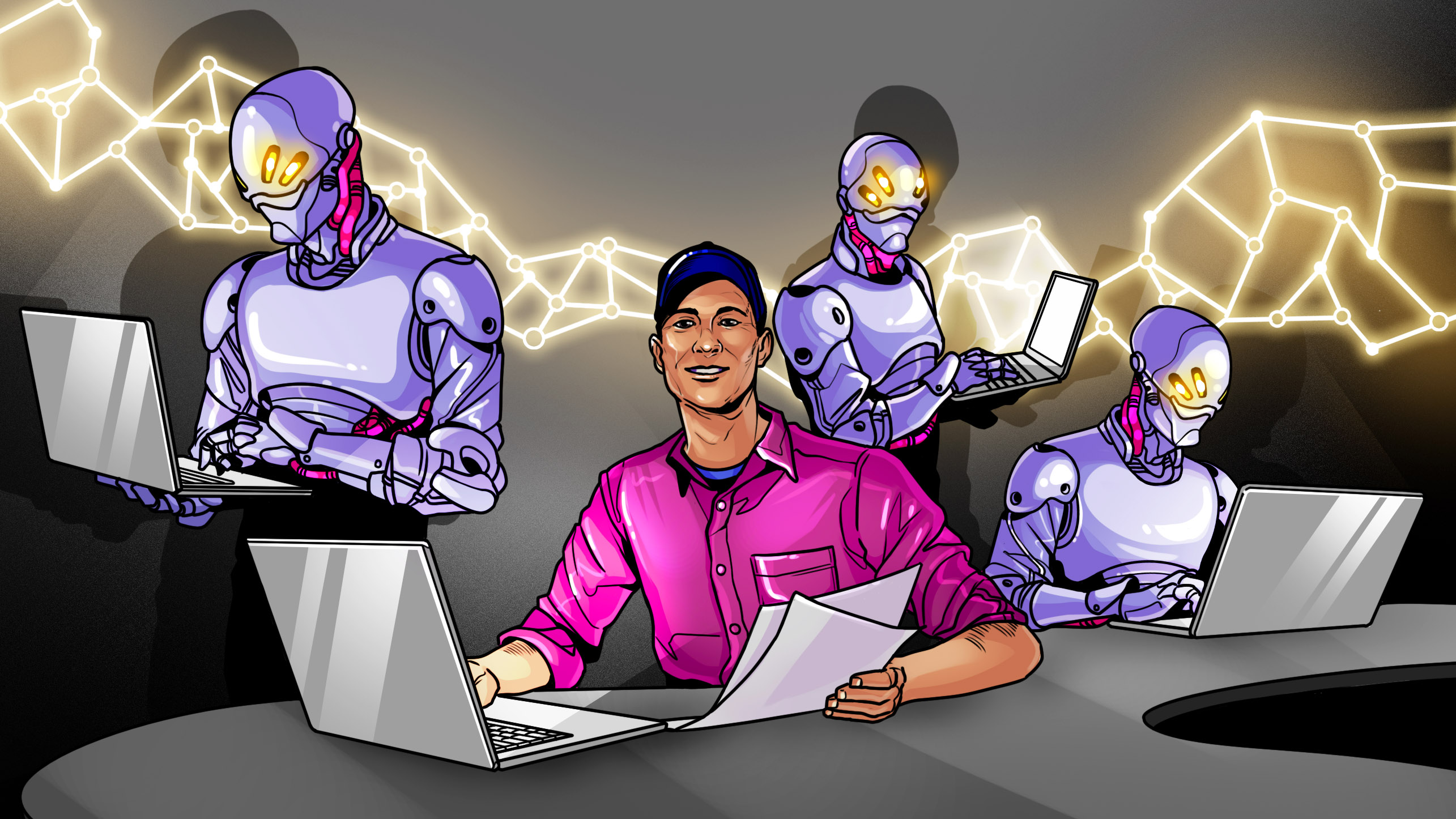
When you have already sold two companies for hundreds of millions and built three others into successful ventures, the logical next step is usually retirement or a quiet seat at a venture firm. Bhavin Turakhia isn't doing either. Instead, he is putting $30 million of his own money on the line to try and solve the one problem that has frustrated every office worker for the last thirty years: the bloated legacy of the office suite.
His new venture, Neo, isn't just another startup trying to add an AI sidecar to a word processor. Turakhia is attempting to dismantle the dominance of Microsoft Office and Google Workspace. It is a bold, perhaps borderline insane, move for a founder. But in the current landscape of AI-first development, it might be the only way to actually change how we work.
The Weight of Legacy Debt
Microsoft Office and Google Apps are the bedrock of the modern economy, but they are both fundamentally broken by their own history. Microsoft is a product of the desktop era, a massive collection of features layered on top of code that dates back to the eighties. Google Workspace was a revolutionary shift to the cloud, but it was essentially a web-based replica of the Microsoft paradigm.
Both platforms have recently tried to slap AI into their sidebars. We have seen Copilot and Gemini integrated into spreadsheets and documents, but the experience feels bolted on. It is additive, not transformative. You are still working in a document format designed for a printing press, just with a chatbot sitting next to it telling you how to summarize your text.
Turakhia's bet with Neo is that you cannot fix the productivity suite by adding AI features to old skeletons. You have to build the skeleton out of AI to begin with. The $30 million seed investment—coming entirely from his own pocket—is intended to fund a ground-up rebuild that assumes the existence of large language models from line one of the code.
Building for the Outcome, Not the Tool
For founders and builders in the crypto and AI space, there is a recurring lesson here: the middle layer is dying. We spent a decade building tools that helped people organize their tasks. Now, we are entering an era where the tool should be doing the task itself.
In a traditional office environment, a manager writes a project brief, a designer creates a mockup, and a developer writes the code. The "suite" is just a container for these files. Turakhia’s vision for Neo suggests a shift toward a world where the suite understands the intent of the work. If the platform understands the context of a business, the friction of manual data entry, formatting, and cross-platform synchronization should theoretically vanish.
This is where the founder perspective becomes critical. Most enterprise software is built to be sold to CTOs, not used by employees. Turakhia has a track record of building for the end-user first. With Zeta and Flock, he focused on the plumbing of business—payments and communication. With Neo, he is moving into the brain of the operation.
The Barrier to Entry
We have to be honest about the odds here. People hate their productivity tools, but they fear changing them more. The network effects of Microsoft Excel alone are enough to kill most competitors before they reach a Series A. If your spreadsheet doesn't perfectly import a legacy macro-heavy file from 2004, the enterprise won't buy it.
Turakhia isn't ignorant of this. His strategy seems to be bypassing the need for legacy compatibility by creating a new category of utility. If Neo can prove that AI-native workflows save five hours a week per employee, the cost of switching becomes a secondary concern. However, $30 million is a drop in the bucket compared to the R&D budgets of Redmond and Mountain View. This isn't a war of attrition; it's a war of agility.
The goal is not to build a better Word. The goal is to make the concept of a 'document' obsolete.
What This Means for the AI Builder Community
There are three main takeaways for those currently building in the AI space:
- Vertical integration is coming back. We are moving away from the era of 'ChatGPT for X' wrappers. Winners will be those who own the entire stack—from the UI to the data layer.
- Capital efficiency is changing. While $30 million is a lot of money, the fact that a single founder can seed a high-level competitor to Google with that amount shows how much AI has lowered the barrier to building complex software.
- The UX is the product. The underlying models (LLMs) are becoming commodities. The way a user interacts with that intelligence is where the value is captured.
A Skeptic’s View on the Native AI Claim
I have seen dozens of startups claim they are "AI-native" only to find out they are just using an API to pre-fill templates. To truly compete with Microsoft, Neo has to do more than just generate text. It has to manage the logic of business. It has to handle the messy, unstructured data that represents actual work.
The risk for Turakhia is that he builds a beautiful, intelligent system that no one can integrate into their existing workflow. The graveyard of productivity apps is filled with "better" versions of Slack and Email that required everyone to change their habits at once. Habit change is the hardest thing to buy, no matter how much money you have in the bank.
The Founder Strategy
By self-funding, Turakhia avoids the quarterly pressure of venture capital that often forces enterprise startups to bloat their products for the sake of landing one big contract. He can stay lean and focused on the product vision. This is a luxury most founders don't have, and it might be his secret weapon.
If Neo succeeds, it won't be because it has a better chatbot. It will be because it figured out how to remove the human as the "middleware" between different office applications. In the current suite, you are the person who copies data from the email to the spreadsheet to the presentation. In a native AI suite, that data should flow automatically because the system understands it is the same piece of information.
The Bottom Line
Bhavin Turakhia is taking a massive swing at the two most entrenched players in tech. He is betting that the shift to AI is as significant as the shift from paper to computers, and that the incumbents are too weighed down by their own success to adapt. It is a high-stakes play that every builder should watch closely. If he can crack the code on an effortless workflow, he won't just have a fifth successful exit; he will change the way every business on the planet functions.
For the rest of us, the message is clear: don't build features for the old world. Build the foundations for the new one, and don't be afraid to take on the giants if you have a cleaner way to solve an old problem.
Read the original at TechCrunch AI →