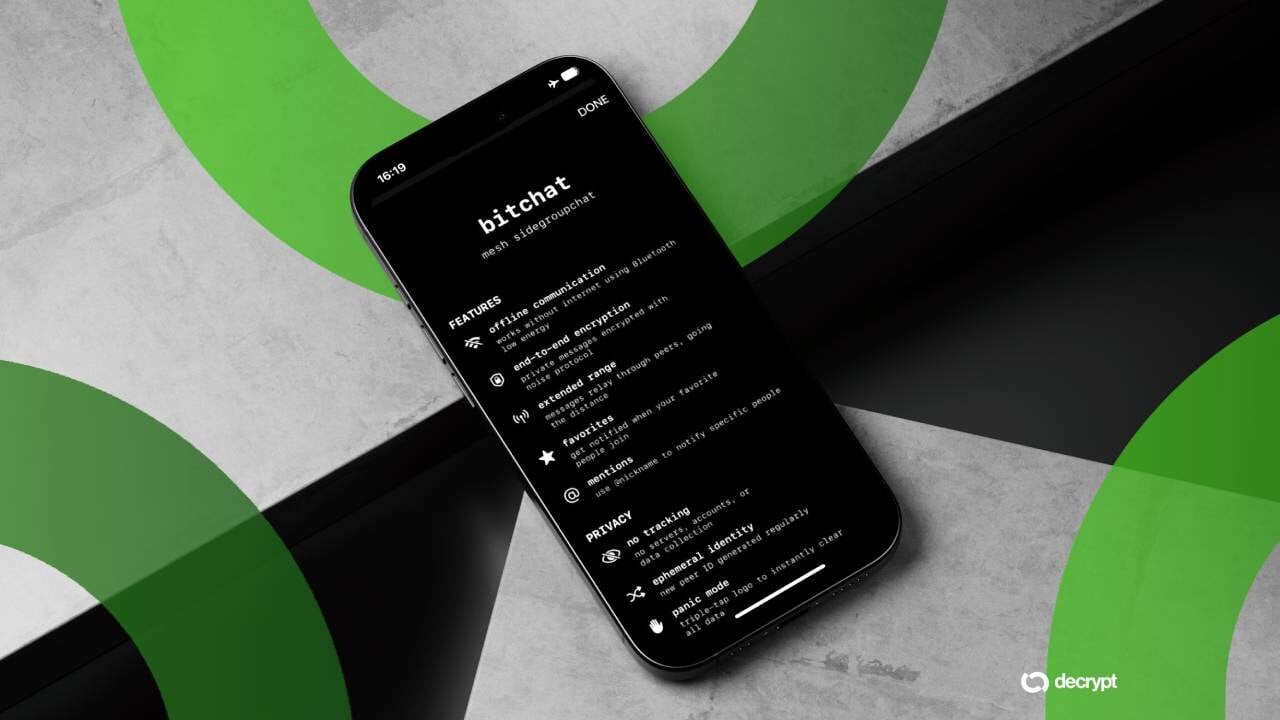
Governments don’t usually take the time to notice a niche software repository unless it actually works. Last week, the Indian government sent a clear signal that they are paying very close attention to local-first, peer-to-peer communication tools. They issued a takedown order to GitHub, demanding the removal of three repositories associated with Bitchat, a decentralized messaging application supported by Jack Dorsey’s TBD.
The Three-Hour Window
The Ministry of Electronics and Information Technology didn’t just ask nicely; they gave GitHub a three-hour window to comply. The urgency tells you everything you need to know about the current climate in India. The country has been grappling with widespread protests, and as is often the case in modern geopolitics, the first move by the state was to throttle the internet. When the backbone goes down, people look for side-channels. That is exactly what Bitchat was designed for.
Bitchat operates on a peer-to-peer (P2P) architecture, meaning it doesn’t rely on a central server to route messages. In a typical scenario, if a government wants to stop information flow on WhatsApp or X, they just tell the ISP to block the IP addresses of those servers. With P2P tools, there is no head to cut off. Users connect directly to one another. During internet shutdowns, these tools often use Bluetooth or local mesh networks to keep the lights on. That makes them a nightmare for authorities trying to maintain a total information vacuum.
Why Builders Should Care
If you are building in the crypto or AI space, this isn’t just a story about a messaging app in a foreign country. This is a story about the fragility of the infrastructure we take for granted. Most developers host their code on GitHub. We treat it like a public utility, but it is ultimately a centralized platform owned by Microsoft. When a sovereign nation sends a legal demand, GitHub generally complies to protect its business interests in that region.
For founders building censorship-resistant tools, the irony is thick. You build decentralized software, but you store the blueprints in a centralized vault. This incident highlights a massive single point of failure in the open-source ecosystem. If the code is removed from GitHub, the project doesn’t die, but the friction of discovery and collaboration skyrockets. It forces developers into the shadows, which is exactly where the state wants them.
The Dorsey Connection and TBD
Jack Dorsey’s involvement through TBD adds a layer of significance here. Dorsey has shifted his focus almost entirely toward decentralized protocols like Nostr and the underlying tech that powers Bitchat. He’s betting on a future where the identity and communication layers of the internet are no longer owned by corporations. The Indian government’s reaction suggests he’s over the target. When officials start issuing midnight takedown orders for code, it’s because the code has successfully bypassed their traditional levers of control.
However, we need to be realistic about the "decentralized" label. Bitchat is still early. It relies on specific protocols that can be identified and throttled if the authorities are sophisticated enough. This move against GitHub isn’t a technical defeat for Bitchat, but it is a distribution defeat. It prevents the next 10,000 protesters from easily downloading and installing the tool. It’s a battle of friction.
The Looming Threat to GitHub
GitHub has found itself in an impossible position. In the past, they’ve tried to push back against broad censorship, but the legal reality of operating in a market as large as India is hard to ignore. If GitHub refuses, they risk being blocked entirely in the country. For a developer community that relies on GitHub for their livelihoods, that would be catastrophic. The government knows this. They are using the platform’s dominance as a hostage to force compliance.
Tactical Takeaways for Founders
- Diversify your code hosting: Relying solely on GitHub is a risk. Consider mirrors on GitLab, Radicle, or other decentralized code-hosting platforms.
- Architecture is the best defense: Bitchat was targeted because it actually worked during shutdowns. If your tool can be turned off with a single switch, it isn’t resilient.
- The legal gray zone is shrinking: If you are building tools for privacy or decentralization, assume you will eventually be viewed as an adversary by someone in power. Plan your distribution accordingly.
The situation in India is a preview of the coming decade. As AI allows for faster, more autonomous communication and crypto provides the incentive layers for mesh networks, the friction between governments and builders will only intensify. They aren’t just going after the users anymore; they are going after the source code itself.
Bitchat might be off GitHub for now, but the cat is out of the bag. You can take down a repository, but you can't take back the idea. The question for us as builders is whether we are prepared to host our own tools when the big platforms decide it’s no longer profitable to protect us.
Read the original at Decrypt →