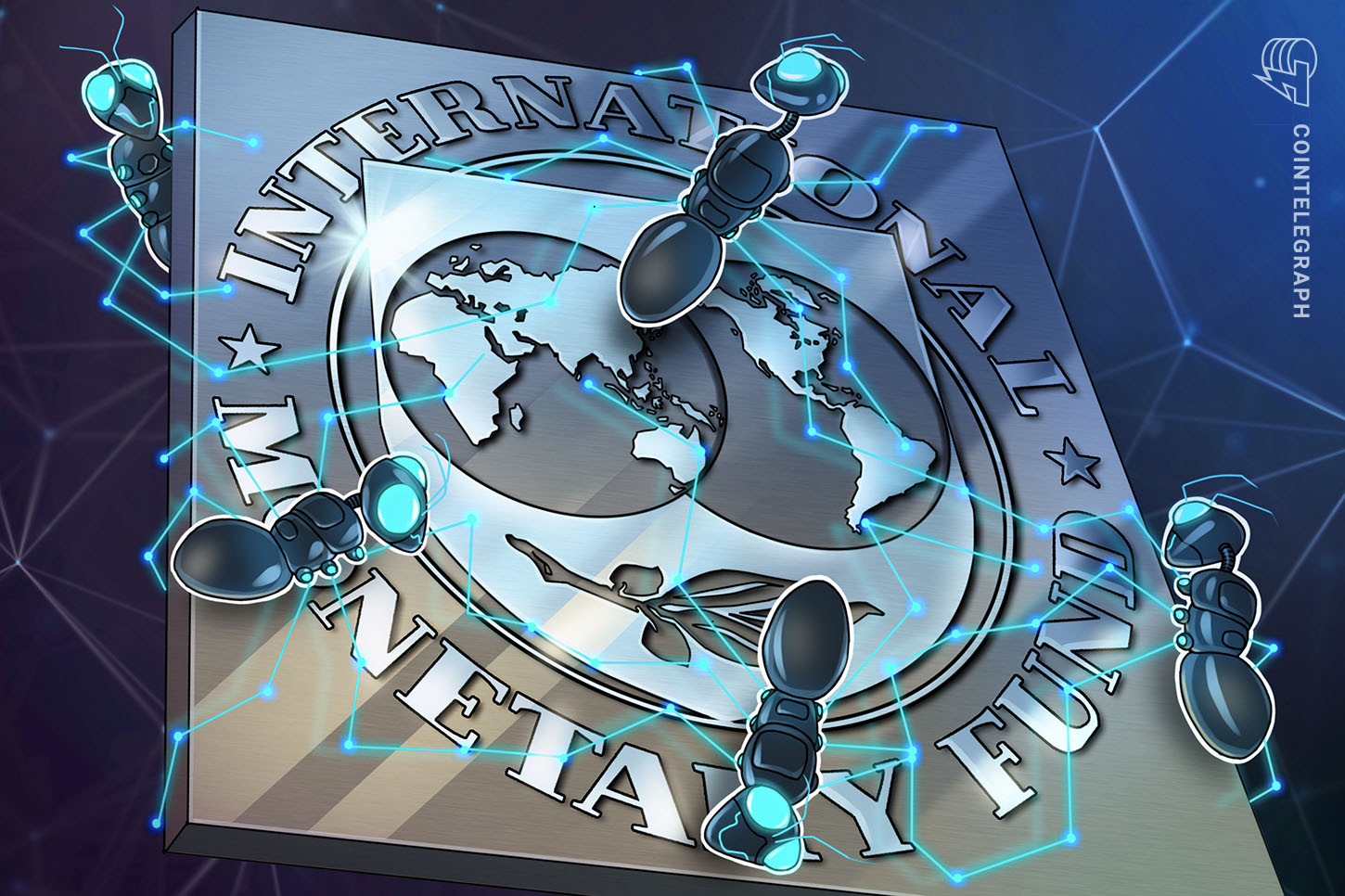
When the International Monetary Fund talks about crypto, they usually focus on money laundering or the threat to sovereign currencies. But their latest stance on tokenization is different. It is a grudging admission that the plumbing of global finance is broken, and blockchain is the only tool actually capable of fixing it. If you are building in DeFi or real-world asset tokenization, this is the validation you have been waiting for, wrapped in a heavy layer of institutional caution.
The Settlement Problem
To understand why the IMF is suddenly interested in on-chain assets, you have to look at how money moves today. Right now, when you buy a stock or an international bond, it feels instant because the UI on your screen tells you it is. In reality, there is a massive, multi-day game of telephone happening behind the scenes. Custodians, clearinghouses, and banks are all manually verifying ledgers that do not talk to each other. This is the T+2 or T+1 settlement cycle, and it is inefficient, expensive, and risky.
Tokenization changes the fundamental nature of an asset. Instead of a ledger entry that points to a paper certificate in a vault, the token is the asset. When you move the token, you move the ownership and the value simultaneously. This concept of atomic settlement is what the IMF is highlighting as a potential game-changer. It eliminates the gap between trading and owning, which reduces the need for collateral and lowers the risk that one party will fail to deliver during the waiting period.
The Fear of Fragmented Island Chains
The IMF's biggest warning is not about the technology failing, but about the industry failing to agree on how to use it. They are worried about fragmentation. From a builder's perspective, this is the most honest part of their analysis. We see it every day: Ethereum, Solana, Layer 2s, and private permissioned chains like those being built by JP Morgan or BlackRock. Each of these is an island.
If we move from a centralized legacy system to twelve different, disconnected blockchain ecosystems, we have not actually solved anything. We have just replaced one type of friction with another. For the IMF, this is a systemic risk. If liquidity is trapped on specific chains that cannot communicate, the financial system becomes more fragile, not less. During a market crash, the inability to move assets between chains could lead to a liquidity crunch that dwarfs what we saw in 2008.
What This Means for Builders
If you are a founder in this space, the message is clear: interoperability is no longer an optional feature. It is a requirement for survival. The IMF is signaling that regulatory favor will likely go to projects that bridge these gaps rather than those that try to build walled gardens. We are moving out of the era of pure experimentation and into the era of infrastructure integration.
- Focus on standards: Building a proprietary token standard might seem like a way to capture value, but it is a fast track to being sidelined by institutional players.
- Regulatory alignment: The IMF is pushing for a unified regulatory framework. If your project ignores compliance in the name of decentralization, you are likely cutting yourself off from the trillions of dollars in institutional collateral that the IMF is currently analyzing.
- Liquidity efficiency: The real winners will be the middleware layers that allow assets to move across chains without losing their legal or financial integrity.
The Paradox of Transparency
One of the more interesting points in the report is how the IMF views the transparency of public ledgers. On one hand, they love the idea of real-time monitoring. For a global regulator, being able to see systemic risk building up in real-time on a blockchain is a dream come true. On the other hand, they are deeply concerned about the lack of privacy for large institutional trades.
This creates a massive opportunity for builders working on privacy-preserving technologies like zero-knowledge proofs. The market needs a way to satisfy the IMF's desire for oversight while protecting the proprietary strategies of the institutions moving the money. This is the next great frontier in financial engineering: making the system transparent enough to be safe, but private enough to be useful.
The Takeaway
The IMF isn't telling us that tokenization is a fad anymore. They are telling us it is inevitable, but they are terrified of how messy the transition might be. For founders, the goal is clear: stop building isolated tools and start building the bridges that will keep the global financial system from splintering into a thousand pieces.
The era of builders vs. regulators is ending. We are entering the era of builders solving regulator problems. It might not be as exciting as the early days of DeFi, but it is where the real money is going to be made. If we can solve the fragmentation problem, we don't just upgrade the plumbing of finance—we redefine what an asset is.
Read the original at Cointelegraph →