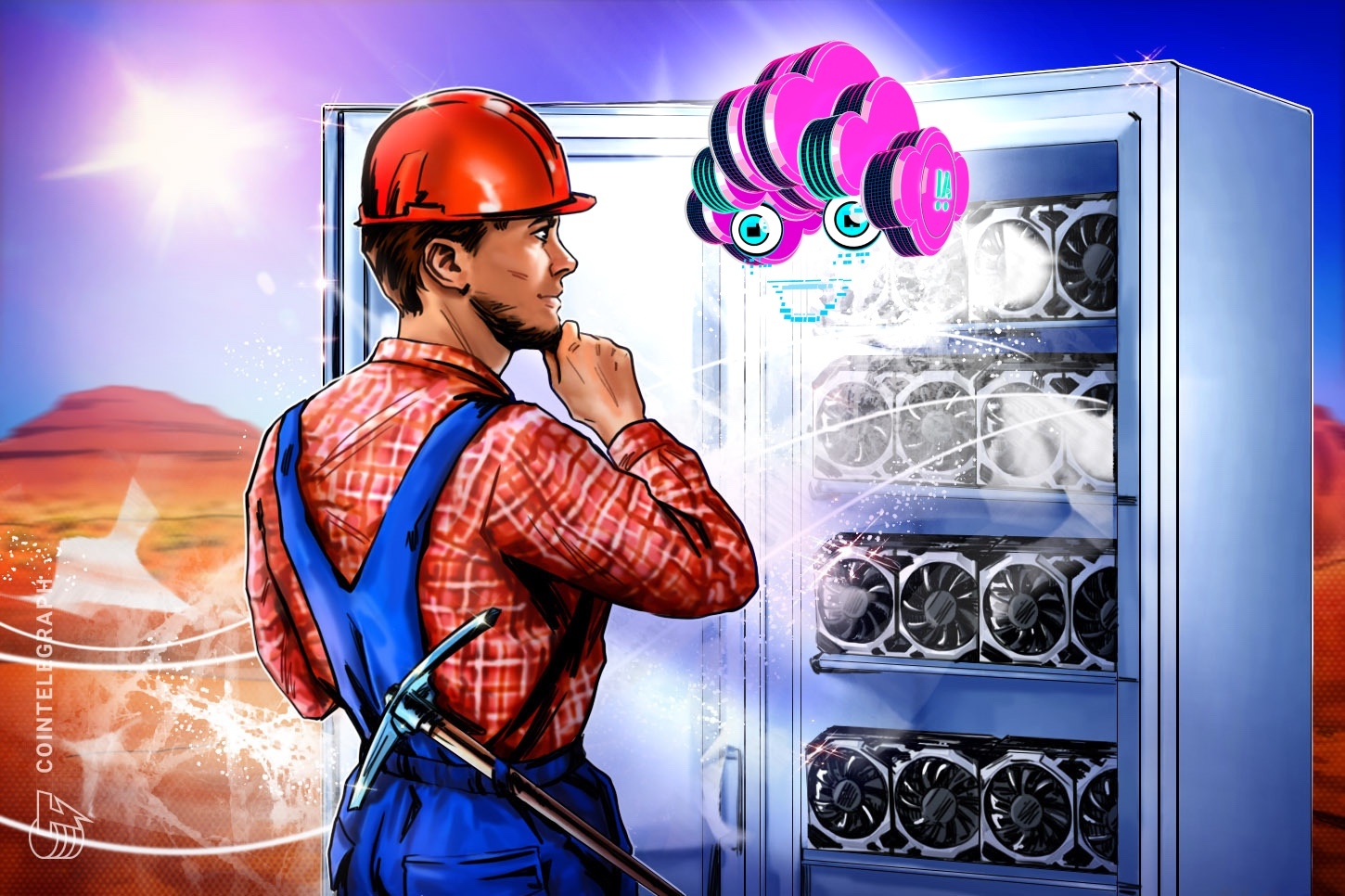
The landscape for Bitcoin miners is shifting, and it is doing so at a pace that suggests the old guard is finally waking up to a new reality. For years, the conversation stayed locked on hash rates, power efficiency, and the price of BTC. But look at the market lately and you will see a different story. Companies like Hut 8 and IREN are not just mining blocks anymore; they are pivoting to become the heavy machinery behind the artificial intelligence surge.
We are seeing these stocks rally not because the world suddenly fell back in love with proof-of-work, but because the market is realizing that these companies own the one thing the AI industry is starving for: power capacity. If you have the land, the transformers, and the grid connections, you are no longer just a crypto company. You are a critical infrastructure provider for the next decade of computing.
The infrastructure arbitrage
As a founder, you have to look at the math. The margins on mining Bitcoin are notoriously fickle. You are at the mercy of the halving, the network difficulty, and the spot price. AI compute, however, offers a different kind of stability. High-performance computing contracts are often long-term, multi-billion-dollar commitments. They provide the kind of predictable cash flow that traditional equity investors crave.
Hut 8 and IREN have been among the most vocal about this transition. Their recent deals have sent a signal to the market that the distressed assets of the last crypto winter are now premium real estate for data centers. It is a classic pivot. These firms spent years securing energy contracts and building out cooling systems. Now, instead of running ASICs to guess a number, they are hosting GPUs to train large language models.
This is not just a trend; it is an arbitrage of assets. The power demand for AI is projected to grow exponentially. Meanwhile, the lead time to build a new substation or secure a massive grid connection can be five to ten years in many jurisdictions. If a miner already has a 100-megawatt site ready to go, they are sitting on a gold mine that has nothing to do with the block reward.
What this means for builders
If you are building in the crypto space, you need to pay attention to where the capital is flowing. We are seeing a blurring of the lines between decentralized finance and centralized infrastructure. For developers, this shift means the underlying hardware supporting our networks is becoming more robust, but also more expensive. We are competing for silicon with companies like OpenAI and Nvidia.
The takeaway for founders is that hardware is king again. For a while, the industry felt like it was moving toward pure abstraction. But the physical world always catches up. The miners who survived the last few years did so by becoming masters of power management. Now, that expertise is their greatest product. If you are starting a project today, you have to ask yourself how you interact with this limited supply of energy and compute.
The skepticism and the risk
I am usually the first one to raise an eyebrow when a crypto company suddenly adds AI to its pitch deck. We have seen this movie before. In 2017, companies were adding blockchain to their names just to get a pump. However, this feels different because the physical assets back it up. A data center is a data center, regardless of what software is running on the servers inside.
The risk here is one of focus. Can a company manage the radically different operational requirements of AI while still maintaining a mining fleet? Bitcoin mining is aggressive and messy. AI compute requires high uptime, specific environmental controls, and a completely different sales cycle. It is easy to say you are pivoting; it is much harder to maintain two high-stakes business models simultaneously without one cannibalizing the other.
The institutional shift
Wall Street is rewarding this pivot because it simplifies the investment thesis. It is much easier for a fund manager to justify a position in a company providing infrastructure for Silicon Valley than it is to explain the nuances of the lightning network to a board of directors. The inflow of capital into these stocks suggests that Bitcoin miners are being revalued as data center plays rather than speculative crypto proxies.
- Energy Security: The real value is in the power purchase agreements and the physical grid infrastructure.
- Diversification: Diversified revenue streams make these companies more resilient to Bitcoin's four-year cycles.
- Market Validation: The multi-billion dollar scale of these contracts proves that the transition is well underway.
For those of us on the ground, this means the infrastructure layer of the industry is maturing. The wild west era of mining in a garage is long gone. We are entering the era of industrial-scale compute where the distinction between a crypto miner and a tech giant's utility provider is becoming nearly invisible.
The final word for founders
Don't get distracted by the stock prices, but do pay attention to the strategy. The lesson here is about asset utilization. If you have spent years building something for one purpose, don't be afraid to look at it through a different lens when the market changes. Hut 8 and IREN didn't wait for Bitcoin to hit a new all-time high to find a way to grow; they looked at their existing footprint and asked who else needed it. That is the kind of founder logic that keeps companies alive during the lean years.
Read the original at Cointelegraph →