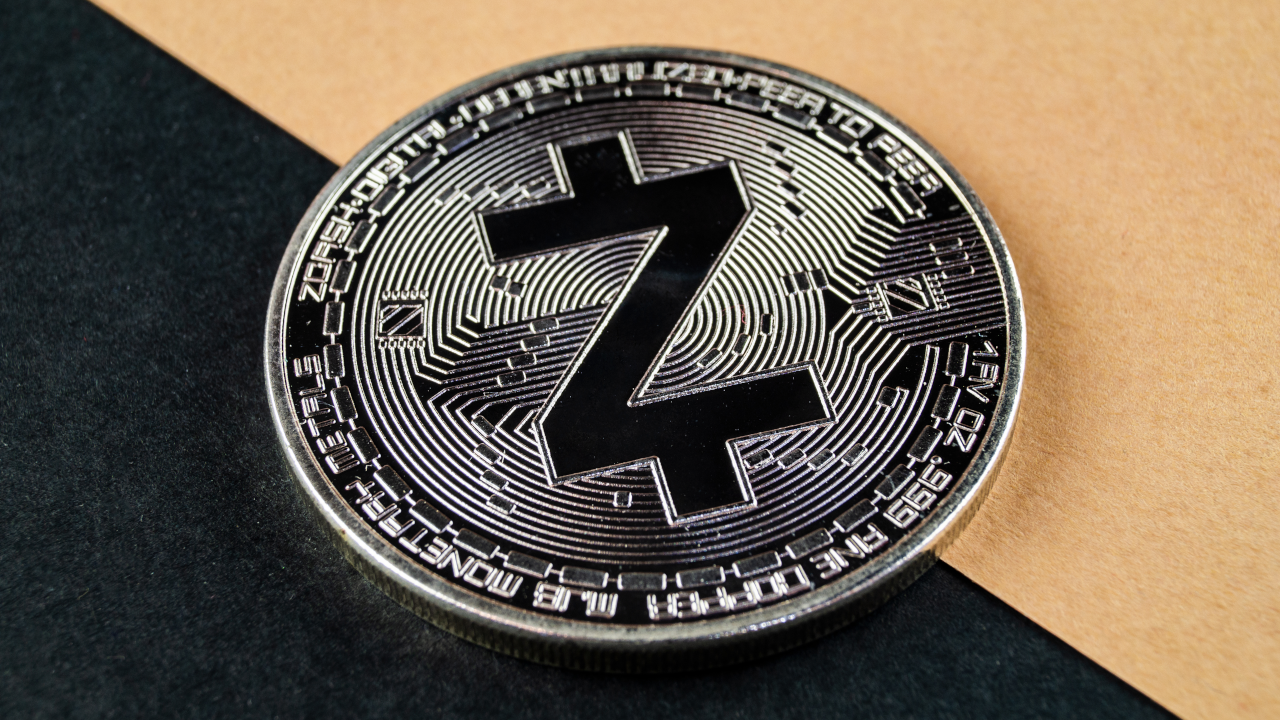
The Privacy Arms Race Just Escalated
Most of the crypto world is currently obsessed with price action and meme coins. Meanwhile, the teams building the foundational privacy layers are staring at a much darker horizon. I have been watching Zcash for a long time, and while it has had its share of community drama and funding debates, the technical roadmap remains one of the most serious in the space.
We are entering an era where two specific threats are converging: quantum computing and AI-driven forensic analysis. If you are building in this space, you need to understand that the encryption we rely on today is not a permanent shield. It has an expiration date. Zcash full node developers, specifically the team at Zakura, are now moving to get ahead of that date.
The Quantum Threat is No Longer Sci-Fi
The core of the recent news involves Zcash preparing for the implementation of hash-based signatures. For the non-cryptographers, here is the plain language version: the math we use to sign transactions today (mostly Elliptic Curve Cryptography) is vulnerable to quantum computers. A sufficiently powerful quantum machine could, in theory, reverse-engineer a private key from a public one.
While we do not have these machines at scale yet, the threat is "store now, decrypt later." State actors and well-funded entities can capture encrypted traffic today and simply wait for the hardware to catch up. By moving toward hash-based signatures—expected to land as early as January—Zcash is trying to bake in resistance before the emergency happens.
For founders, this is a lesson in technical debt. If you are building a protocol that handles sensitive user data or financial privacy, you cannot wait for a crisis to upgrade your stack. You have to assume your current encryption will be broken within the next decade and build paths for migration now.
AI is the New Forensic Investigator
Quantum is the future threat, but AI is the current one. The second part of the Zakura update involves a privacy tool for rotating transparent addresses. This is a subtle but critical shift in how Zcash handles its "non-shielded" side.
In the past, users often reused transparent addresses because it was convenient. But AI models are now incredibly good at pattern recognition. An AI does not need to break your encryption to figure out who you are; it just needs to look at the timing of your transactions, the amounts, and the frequency of address reuse. It builds a behavioral fingerprint that eventually links your digital activity to your real-world identity.
The new tool being rolled out this week aims to automate address rotation. It makes the job of an AI forensic bot much harder by constantly shifting the targets. It is a game of digital cat and mouse where the goal is to make the cost of surveillance higher than the value of the data.
Why Builders Should Care
If you are a builder, do not look at this as just another Zcash feature update. Look at it as a blueprint for the next phase of Web3 infrastructure. We are moving away from "transparency at all costs" because we have realized that total transparency in an AI-powered world is just a gift to centralized surveillance.
Building for privacy is not about hiding illegal activity; it is about maintaining the fundamental human right to have a private conversation or a private transaction without a machine learning model grading your behavior. If your project treats privacy as an afterthought, you are building a product that will be obsolete the moment users realize how exposed they really are.
The Skeptic's View
Now, I have to be honest. Zcash has a usability problem. Rotating addresses and managing hash-based signatures adds complexity. As a founder, I know that if a tool is hard to use, people will skip the security steps. The challenge for the Zakura team and the wider Zcash community is making these advanced protections invisible to the end user.
We also have to consider the regulatory climate. As privacy tools become more sophisticated at blocking AI surveillance, regulators will likely push back harder. The tension between "privacy by design" and "compliance by design" is the primary battlefield for the next five years. Zcash is choosing a side—privacy—and that comes with both technical prestige and political risk.
The Takeaway for the Ecosystem
The implementation of hash-based signatures in January will be a major milestone. It proves that a legacy privacy coin can iterate and adapt to modern threats. But for the rest of us, the takeaway is simpler: your current security assumptions are probably wrong.
If you are not thinking about quantum resistance and AI-driven deanonymization, you are not building for the long term. Zcash is showing that the best way to handle the future is to assume it is already here and start hiding the keys before the locks are broken.
- Quantum computers will eventually break standard encryption; hash-based signatures are the proactive fix.
- AI forensic analysis makes address reuse a fatal privacy flaw; automation is the only solution.
- Builders must prioritize privacy-preserving architecture now or face mass data exposure later.
We will see if the January rollout goes smoothly. If it does, it sets a new standard for what "hardened" crypto actually looks like.
Read the original at Decrypt →