The defensibility trap in the age of fast-following
In the current crypto and AI landscape, everything moves at a breakneck pace. We see new protocols launching every Tuesday and 'wrapper' AI startups appearing every Wednesday. As a founder, you are constantly told to move fast and break things, but there is a growing problem: most people are building things that are incredibly easy to replicate. They are building features, not companies. They lack a moat.
A moat is not just a buzzword for VCs to throw around during a series A pitch. It is the fundamental reason your business will survive when a tech giant decides your core product is now a free feature in their next update. If you are looking to join a startup, or starting one yourself, you have to look past the hype and the fancy office space to see if there is actually a structural barrier to entry.
The myth of the first-mover advantage
For a long time, we were told that being first was the ultimate moat. In the blockchain world, we saw this with the early DeFi protocols. But being first is often a curse. You do the hard work of educating the market and figuring out the tech, only for a competitor to fork your code, fix your mistakes, and launch with better incentives. Speed is a tactic, not a strategy.
True defensibility comes from things that are hard to copy even if the competitor has more money and more developers than you. If a giant like Google or a well-funded competitor can replicate your entire value proposition in a weekend hackathon, you do not have a moat. You have a head start, and those vanish quickly.
Network effects: The holy grail and the heavy lift
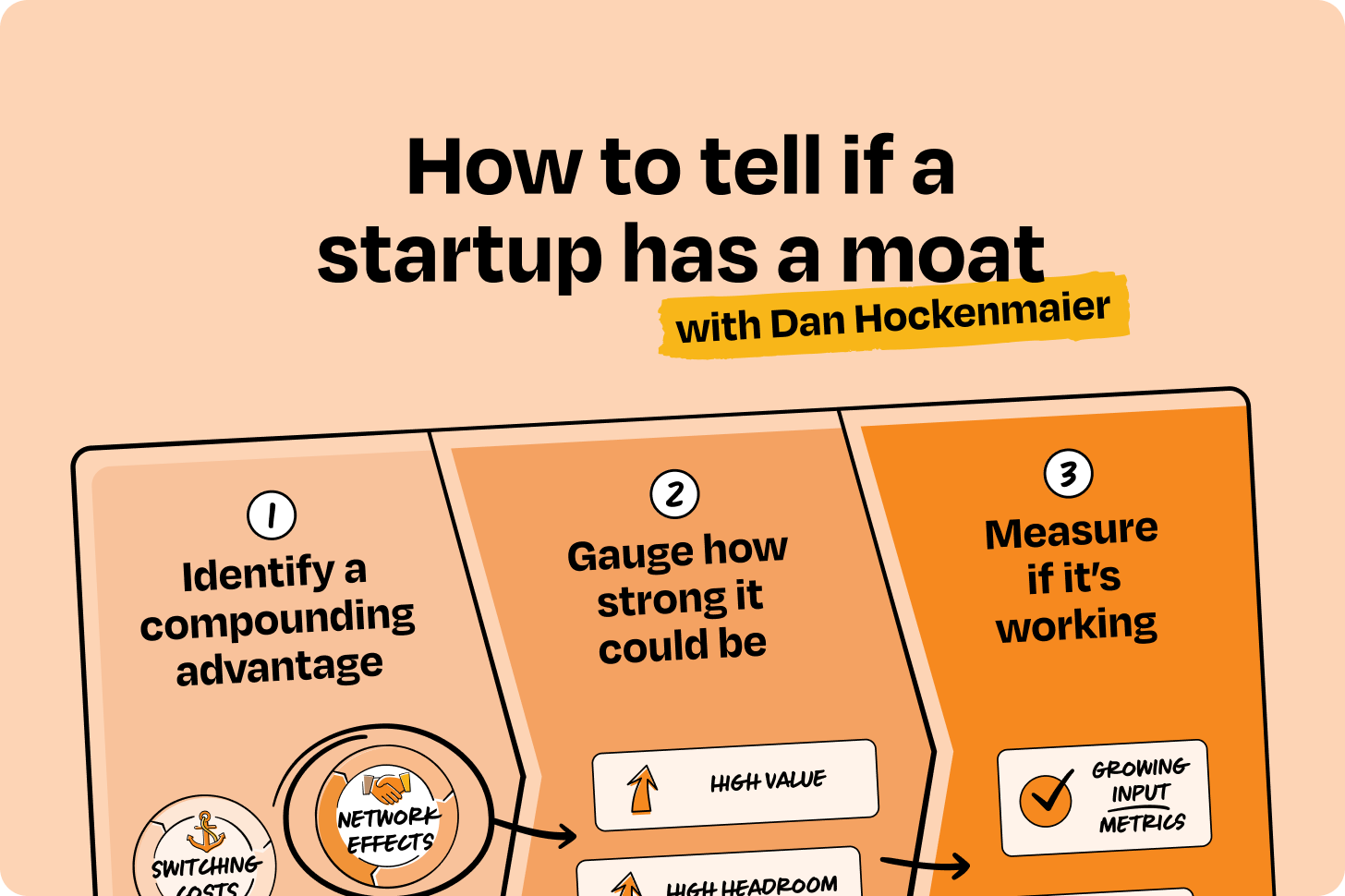
We talk about network effects constantly, but they are rarely understood. A real network effect means that every new user who joins your platform makes the platform more valuable for every existing user. This is the gold standard for crypto projects. Think about a liquid exchange or a developer ecosystem. The more developers build on a specific L2, the more tools exist, which attracts more developers.
However, building a network effect is incredibly difficult. It is the classic chicken-and-egg problem. If you are joining a company that claims to have a network effect, look at the friction. If the value only exists when a million people are there, but they only have a thousand, they haven't built a moat yet—they have built a promise. The best companies find a way to provide single-player value while they scale toward that network effect.
Switching costs and the 'sticky' factor
High switching costs are a boring but effective moat. This is why enterprise software is so lucrative. Once a company integrates a specific data pipeline or an AI model into their core workflow, the cost of ripping it out—both in terms of money and time—is massive. In the builder world, we see this with infrastructure. If you are the plumbing, you are hard to replace.
I often look at how much 'work' a user has to do to leave. If a user can migrate their entire operation to a competitor with three clicks, your product is a commodity. If leaving requires re-training an entire staff or migrating petabytes of proprietary data, you have a moat. For builders, the goal should be to become the operational system of record for your users.
Proprietary assets and the data flywheel
In AI, everyone is talking about data moats. But here is the skeptical take: most data is not a moat. If you are just scraping the public internet, you have the same data as everyone else. A real data moat comes from proprietary, high-quality, labeled data that is generated by your users' interactions with your specific product.
This creates a flywheel. Better data leads to a better model, which leads to a better user experience, which leads to more users, which generates more data. If a startup cannot explain how their data loop is unique or why their data cannot be easily bought on the open market, they are just another wrapper. They are renting their intelligence from OpenAI or Anthropic, and that is a dangerous place to be.
Brand as a moat is a double-edged sword
A lot of founders lean on 'brand' as their defensibility. While a strong brand can lower customer acquisition costs, it is the weakest form of a moat. In the crypto space, we have seen massive brands evaporate overnight when the underlying utility or trust was questioned. Brand is a multiplier, but a multiplier of zero is still zero. You need a structural advantage first.
Builders should focus on brand as a way to build community trust, not as a replacement for technical or structural barriers. A community that feels like they own part of the project—which is the promise of Web3—is a much stronger moat than just having a recognizable logo or a loud Twitter presence.
How to evaluate your own project
If you are trying to figure out if your current path is defensible, ask yourself one question: 'If a competitor offered my product for half the price, or for free, why would my customers stay?' If the only answer is 'because they like us,' you are in trouble. If the answer involves technical integration, community ownership, or unique data they can't get elsewhere, you might have something.
Building for the long term requires a level of honesty that is often missing in the hype-cycles of AI and crypto. It is easy to confuse a bull market with a good business model. Real builders look for the friction, the complexity, and the structural moats that keep them standing when the hype eventually dies down.
The best moats aren't built in a day; they are the result of deliberate choices to do things that are hard to replicate, even if they aren't the fastest way to grow.
The takeaway for founders and early employees is simple: stop obsessing over being first and start obsessing over being hard to leave. If you can't identify your moat, you are just building the prototype for the person who will eventually replace you.
Read the original at Lenny's Newsletter →