The Massive Hole in the Liquidity Bucket
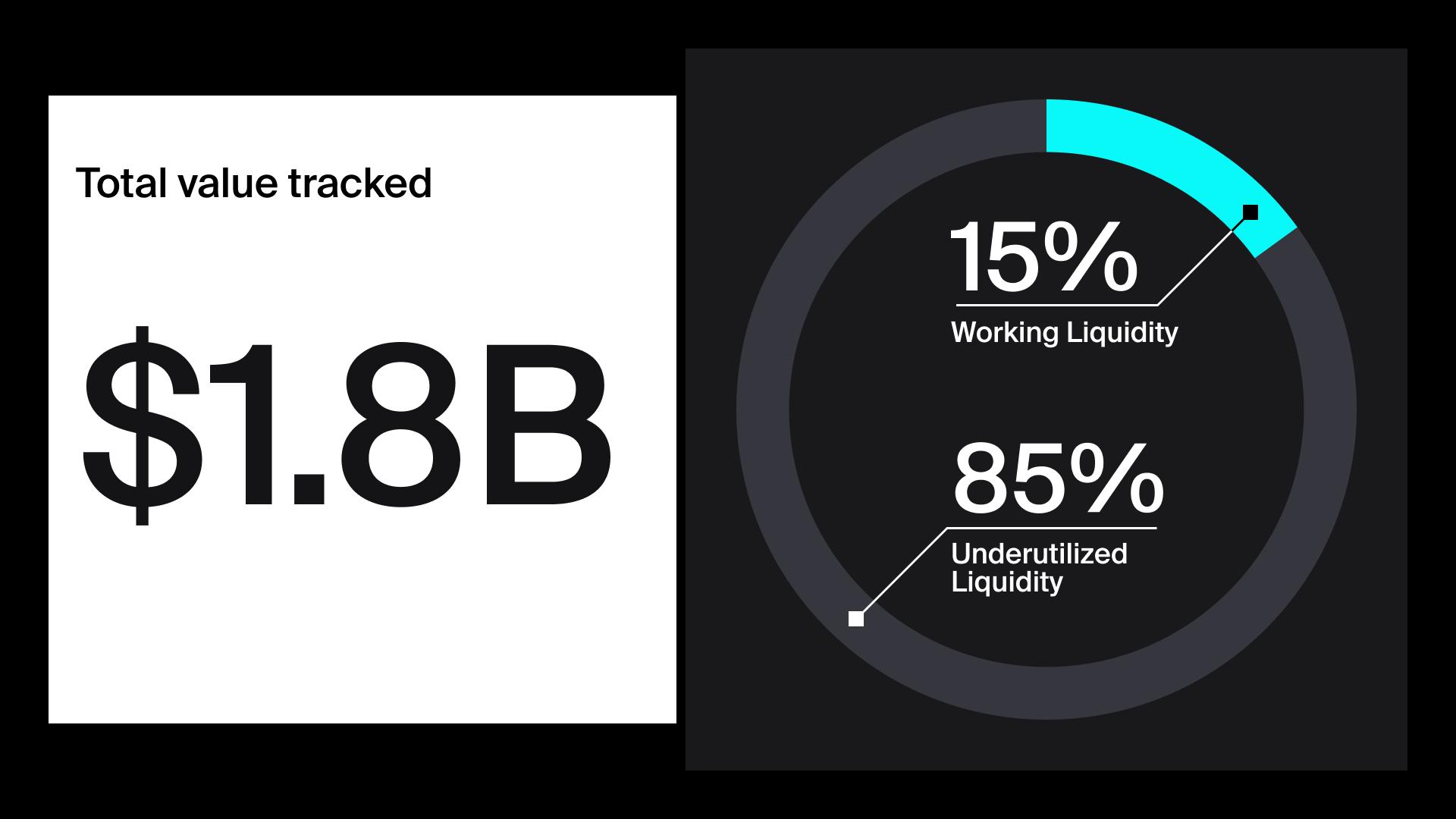
In the world of on-chain trading, we talk a lot about Total Value Locked as if it is the ultimate scoreboard. We look at billions of dollars sitting in smart contracts and assume that money is working. But a recent look under the hood of decentralized exchanges reveals a frustrating reality: a huge chunk of that capital is essentially dead weight.
Currently, about $1.6 billion in cryptocurrency is sitting in liquidity pools without actually facilitating a single trade. According to recent data, roughly $542 million per week falls outside of active trading ranges. This means that for a significant portion of the time, the assets provided by liquidity providers are doing nothing. They aren't earning fees, they aren't providing depth for traders, and they aren't helping the ecosystem grow. They are just sitting there, losing value to inflation or opportunity cost.
The Problem with Concentrated Liquidity
To understand why this is happening, we have to look at the move from passive liquidity to concentrated liquidity. Early versions of decentralized exchanges were simple. You put your tokens in, and they were spread across a price range from zero to infinity. It was inefficient, but it was set-and-forget. You always earned a tiny piece of the action, no matter where the price went.
Then came the more sophisticated models that builders love today. These allow providers to pick a specific price range for their capital. If Bitcoin is at $60,000, you might put your liquidity between $58,000 and $62,000. This is great for capital efficiency because your money is concentrated where the trades are happening. But there is a catch. If the price moves to $63,000, your capital becomes inactive. You stop earning fees instantly.
The data suggests that most liquidity providers are not active enough to keep up. They set their ranges, the market moves, and their capital stays stuck in the old range while the volume moves elsewhere. We have built a system that requires constant management, yet we are still treating it like a passive investment graveyard.
Why Builders Should Care
If you are building in the DeFi space, this is a massive red flag and a massive opportunity at the same time. It tells us that the current user interface for providing liquidity is broken for the average person. We are asking retail users to act like professional market makers, and they are failing at it.
- Capital Efficiency is a Lie: It doesn't matter how efficient your protocol is if 30% of your TVL is out-of-range at any given time.
- Bad User Experience: Users who see zero returns on their staked assets will eventually leave the platform.
- Market Depth Issues: Large trades are hitting more slippage because the liquidity isn't where it needs to be, despite the high headline TVL numbers.
For a founder, this means the next wave of successful protocols won't just be about better math; they will be about better automation. We need tools that move this idle $1.6 billion back into the line of fire without requiring a user to check their wallet thirty times a day.
The Manager's Dilemma
We have seen the rise of automated liquidity managers, but they haven't solved the problem yet. Many of these tools are still too expensive in terms of gas fees, or they are too slow to react to volatile swings. When the market moves fast, these managers are often left holding the bag or rebalancing at a loss due to impermanent loss.
The reality is that market making is a full-time job. When we convinced a bunch of hobbyists that they could play market maker for a few percentage points of yield, we didn't tell them they were competing against high-frequency algorithms. Now we see the result: hundreds of millions of dollars wasting away in ranges that the price hasn't touched in weeks.
The industry focuses so much on attracting new capital that we have forgotten to make sure the capital we already have is actually functioning. Retaining active liquidity is more valuable than attracting passive, dead volume.
What This Means for the Future
We are going to see a shift away from manual range settings. The era of the individual user picking their own ticks on a chart is likely coming to an end for everyone except the most professional shops. If we want this $1.6 billion to start working again, the industry needs to move toward intent-based systems or more robust vault architectures that take the decision-making out of the user's hands.
We also have to be honest about what TVL actually represents. If a protocol claims a billion dollars in liquidity but half of it is out of range, that protocol is half as liquid as it claims to be. We are essentially inflating our success metrics with idle money that provides no utility to the end user.
The Takeaway
The headline numbers in crypto are often deceptive. While $1.6 billion in idle liquidity sounds like a disaster, it's actually an invitation for builders. The market is screaming for better execution and more intelligent capital management tools. If you can figure out how to keep that money in the game without burning the user on fees, you don't need to find new capital—you just need to capture what is already sitting there, waiting for something to do.
Stop looking at TVL as a static win. It is a dynamic responsibility. If the money isn't moving, the protocol isn't working.
Read the original at CoinDesk →