The Institutional Pivot from Fear to FOMO
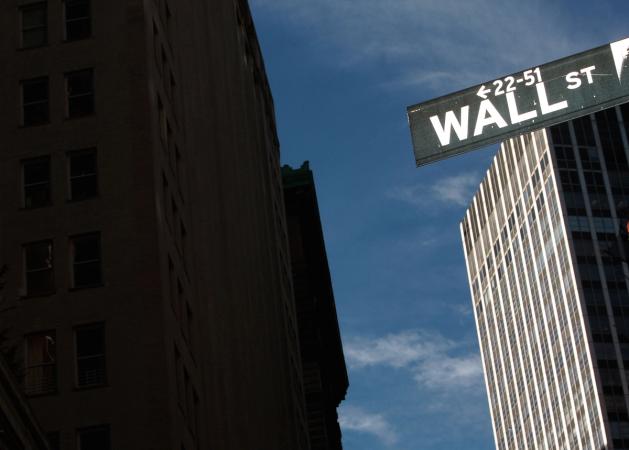
For years, the narrative around blockchain and the big banks was one of disruption. We were told that decentralized ledgers would disintermediate the titans of Wall Street, making the middleman obsolete. But if you look at the recent moves from Goldman Sachs, Wells Fargo, and Morgan Stanley, that theory is hitting a wall of reality. These firms aren't running away from tokenization; they are building the plumbing for it.
The shift we are seeing right now is a transition from experimentation to integration. For a long time, these banks ran pilot programs that felt like PR stunts—closed-loop systems that didn't really touch the core business. Now, they are looking at tokenization as a genuine growth play. They’ve realized that putting traditional assets on a blockchain isn't a threat to their existence; it’s an upgrade to their efficiency and a way to unlock liquidity in markets that have been stagnant for decades.
Why the Big Banks Are Doubling Down
The motivation here is simple: margin. Running a global bank is an exercise in managing friction. When you trade bonds, real estate, or private equity today, you are dealing with a mess of legacy systems, T+2 settlement times, and manual reconciliations. Tokenization promises to collapse those timelines. For a bank like Goldman Sachs, being able to settle a trade instantly instead of waiting forty-eight hours isn't just a technical win—it’s a massive reduction in counterparty risk and capital requirements.
Morgan Stanley and Wells Fargo are looking at this through the lens of wealth management. They see a future where their advisors can offer clients fractional ownership in high-value assets that were previously out of reach. Think about the barrier to entry for top-tier commercial real estate or private credit. By tokenizing these assets, banks can lower the minimum investment threshold, bringing in a new wave of capital while keeping their advisors at the center of the transaction.
The Role of the Modern Advisor
There was a lot of talk early on about how smart contracts would replace financial advisors. That was always a bit naive. High-net-worth individuals don't just want a piece of code; they want a strategist. What tokenization actually does is give these advisors a better toolkit. Instead of managing a clunky portfolio of stocks and bonds, they can now manage a diverse array of tokenized real-world assets with the same ease as trading a share of Apple.
For builders in this space, this is a signal to stop trying to "kill the banks" and start building the infrastructure they need to survive. The banks have the customers and the regulatory licenses. What they lack is the agility to build these systems from scratch. They are looking for enterprise-grade solutions that bridge the gap between their legacy databases and the public or private chains they intend to use.
The Infrastructure Play for Founders
If you are a founder in crypto or AI, the takeaway here is that the demand for middleware is skyrocketing. The big banks aren't going to suddenly start using Uniswap to trade billion-dollar bond portfolios. They need permissioned environments, KYC-compliant rails, and robust custody solutions that don't rely on a single person holding a hardware wallet in a desk drawer.
We are seeing a move toward a hybrid model. Banks want the transparency and speed of a blockchain, but they want the control and privacy of a centralized entity. This creates a massive opportunity for startups building privacy-preserving tech like Zero-Knowledge Proofs. Banks need to prove they have the assets without revealing their entire trade history to their competitors.
What This Means for Liquidity
One of the most significant aspects of this shift is the potential for 24/7 markets. Traditional finance sleeps on weekends and holidays. Crypto doesn't. As Goldman and its peers move toward tokenized assets, the expectation of instant liquidity will become the standard. This will likely force a massive overhaul of how payments are handled. We’re already seeing Wells Fargo explore how blockchain can speed up cross-border internal transfers, cutting down on the reliance on the outdated SWIFT network.
This isn't just about making things faster; it's about making capital work harder. When money isn't stuck in a settlement vacuum for two days, it can be redeployed immediately. In a high-interest-rate environment, that time represents real money.
The Skeptic's Corner: Regulation and Reality
I’m naturally skeptical of any "Wall Street is coming" narrative because we’ve heard it before. However, this time feels different because the focus is on utility rather than speculation. They aren't trying to sell you the next meme coin; they are trying to figure out how to put a $10 trillion bond market on a ledger. That is a much more boring, and therefore much more credible, use case.
The biggest hurdle remains the regulatory landscape. The banks are ready, the tech is mostly there, but the rules are still being written in pencil. Until there is a clear legal framework for how a tokenized asset is treated in a bankruptcy or a dispute, we won't see the full floodgates open. But make no mistake, the plumbing is being laid now so that when the green light stays green, the transition will be almost overnight.
Takeaway for Builders
- Stop pitching "bank killers" and start pitching "bank enablers." The money is in the transition, not the revolution.
- Focus on compliance and privacy. No major bank will touch a system that doesn't have robust identity management and data protection.
- Think about interoperability. The future won't be one single chain; it will be a fragmented ecosystem of private bank chains and public liquidity pools. Tools that connect them will be invaluable.
Building for the future of finance means understanding that the giants aren't going away—they are just getting an upgrade. The real winners will be the ones who provide the parts for that upgrade.
The transition of tokenization from a perceived threat to a growth engine is the most significant validation the blockchain space has seen in years. It’s not about the price of Bitcoin; it’s about the architecture of the entire global financial system. If you're a founder, look at where the friction is in these big institutions. That's where your next product is.
Read the original at CoinDesk →