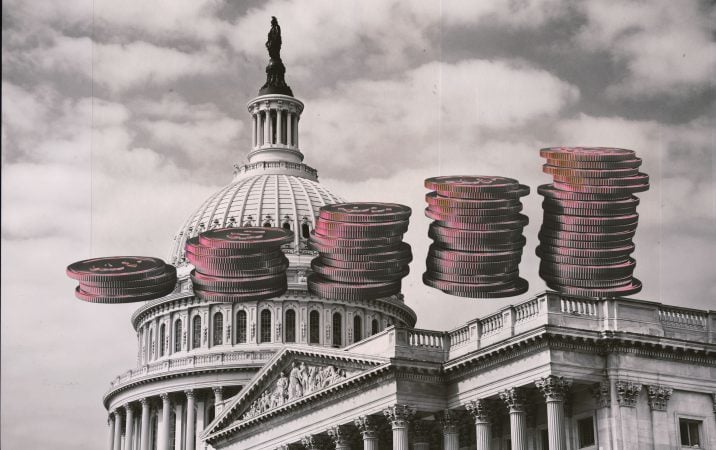
The Congressional Stalemate
In the world of crypto regulation, we often hear that clarity is just around the corner. But for anyone building in the stablecoin space, the latest signals from Washington suggest that the wait is going to be longer than most of us hoped. The Clarity for Payment Stablecoins Act, once seen as a slam-dunk piece of legislation that could finally bridge the gap between digital assets and traditional banking, is currently stuck in the mud.
New analysis from the team at Galaxy research shows that the probability of this bill passing before the end of the year has dropped significantly. We are looking at odds around 30% now. That is a sharp decline from previous outlooks. The reason is simple and frustratingly familiar: a group of Democratic negotiators has raised concerns over consumer protections and ethics rules. Even with the finish line in sight, the parties are moving further apart, not closer together.
Defining the Friction Points
What exactly are they arguing about? From a founder's perspective, it feels like the goalposts are being moved. The negotiators are looking for more robust safeguards for the actual users of these tokens. They want to ensure that if a stablecoin issuer goes bust, there is a clear, ironclad process for how people get their money back. They are also pushing for stricter ethical standards for the companies behind these assets.
While those goals sound noble on paper, the implementation details are where the friction lies. For builders, every new layer of regulation is another hurdle to jump. If the requirements become too burdensome, the very innovation we are trying to foster in the U.S. will just find a home elsewhere. This has always been the tension. We want the legitimacy that comes with a federal framework, but we don't want to be regulated into obsolescence by people who still struggle to understand how a ledger works.
Why This Matters for Founders
If you are building a protocol or a service that relies on stablecoin liquidity, this delay is a massive headache. The current environment is a patchwork of state-level enforcement and federal uncertainty. Without this bill, we continue to live in a state of "regulation by enforcement." That means instead of having a rulebook to follow, we find out we broke a rule only when a letter arrives from a three-letter agency.
This uncertainty kills capital. Investors are hesitant to pour money into projects that could be deemed illegal or non-compliant in six months. It also makes it incredibly difficult to form meaningful partnerships with traditional financial institutions. Banks want clarity. They want to know exactly which stablecoins they are allowed to touch and what the compliance overhead looks like. As long as this bill is stalled, those bridges remain unbuilt.
The Last-Ditch Effort
For the Clarity Act to survive, it requires what analysts are calling a "last-ditch effort." This usually means some sort of high-level political horse-trading that happens behind closed doors. Usually, this involves attaching a piece of crypto legislation to a "must-pass" bill, like a defense spending package or a budget resolution. But that is a messy way to govern, and there is no guarantee that stablecoins are high enough on the priority list to make the cut.
The current political climate doesn't help. We are in an election year, and traditionally, very little gets done when everyone is focused on their own survival at the polls. Crypto has become a partisan issue, whether we like it or not. One side wants to be seen as protectors of the consumer, while the other wants to be seen as champions of innovation. The middle ground is currently a lonely place.
The Cost of Inaction
While D.C. bickers, the rest of the world is moving on. Europe has MiCA. Other jurisdictions are rolling out their own frameworks to attract talent and capital. Every month that the U.S. remains without a clear stablecoin framework is a month where we lose ground to global competitors. We are essentially telling the next generation of fintech founders that if they want to build something that lasts, they should probably do it in a different time zone.
As someone who has seen the cycle of hype and despair in this industry multiple times, I find this particularly exhausting. We aren't asking for a handout; we are asking for a set of rules that don't change every time a different chair takes over a committee. The skepticism we feel toward the legislative process isn't just cynicism; it's a rational response to seeing the same patterns of stalling and grandstanding year after year.
A Realistic Outlook
So, where does that leave us? If you are waiting for federal law to tell you it's safe to innovate, you might be waiting for a very long time. The odds aren't in our favor for 2024. The 30% chance cited by Galaxy feels right—maybe even a bit optimistic. Projects should probably start planning for another year of the status quo.
This means prioritizing jurisdictional diversification. If the U.S. won't give you a clear path, you have to find one elsewhere while maintaining a defensive posture domestically. It's not the outcome we wanted, but it's the reality of the landscape. We have to be builders first and lobbyists second. We can't let the lack of imagination in Washington dictate the ceiling for what we can create.
The Core Takeaway
The main takeaway here is that consumer protection is the new battleground. Even the lawmakers who generally support crypto are being pressured to add more teeth to these bills. To get legislation through, the industry might have to accept a level of oversight that many will find uncomfortable. But if the alternative is another four years of confusion, that might be a price worth paying.
- Stablecoin legislation has stalled due to demands for higher ethics and consumer protection standards.
- The odds of the Clarity Act passing in 2024 have dropped to roughly 30%.
- Builders face continued uncertainty, making it harder to secure funding and banking partners within the U.S.
- International jurisdictions are pulling ahead by providing the regulatory frameworks that the U.S. currently lacks.
Ultimately, don't hold your breath for a legislative miracle. Keep your heads down, keep building, and prepare for a long, cold winter of regulatory ambiguity. The tech will outlast the politicians, but the path forward remains unnecessarily difficult.
Read the original at The Block →