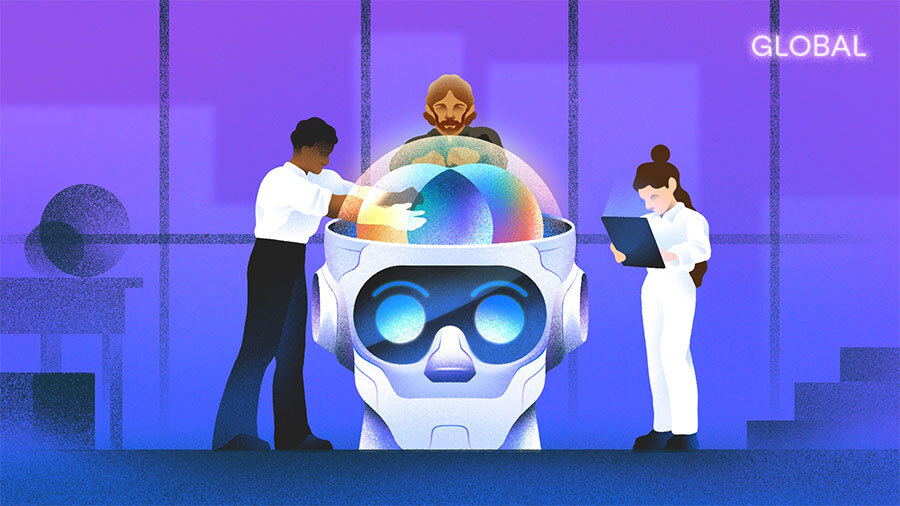
I have been watching the AI safety conversation evolve from a niche academic worry into a full-blown corporate compliance hurdle. If you are building in this space right now, you know the vibe has shifted. It is no longer about whether a machine will gain consciousness; it is about whether your model will leak customer data or hallucinate a legal defense that gets you sued.
As we head into the next major cycle of industry gatherings, specifically the upcoming sessions at Disrupt, the agenda reflects this transition. We are moving away from the 'doomer' rhetoric and toward actual infrastructure. For founders, this is the most critical pivot to get right. If you build without safety in mind, you are not just being edgy; you are building on a foundation of sand that no enterprise client will touch.
The Shift to Guardrails as Infrastructure
In the early days of the current AI boom, safety was often treated as an afterthought or a PR move. You launched the product, and then you hired a small team to figure out how to stop it from saying things it shouldn't. That model is dead. The sessions we are seeing now, featuring voices from Anthropic and Nvidia, suggest that safety is being baked into the compute and the foundational layer itself.
When you look at companies like Anthropic, their entire brand is built on 'Constitutional AI.' Whether you agree with their specific constraints or not, they have proven that safety can be a competitive advantage rather than a friction point. For a builder, the takeaway here isn't just to follow their lead, but to realize that your customers are starting to demand these baked-in protections as a default feature, not a premium add-on.
Hardware and the Physical World
One of the more interesting shifts in the current discourse is the move toward 'Real World AI.' We have spent a lot of time talking about chatbots, but the stakes change entirely when the AI is driving a truck or managing a warehouse floor. The upcoming discussions involving Waabi and Nvidia are particularly relevant here.
In software, a hallucination is an embarrassing error. In robotics or autonomous logistics, a hallucination is a physical catastrophe. Builders in the physical AI space are currently defining the safety standards that will likely govern the rest of the industry. They don't have the luxury of 'moving fast and breaking things' because the things they break are expensive and dangerous. If you are a founder in SaaS, you should be watching the robotics space closely; their rigorous testing frameworks are a preview of the compliance standards coming for all of us.
Cloud Providers and the Safety Tax
We also have to talk about the gatekeepers. AWS and other cloud giants are increasingly positioning themselves as the safety net for the AI industry. This is a double-edged sword. On one hand, having tools that automate red-teaming and bias detection is a massive win for small teams with limited resources. On the other hand, it creates a new kind of vendor lock-in.
If your entire safety protocol is tied to a specific cloud provider's proprietary monitoring tools, you are losing sovereignty over your stack. I am skeptical of any 'safety-as-a-service' model that doesn't allow for portability. Founders need to ask themselves if they are building a resilient company or if they are just outsourcing their ethics to a third-party API that could change its terms of service overnight.
Why Founders Should Care Now
There is a pragmatic reason to pay attention to these safety sessions: regulation is no longer a 'maybe.' It is a 'when.' We are seeing a fragmented landscape where different regions are imposing different rules on model transparency and risk mitigation. The sessions at Disrupt aren't just about technical safety; they are about survival in a regulated market.
If you aren't attending these types of deep dives, you are missing the signal. The noise is the hype around new model releases; the signal is the quiet work being done on verification and validation. The founders who win in the next three years won't necessarily be the ones with the most creative prompts, but the ones who can prove their systems are predictable and auditable.
Practical Strategy for Builders
- Audit your dependencies: Understand which parts of your safety stack are yours and which belong to your cloud provider.
- Adopt a 'Safety-First' design: Treat guardrails like you treat unit testing. It shouldn't be a separate phase of development; it should be part of the commit.
- Watch the physical AI space: Even if you build pure software, the safety protocols in robotics are the gold standard you will eventually be held to.
The upcoming agenda for Disrupt 2026, particularly the tracks on the AI Stage and the Real World AI Stage, serves as a roadmap for where the money is going. The venture capital community is getting smarter. They are moving past the 'wow factor' of generative demos and asking harder questions about liability and long-term stability. If you can't answer those questions, your path to a Series A is going to be a lot harder.
Safety is not a feature you add at the end; it is the infrastructure that allows you to scale without self-destructing.
I suggest keeping an eye on the early bird deadlines for these events, not just to save a few hundred bucks, but to ensure you are in the room when these standards are being hammered out. The industry is moving fast, and the window for being 'accidentally' successful without a safety strategy is closing.
Read the original at TechCrunch Startups →