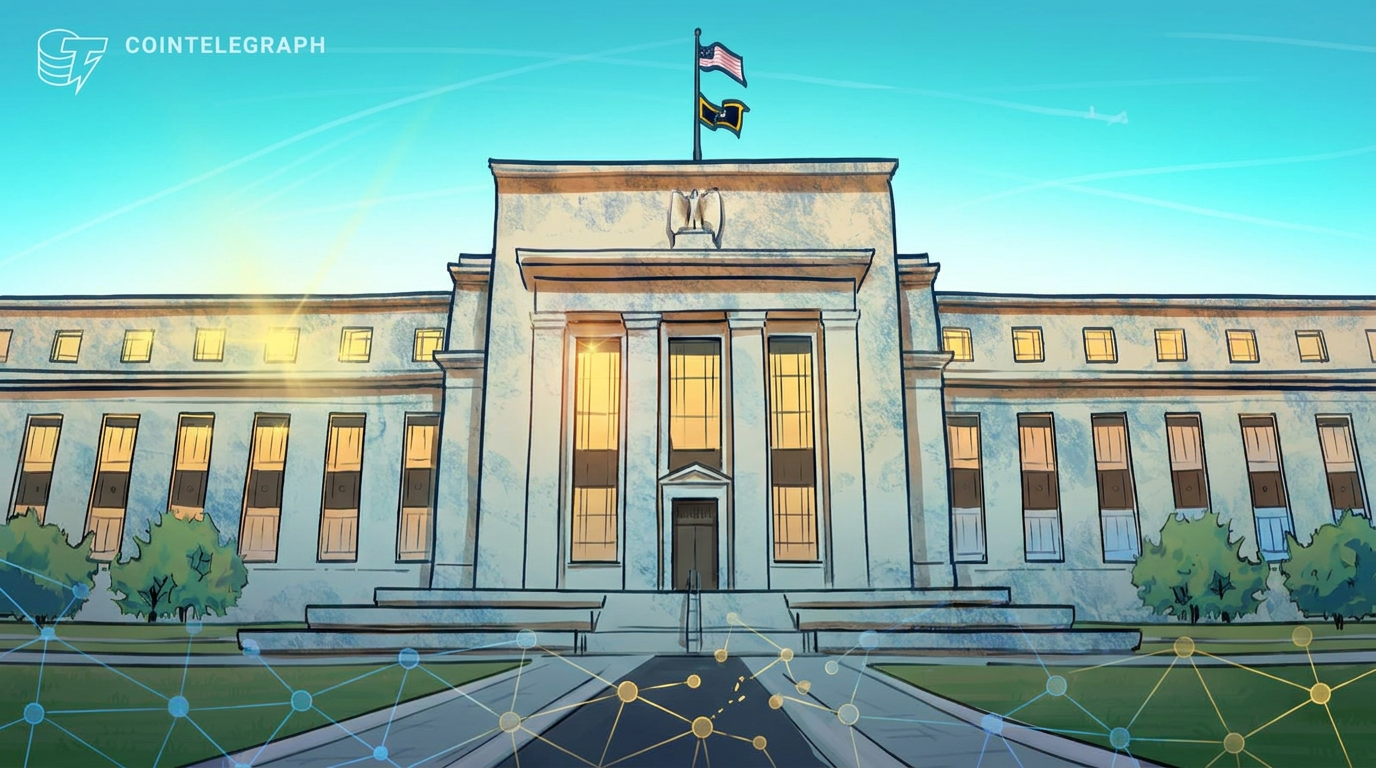
We have spent the last decade hearing that blockchain is the ultimate truth machine. The narrative is simple: code is law, the ledger is immutable, and the middleman is dead. But as the Federal Reserve starts looking closer at the intersection of traditional finance and tokenization, they are asking a question that most founders hate to answer: who takes the fall when the code breaks?
Federal Reserve Governor Christopher Waller recently pointed to the 2022 Binance Bridge hack as a case study for why the dream of a fully automated financial system might be a nightmare for regulators and consumers alike. When you move real-world assets like Treasury bonds or corporate debt onto a chain, you aren't just moving value; you are moving liability. Waller is essentially telling the industry that we haven't solved the 'human problem' just by using a distributed database.
The Liability Vacuum
In the traditional banking world, there is always a throat to choke. If your bank account is drained by a fraudster, there is a legal framework, an insurance protocol, and a physical institution you can hold accountable. In the world of tokenized finance, that responsibility is often diffused across a network of validators, smart contract developers, and decentralized autonomous organizations. Waller’s concern is that this diffusion creates a liability vacuum.
When the BNB Smart Chain was exploited for over $500 million, the reaction was a mix of emergency hard forks and manual intervention. For a centralized exchange like Binance, they had the power to stop the bleeding. But for a truly decentralized protocol handling billions in tokenized credit, there is no 'stop' button. If a smart contract has a bug, or if a private key is compromised, the assets don't just disappear; they are legally and financially stranded. The Fed wants to know who is going to make the victim whole.
The Myth of Atomic Settlement
Founders love to talk about atomic settlement—the idea that two assets swap simultaneously, eliminating counterparty risk. It sounds perfect on paper. But Waller is highlighting the friction points that remain. If the plumbing of the blockchain fails mid-transaction, or if a validator set becomes malicious, the settlement isn't just delayed; it becomes a legal nightmare. The system assumes the technology will always work, but history shows us that even the best-funded projects have single points of failure.
For those building in this space, the takeaway is clear: the Fed isn't impressed by your tech stack. They are looking at your governance. They want to see that there is a clear legal path for dispute resolution. If your project relies on 'the community' to vote on whether or not to refund a hack victim, you aren't building a financial system; you are building a casino. TradFi institutions will not move their balance sheets onto a chain where the finality of a transaction depends on the whim of a Discord group.
The Oracle Problem is a Regulatory Problem
Tokenization relies on oracles to tell the blockchain what is happening in the real world. If you tokenize a house or a gold bar, the chain needs to know that the asset still exists and hasn't been sold elsewhere. Waller’s skepticism stems from the fact that these oracles are often the weakest link. A hack doesn't have to happen on the chain; it can happen at the data source. If the data is corrupted, the tokenized asset becomes a lie.
We have seen this play out in DeFi repeatedly. Price manipulation and stale data feeds lead to cascades of liquidations. When this happens to a few degens trading meme coins, the Fed doesn't blink. When it happens to the plumbing of the global financial markets, it becomes a systemic risk. The 'move fast and break things' ethos of Silicon Valley is fundamentally incompatible with the 'never fail' requirement of global central banking.
What This Means for Builders
If you are a founder in the RWA (Real World Asset) space, Waller’s comments should be a wake-up call. Stop selling the 'decentralization' dream to regulators and start selling 'accountability.' The winning projects in the next five years won't be the ones with the fastest TPS or the most complex zk-proofs. They will be the ones that integrate traditional legal protections into the smart contract layer.
- Focus on Custody: Safe, institutional-grade custody isn't just about cold storage anymore. It's about clear legal ownership and insurance.
- Build for Reversibility: The idea of irreversible transactions is a bug, not a feature, for large-scale finance. We need protocols that allow for legal interventions without compromising the integrity of the ledger.
- Standardize Dispute Resolution: Before you launch, you need to know exactly which jurisdiction's laws apply when the bridge gets hacked.
Waller isn't saying tokenization is a bad idea. He is saying it's an immature one. He acknowledges that the efficiency gains are real, but he isn't willing to trade stability for speed. The Binance hack serves as a reminder that even the biggest players in the space are vulnerable to basic security lapses. In the Fed's eyes, if you can't guarantee the safety of the keys, you can't be trusted with the keys to the economy.
The Honest Truth
We are currently in a transition period where we are trying to force old-world regulations onto new-world technology. It’s clunky and it’s frustrating. But the skepticism coming from the Fed isn't just FUD (Fear, Uncertainty, and Doubt). It’s a roadmap. They are telling us exactly what we need to fix before they give the green light for mass adoption.
If we want tokenized finance to be more than a niche experiment, we have to stop pretending that the technology is a substitute for trust. Technology can facilitate trust, but it cannot replace the need for human accountability. The Binance hack was a lesson in technical vulnerability; Waller’s response is a lesson in institutional reality. Builders who ignore this reality will find themselves with a great product that no one is allowed to use.
Read the original at Cointelegraph →