We have reached the point in the tech cycle where land is becoming a bottleneck. If you are building in AI right now, you know the drill: you need chips, you need power, and you need cooling. On Earth, those three things are getting harder to coordinate. Regulation, local power grids, and environmental concerns are slowing down the rollout of massive data centers. Elon Musk’s solution is characteristically aggressive: move the compute to space.
The Starmind Strategy
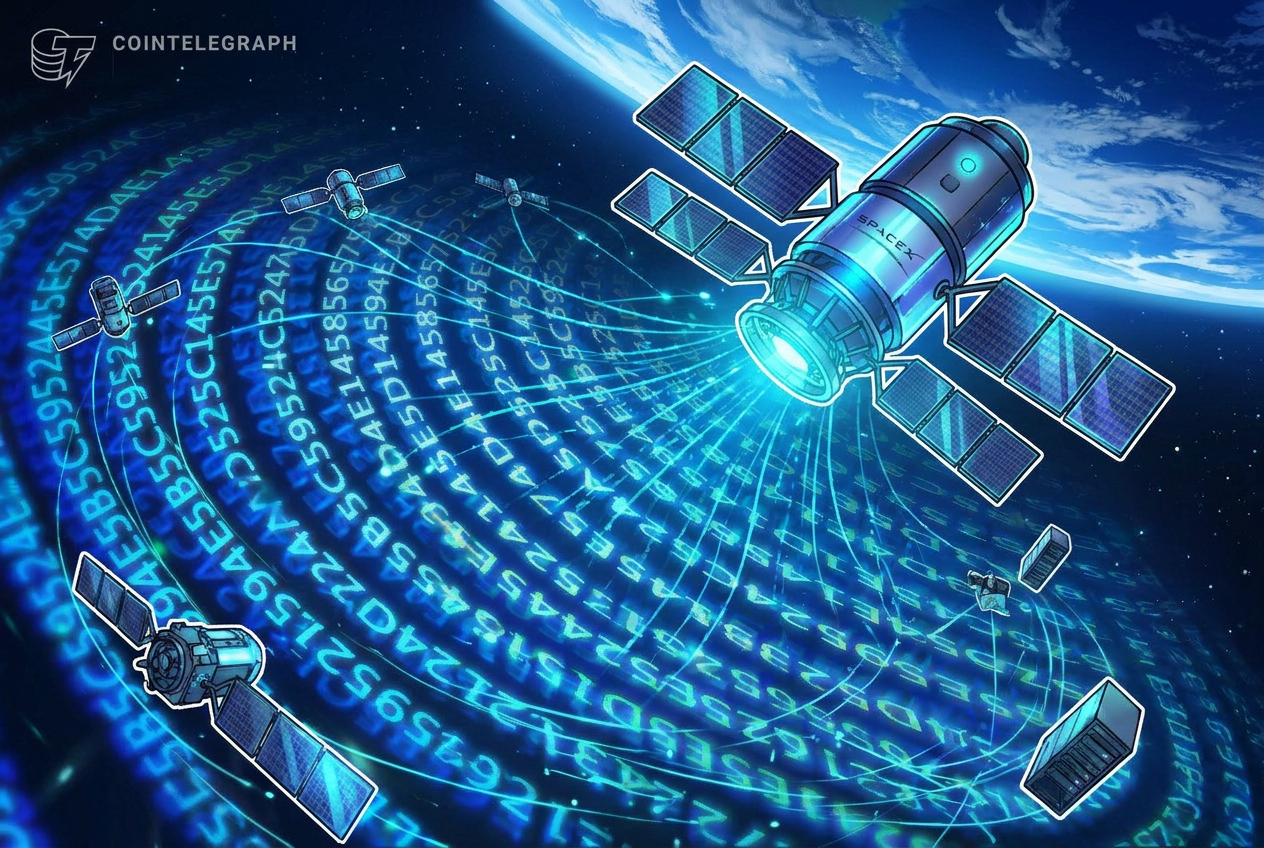
The Federal Communications Commission (FCC) recently authorized SpaceX to deploy a massive constellation of up to one million satellites. While the public knows Starlink as a provider of high-speed internet for rural areas and maritime vessels, this new initiative, dubbed Starmind, is a different beast entirely. We are looking at the birth of orbital AI data centers.
The concept is simple but difficult to execute. Instead of just bouncing signals from a ground station to a satellite and back down, these satellites will be equipped with high-density processing units. They will process data in orbit. This reduces the latency of sending raw data back to Earth for analysis and, perhaps more importantly, taps into an environment where cooling is managed by the vacuum of space and power is provided by constant solar exposure.
Why Builders Should Care
If you are a founder or a developer, you might wonder why the location of a server rack matters to you. It matters because of the compute-to-latency ratio. For years, we have dealt with the limitations of the edge. We want powerful models running close to the user, but we are limited by the hardware in their pockets or the local nodes in their cities.
SpaceX is effectively creating a new layer of the stack. By placing a million nodes in low Earth orbit, they are creating a global mesh of compute that doesn't care about borders or terrestrial fiber optics. For crypto builders, this is particularly interesting. We have long talked about censorship resistance and decentralized infrastructure. A constellation of a million satellites running nodes and processing data is the ultimate hardware realization of that dream.
The Skeptic's View
I am generally skeptical of anything that sounds like it belongs in a sci-fi novel, and a million satellites is a staggering number. For context, there are only a few thousand active satellites in orbit today. Increasing that number by orders of magnitude brings up massive concerns regarding orbital debris and light pollution. The FCC’s approval is a huge win for SpaceX, but the operational reality of managing a million autonomous units is a logistical nightmare no one has solved yet.
Then there is the heat problem. While space is cold, it is also a vacuum. On Earth, we use fans or liquid cooling to move heat away from chips. In space, you have to rely on radiation to get rid of heat, which is significantly less efficient. If SpaceX is going to run high-performance AI chips in these satellites, they aren't just launching servers; they are launching sophisticated thermal management systems that have to survive the harsh environment of space for years.
Impact on the AI Landscape
The demand for AI compute is currently insatiable. NVIDIA can't make chips fast enough, and companies like Microsoft and Google are spending billions on terrestrial data centers. Starmind represents a hedge against the limitations of Earth. If you can’t get a permit to build a 10-gigawatt data center in Virginia, you launch it into orbit.
For AI developers, this could lead to a new category of "Space-Native" applications. These would be programs designed to run on the Starmind mesh, utilizing orbital data processing for real-time global monitoring, autonomous navigation, or decentralized ledger verification without ever touching a terrestrial ISP.
The Infrastructure Play
We often focus on the software side of AI—the LLMs and the generative art—but the real power in the next decade will belong to whoever owns the infrastructure. SpaceX is moving from being a transportation company (Starship) to a communications company (Starlink) to an infrastructure company (Starmind).
This is a classic vertical integration move. By controlling the rockets, the satellites, and now the processing power, SpaceX is positioning itself to be the backplane of the global AI economy. For builders, the takeaway is clear: the hardware bottleneck is the only one that truly matters. If you can solve the physical constraints of where data lives and how it is processed, you own the market.
Founder Takeaway
Don't get distracted by the scale of a million satellites. Focus on the shift in architecture. We are moving from a world of centralized clouds to a world of ubiquitous, decentralized orbital compute. If you are building today, start thinking about what your stack looks like when the "edge" is no longer a cell tower down the street, but a mesh of a million AI-capable nodes overhead.
- Physical constraints like power and cooling are driving innovation into extreme environments.
- SpaceX is pivoting from data transit to data processing, creating a new layer for the global tech stack.
- Regulatory approval for a million satellites suggests a massive acceleration in orbital infrastructure.
- Founders should monitor how Starmind integrates with existing AI frameworks and decentralized protocols.
This isn't just another satellite launch. It is the beginning of the end for terrestrial data monopolies. It is going to be messy, it is going to be expensive, and it might just be the most important infrastructure project of our lifetime.
Read the original at Cointelegraph →