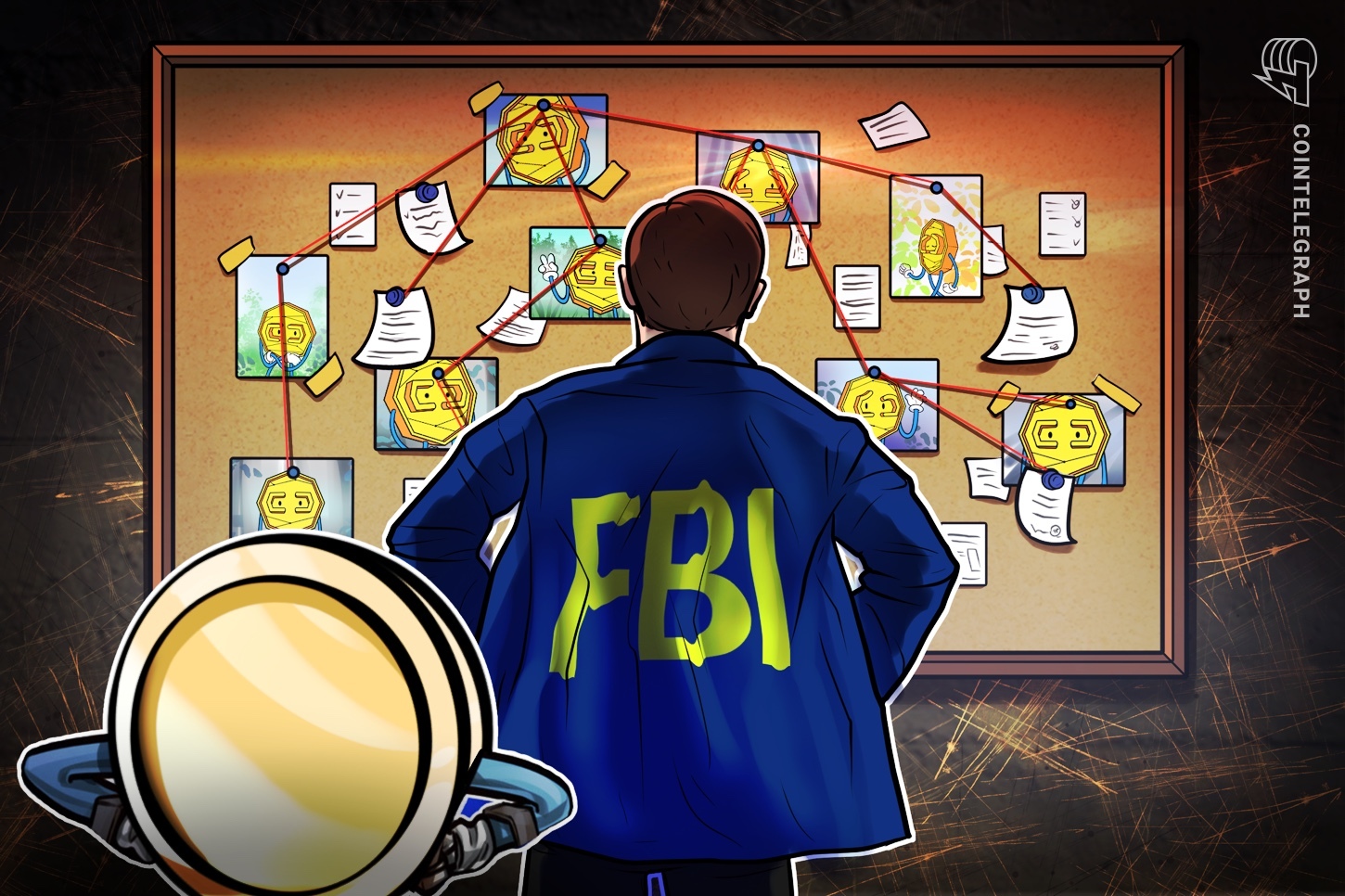
The $6 Billion Wake-Up Call
When you hear a number like $6.3 billion, it is hard to wrap your head around the scale. That is not just a rounding error or a minor exploit. It is a systemic shock. The recent breach at Binance has now escalated beyond typical industry damage control, drawing in the heavy hitters: the FBI and the U.S. Secret Service. While Binance claims to have frozen roughly $3 billion of the loot, the remaining capital represents a massive liability for the entire ecosystem.
As a founder, I look at this and see more than just a security failure. I see the end of the 'Wild West' era of self-policing. When the federal government steps in to help a private exchange recover assets, the lines between decentralized finance and traditional state enforcement blur. If you are building in this space, you need to understand that the rules of engagement just changed.
The Logistics of the Recovery
Tracing $6 billion in digital assets is not like tracking a wire transfer. It involves monitoring thousands of hops, mixers, and bridge protocols. The fact that the Secret Service is involved tells us this is being treated as a matter of national financial security. These agencies aren't just looking for a kid in a hoodie; they are looking for state-sponsored actors or sophisticated syndicates that have the infrastructure to wash billions.
Binance's ability to freeze $3 billion is a double-edged sword. On one hand, it is a win for the users who might see their funds returned. On the other hand, it highlights just how much control a centralized exchange actually has over the 'immutable' ledger. If the exchange can flip a switch and stop $3 billion from moving, the narrative of true decentralization takes a hit. Builders need to be honest about this trade-off: security often comes at the cost of the very autonomy we claim to value.
What This Means for Founders
If you are building an app, a protocol, or a new chain, you have to assume that you are a target from day one. A $6 billion theft proves that no one is too big to fail or too secure to be breached. The involvement of U.S. agencies suggests that the 'wait and see' approach to regulation is over. We are entering a phase where the government is not just a regulator, but an active participant in the security lifecycle of crypto companies.
- Security is not a feature; it is the foundation. If your code hasn't been audited by multiple independent firms, you are playing with fire.
- Custody matters. Centralized points of failure are the primary targets. Founders should be looking at multi-sig solutions and decentralized custody models that don't rely on a single entity's kill switch.
- Compliance is coming for your code. The fact that federal agencies are successfully tracing these funds means the anonymity of the blockchain is a myth. Build with the assumption that every transaction is public and traceable.
The Skeptic's View on 'Frozen' Funds
We should be cautious about the $3 billion figure being thrown around. Freezing assets on an exchange is one thing; actually recovering them and returning them to the rightful owners is another legal and technical nightmare. Often, 'frozen' just means the funds are stuck in a digital purgatory while lawyers and agents argue over who gets to hold the keys. For the average user, the wait for a refund could take years, not months.
Furthermore, the focus on the $3 billion saved ignores the $3.3 billion that is still out there. That capital can be used to fund further attacks, manipulate markets, or develop even more sophisticated exploits. The industry shouldn't be patting itself on the back yet. We are still in the middle of a massive drain, and the secondary effects on market liquidity and investor trust are only just beginning to be felt.
The involvement of the FBI and Secret Service isn't a sign of crypto's maturity; it's a sign of its vulnerability. We have built a multi-trillion dollar house on a foundation that still can't keep the doors locked.
The Infrastructure Shift
For those of us in the builder community, this event should trigger a pivot toward 'defensive development.' We have spent the last few years chasing scalability and user experience. We neglected the basic plumbing. We need better circuit breakers that don't rely on centralized intervention. We need bridges that aren't just massive honey pots waiting to be cracked.
The Secret Service's role here is particularly interesting. They were originally founded to combat counterfeiting, and in a way, that is what they are doing here—protecting the integrity of the financial system from fraudulent actors. If you are a founder, you should be asking yourself: 'If my protocol was hit for $100 million tomorrow, would the FBI care?' For most small-to-medium projects, the answer is no. You are on your own. Binance gets the federal cavalry because they are 'too big to fail.' You don't have that luxury.
The Real Takeaway
The headline here isn't just about a hack; it's about the integration of crypto into the global law enforcement framework. The days of 'code is law' are being replaced by 'code is subject to the Department of Justice.' This isn't necessarily a bad thing for adoption, but it is a reality check for anyone who thought crypto would exist in a vacuum outside of traditional power structures.
Stay skeptical of the numbers, stay focused on your own security audits, and remember that in a crisis, the government is the only entity with a bigger stick than the hackers. The goal for builders shouldn't be to need the FBI—it should be to build systems that make their involvement unnecessary.
Read the original at Cointelegraph →