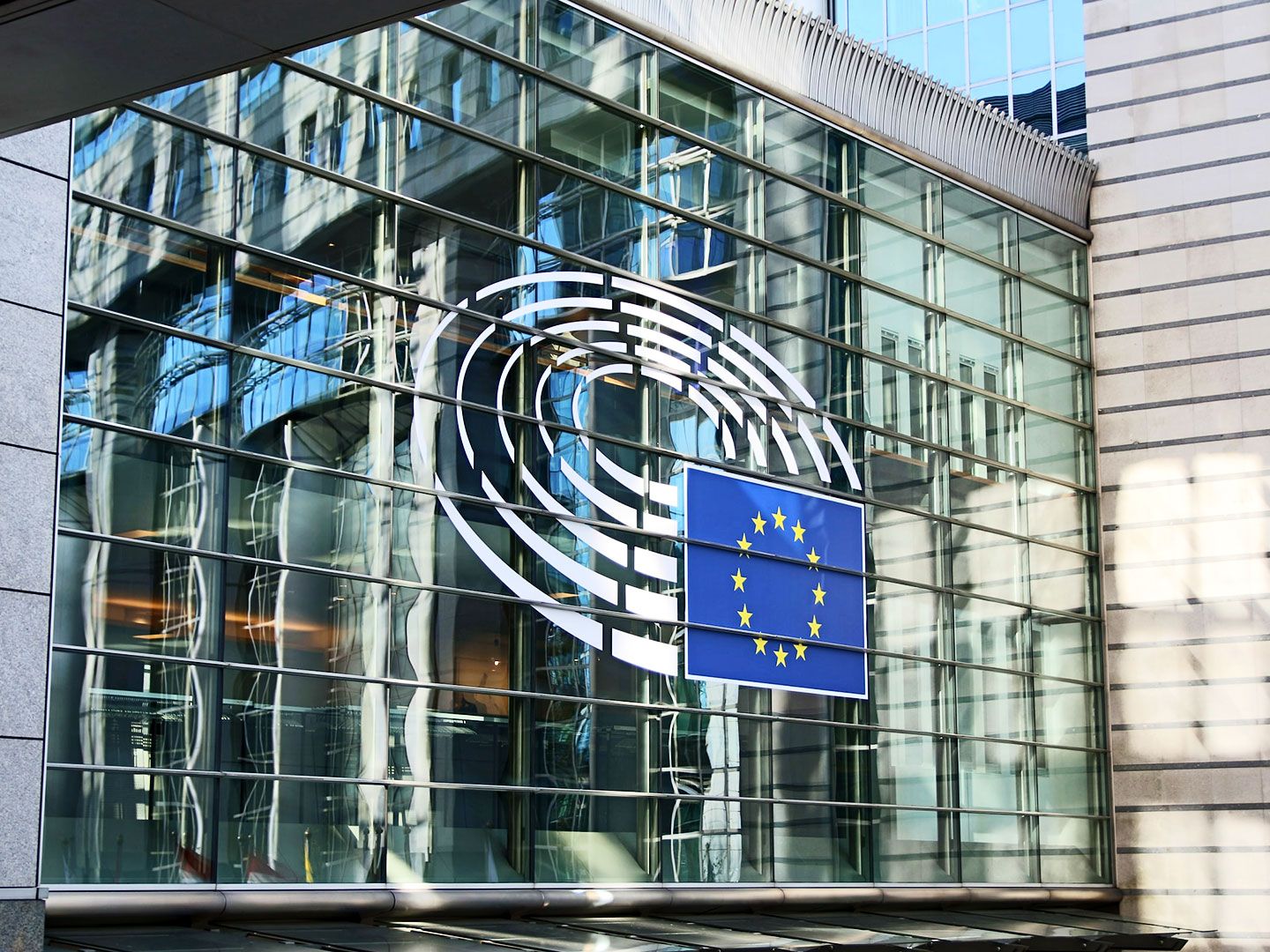
I have spent years watching the tug-of-war between builders who want to create permissionless tools and regulators who want to protect people from themselves. Usually, there is a middle ground. But the latest move from the European Union regarding prediction markets feels less like a compromise and more like a hard line in the sand. If you are building in the space, the honeymoon phase of pretending your platform is just a game or a social tool is officially over.
The Function Over Labeling Dilemma
The core of the EU’s new stance is incredibly simple and, frankly, quite predictable for anyone who has dealt with financial law. Regulators don't care what you call your product. You can call it a forecast tool, a social consensus engine, or a decentralized marketplace. What they care about is the actual function of the contract. If it looks like a derivative, walks like a derivative, and pays out like a derivative, the EU is going to treat it as one under the MiFID II framework.
For retail investors in Europe, this represents a significant wall. By classifying these markets as complex financial instruments, the EU is effectively pushing them into a corner where only professional investors or highly regulated platforms can play. For a sector that thrives on the wisdom of the crowd, removing the 'crowd' is a systemic threat to the utility of the product itself.
Why This Hits Builders Differently
When you are a founder, you are usually focused on the tech and the user experience. You want to see if you can solve the oracle problem or if you can scale your order book on a Layer 2. But the EU's move reminds us that all the clever engineering in the world cannot bypass a jurisdictional mandate. If your platform allows users to bet on the outcome of future events for a financial return, you are now operating a mini-exchange in the eyes of Brussels.
This isn't just about red tape. It’s about the cost of entry. Compliance with MiFID II is not something a small team of three developers in a garage can handle easily. It requires legal counsel, reporting requirements, and capital buffers. This creates a moat, but the wrong kind. It’s a moat that keeps out the innovators and protects the incumbents who already have the legal departments to handle the paperwork.
The Retail Exclusion Paradox
Regulators argue that they are protecting retail investors from high-risk, volatile products. While that sounds noble, there is a paradox at play here. Prediction markets are often used as a hedge or a source of better information than traditional polling. By locking retail users out, you aren't just stopping them from gambling; you are stopping them from participating in what many believe is the most accurate information discovery tool we have invented.
From a founder’s perspective, this is a massive blow to liquidity. Prediction markets need volume to be accurate. They need diverse opinions and thousands of small participants to offset the biases of a few large whales. If you restrict the market to only 'sophisticated' investors, you end up with a skewed data set. You lose the very thing that makes the technology valuable in the first place.
The Offshore Temptation
We have seen this movie before. When a major jurisdiction like the EU makes it difficult to operate, builders look elsewhere. We saw it with early crypto exchanges and we see it now with AI companies fleeing to friendlier regulatory environments. However, geofencing is notoriously difficult to maintain and even harder to enforce perfectly. Platforms that try to stay 'decentralized' to avoid these rules are going to find themselves in a cat-and-mouse game with regulators who are getting much better at tracking on-chain activity.
If you are building a platform today, you have to decide: do you lean into the regulated path, or do you try to stay purely in the shadows? The middle path, where you pretend the rules don't apply because you use a blockchain, is disappearing. The EU has made it clear that the underlying technology is irrelevant to the legal classification of the activity.
What This Means for the Future of Info-Markets
This crackdown also signals a shift in how authorities view decentralized finance (DeFi) as a whole. They are moving away from general warnings and toward specific category strikes. Prediction markets are an easy target because they involve clear 'winners' and 'losers' based on public events, making them look very much like the regulated betting and derivatives markets that have existed for decades.
For those of us watching the intersection of AI and prediction markets, this is particularly frustrating. AI agents are the perfect participants for these markets, processing vast amounts of data to provide liquidity and accuracy. But if those agents are operating on behalf of retail users, they fall under the same regulatory cloud. The friction being introduced here will slow down the integration of AI into our information ecosystems.
The Founder's Takeaway
If you are building in this space, stop ignoring the legal stack. The tech stack is only half the battle. You need to be thinking about how your platform can exist in a world where retail access is restricted in major markets. Does your business model survive if you have to block 450 million Europeans? If not, you need to pivot your user acquisition strategy or your regulatory stance now before the enforcement actions begin.
The EU isn't banning the technology, but they are throttling the access. In the world of crypto, access is everything. If the barrier to entry is a 50-page disclosure form and a net-worth check, the 'decentralized' dream of a global, open market starts to look a lot like the old-world financial system we were trying to improve.
The goal was to build a better way to find the truth; the risk is that we end up with just another regulated betting shop.
We are entering a phase where the 'move fast and break things' mantra is meeting the 'regulate fast and fix things' reality. For prediction markets to survive this, they have to prove they are more than just a place to bet on elections. They have to prove they are essential infrastructure for the modern world. Right now, the EU isn't convinced.
Read the original at CoinDesk →