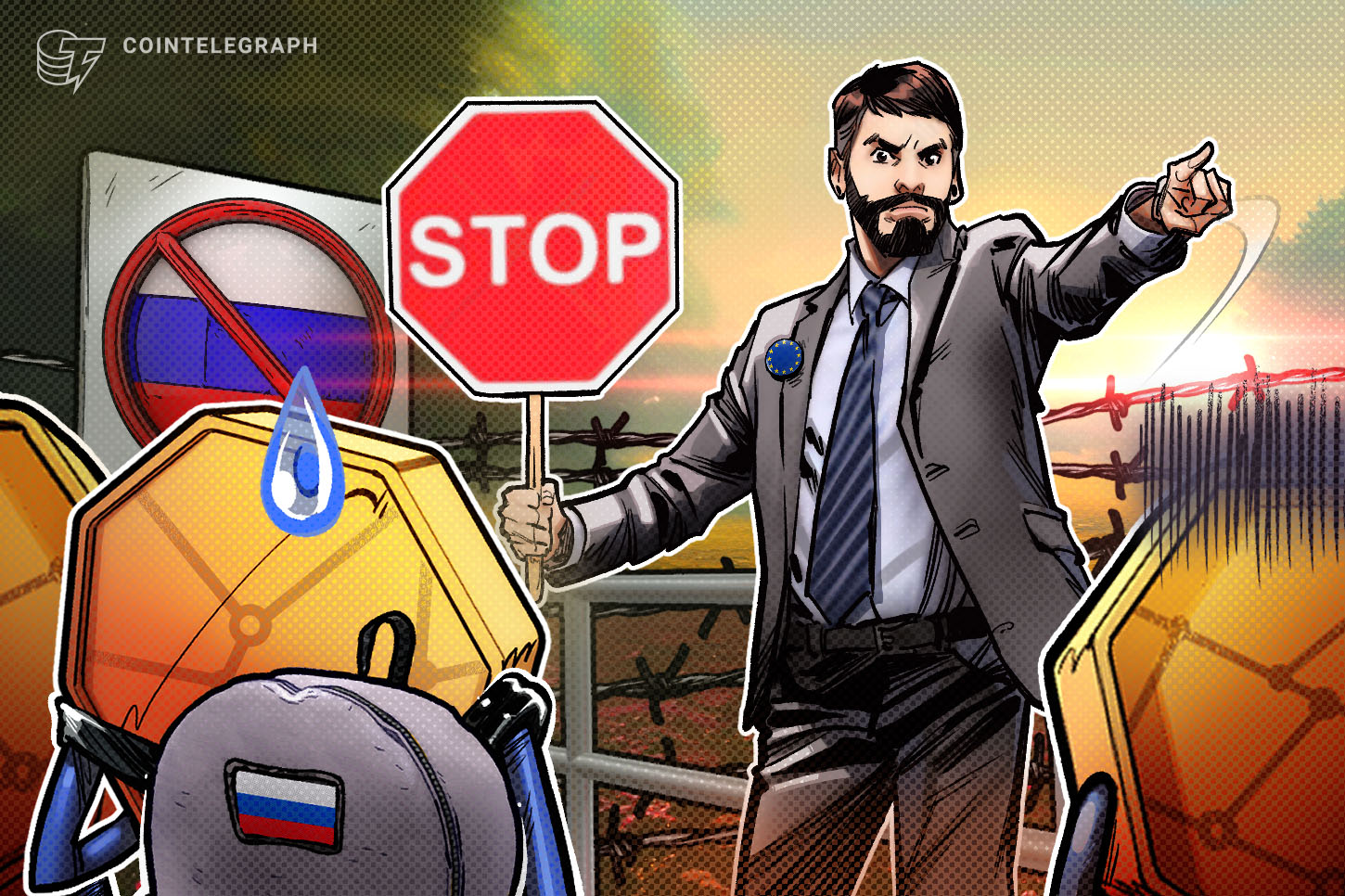
The compliance wall is closing in
In the early days of this industry, we talked about censorship resistance like it was a feature you could just toggle on. If you built a decentralized enough protocol or an offshore enough exchange, the thinking went, you could ignore the geopolitical weather. This week, Justin Sun’s HTX found out that the weather in Brussels is currently a blizzard.
European Union authorities have officially added HTX to their list of sanctioned entities. They aren't just making a suggestion; they are grouping the exchange with 17 other firms accused of facilitating financial services that bypass measures designed to isolate the Russian economy. This follows a similar move by the United Kingdom earlier this year. For anyone paying attention to the intersection of crypto and global politics, the message is clear: the "offshore" safety net is disintegrating.
Why this matters for founders
If you are building a product in the crypto space right now, you might feel like news about a major exchange getting slapped by the EU doesn't affect your daily stand-up. That is a dangerous mistake. When a platform the size of HTX gets blacklisted, it creates a ripple effect throughout the entire liquidity stack. Your users, your market makers, and your institutional partners all have to look at their risk exposure. If they are interacting with an entity on a sanctions list, they risk their own licenses.
As a founder, you have to realize that the era of "build first, ask for forgiveness later" is being replaced by "comply or be cut off." The EU’s inclusion of HTX isn't just about one exchange’s ties to Russia; it is a demonstration of the block's willingness to use crypto as a primary tool in economic warfare. This isn't just theory anymore. It is a line in the sand that affects how money moves globally.
The myth of the neutral platform
We often tell ourselves that code is neutral. We like to believe that an exchange is just a middleman connecting buyers and sellers, and that we shouldn't be responsible for who those buyers and sellers are. Regulators do not care about that philosophy. To the EU, if you are providing crypto-asset services or payment services that aid a sanctioned nation, you are an extension of that nation's financial system.
HTX now has to navigate a world where European banks and fintech partners will likely treat them as radioactive. This isn't just a PR problem; it's a structural one. When you lose the ability to easily move fiat in and out of a major economic zone like the European Union, your product becomes substantially less useful to the average user. For builders, the takeaway here is that your choice of jurisdiction and your KYC/AML stack are now part of your core product viability.
The ripple effect on retail and institutional trust
When an exchange gets tagged with sanctions, it creates a crisis of confidence. Retail users start worrying about their withdrawals. Institutional players start looking at the exit. While HTX hasn't disappeared, the friction of operating on a sanctioned platform is often enough to drive volume elsewhere. We’ve seen this play out with other exchanges in the past, and it rarely ends with a simple fine.
For those of us building in this space, we need to be honest about the trade-offs. If your goal is to build a platform that serves the global market, you cannot ignore the regulatory frameworks of the largest economies. You might disagree with the politics of the sanctions—many do—but from a business perspective, the reality is that the EU has a very big stick, and they are starting to swing it with more precision.
Builder perspective: A shift in priorities
If I were sitting in a founder's chair today, looking at this news, my first question would be about my own dependency on centralized players. The irony is that events like the HTX sanctions should be a massive tailwind for true DeFi. If decentralized protocols can actually deliver on the promise of permissionless finance without a central neck to wring, they become the only viable alternative. However, we are also seeing regulators start to look at the front-ends of these protocols, which means even the "decentralized" builders aren't safe from the long arm of the law.
- Diversify your liquidity: Don't rely on a single gateway or exchange for your project’s stability.
- Audit your partners: Know who your market makers and liquidity providers are working with.
- Keep it clean: If you are planning to scale in the West, your compliance shouldn't be an afterthought.
The road ahead
We are entering a phase of crypto history where the "Wild West" narrative is finally being silenced by the roar of the state. The EU's decision to include HTX on this list proves that they are monitoring on-chain and off-chain activity with a level of scrutiny we haven't seen before. They are identifying the conduits through which capital flows and they are systematically shutting down the ones that don't play by their rules.
This isn't about whether HTX is a "good" or "bad" company. It is about the reality of building in a world where digital assets are no longer a niche hobby for cypherpunks. They are now a core component of geopolitical strategy. As a builder, you have to decide if you want to be a casualty of that strategy or if you want to build something that can survive the transition to a regulated world. The middle ground is disappearing fast.
Summary takeaway
The EU’s move against HTX marks a significant escalation in how crypto entities are handled within the framework of global sanctions. For founders, this is a reminder that the cost of ignoring regulatory mandates is no longer just a fine—it is potential exclusion from the global financial system. Build with your eyes open, because the regulators certainly have theirs on you.
Read the original at Cointelegraph →