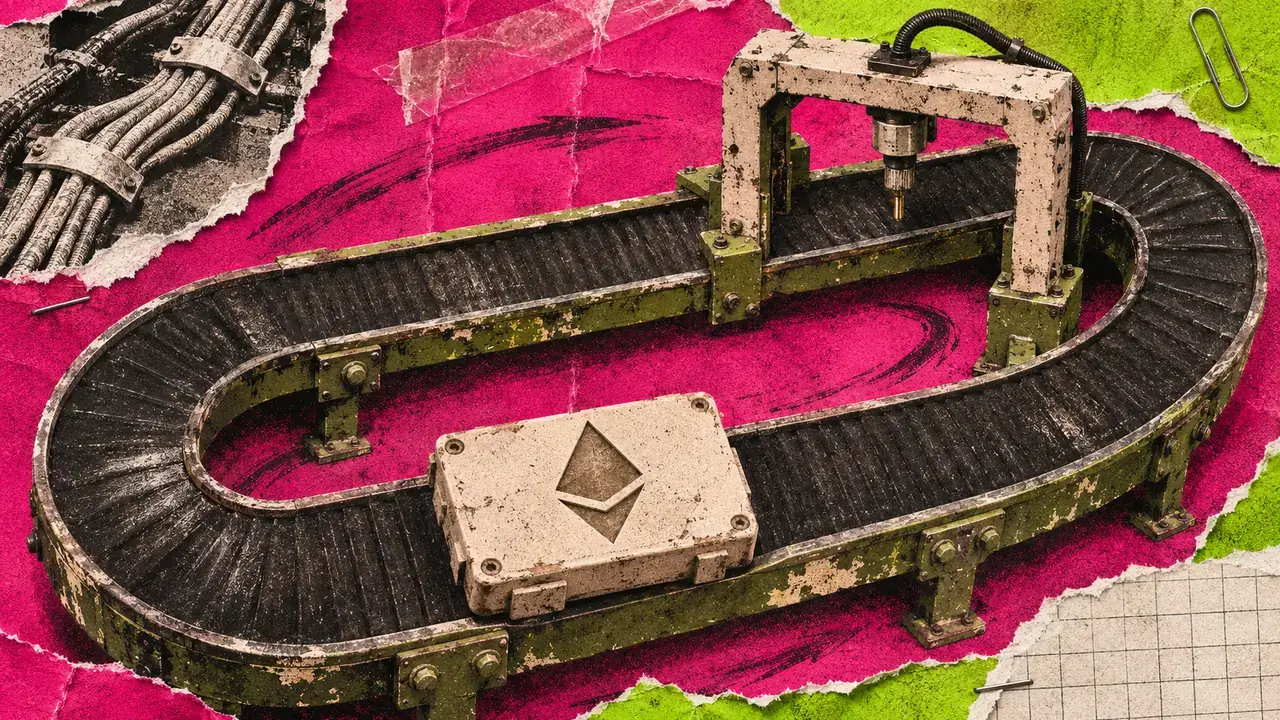
Ethereum has a communication problem that is starting to look like a structural weakness. The recent news that the Glamsterdam upgrade—initially slated for a 2026 release—has been pushed back to at least January 2027 isn't just a calendar shift. It is a signal to everyone building on this stack that the timeline for fundamental base-layer improvements is increasingly decoupled from reality.
The Logistics of a Delay
Toni Wahrstätter, a researcher at the Ethereum Foundation, recently confirmed what many in the developer circles had been whispering about: the testing schedule simply isn't holding up. When you are coordinating dozens of client teams and thousands of node operators, the margin for error is razor-thin. By missing the window for the first half of 2026, the network enters a territory where the technical debt of legacy systems starts to weigh heavier than the innovation being proposed.
The delay isn't caused by one single bug. It is the result of the sheer complexity involved in moving the goalposts while the game is still being played. Ethereum is trying to optimize its data availability and execution layers simultaneously, and the friction between those two goals is causing the gears to grind.
The Founder Perspective: Why This Matters
If you are a founder building a decentralized application, your roadmap is inherently tied to the infrastructure you choose. If you were banking on Glamsterdam to solve specific throughput or cost issues in early 2026, you are now looking at an extra year of "making it work" with current limitations. This is how you lose builders to faster, more agile ecosystems.
As someone who spends a lot of time looking at how technology actually hits the ground, I find the "move fast and break things" ethos of early crypto is being replaced by a "promise fast and ship slow" culture. For a network that prides itself on being the world's computer, these delays suggest the hardware upgrades are getting stuck in customs.
The Complexity Trap
The core issue is that Ethereum is no longer a lean project. It is a massive, multi-headed beast. Every time a new EIP (Ethereum Improvement Proposal) is added to a major upgrade like Glamsterdam, the testing surface area grows exponentially. We are seeing a pattern where the ambition of the researchers is outstripping the capacity of the engineers to verify the safety of the code.
- Client Diversity: Having multiple independent software implementations is great for security, but it is a nightmare for synchronization. If one client team falls behind, the whole upgrade stalls.
- State Growth: The chain is getting heavy. Managing how nodes handle the ever-increasing history of the network is becoming a primary bottleneck for any new feature.
- Governance Friction: Decision-making in a decentralized environment is slow by design, but we are reaching a point where the lag is affecting competitive viability.
The Opportunity for Builders
Despite the skepticism, there is a silver lining here for the pragmatists. If the base layer is going to be slow to change, the real value continues to migrate to Layer 2s and the application layer. Founders should stop waiting for Ethereum to "fix itself" at the protocol level and instead build as if the current constraints are permanent.
If you can build a profitable, scalable business on Ethereum as it exists today, then any future upgrades like Glamsterdam become a bonus rather than a requirement for survival. The most successful founders I know are the ones who don't include "waiting for a hard fork" in their quarterly milestones.
The most dangerous thing a builder can do is treat a roadmap as a guarantee. In crypto, a roadmap is a wishlist.
The Competitive Landscape
While Ethereum recalibrates its 2027 plans, competitors aren't sitting still. Networks that prioritize speed of execution over the rigorous, multi-client consensus model of Ethereum are gaining ground. For the average user, the philosophical purity of Ethereum's development process matters less than the cost of a transaction and the speed of a confirmation.
We have to ask: at what point does the pursuit of the "perfect" upgrade become the enemy of the "available" upgrade? Glamsterdam promises a lot, but if it arrives in an environment where the market has already moved on to other scaling solutions, its impact will be muted.
What to Watch Next
Keep a close eye on the testnets. The transition from "research phase" to "testnet deployment" is where the real truth comes out. If we don't see stable testnet environments for Glamsterdam by mid-2026, even the January 2027 date will start to look optimistic. In this industry, a six-month delay often turns into a twelve-month delay once the edge cases start appearing in the wild.
The Takeaway
Ethereum is maturing, and maturity is often slow and frustrating. The Glamsterdam delay is a reality check for the ecosystem. It is a reminder that decentralized infrastructure is hard, and shipping global-scale upgrades is harder. For builders, the message is clear: build for the network you have, not the one you were promised in a slide deck. The future of Ethereum is still bright, but it is arriving later than expected, and you need to have enough runway to wait for it.
Read the original at CryptoSlate →