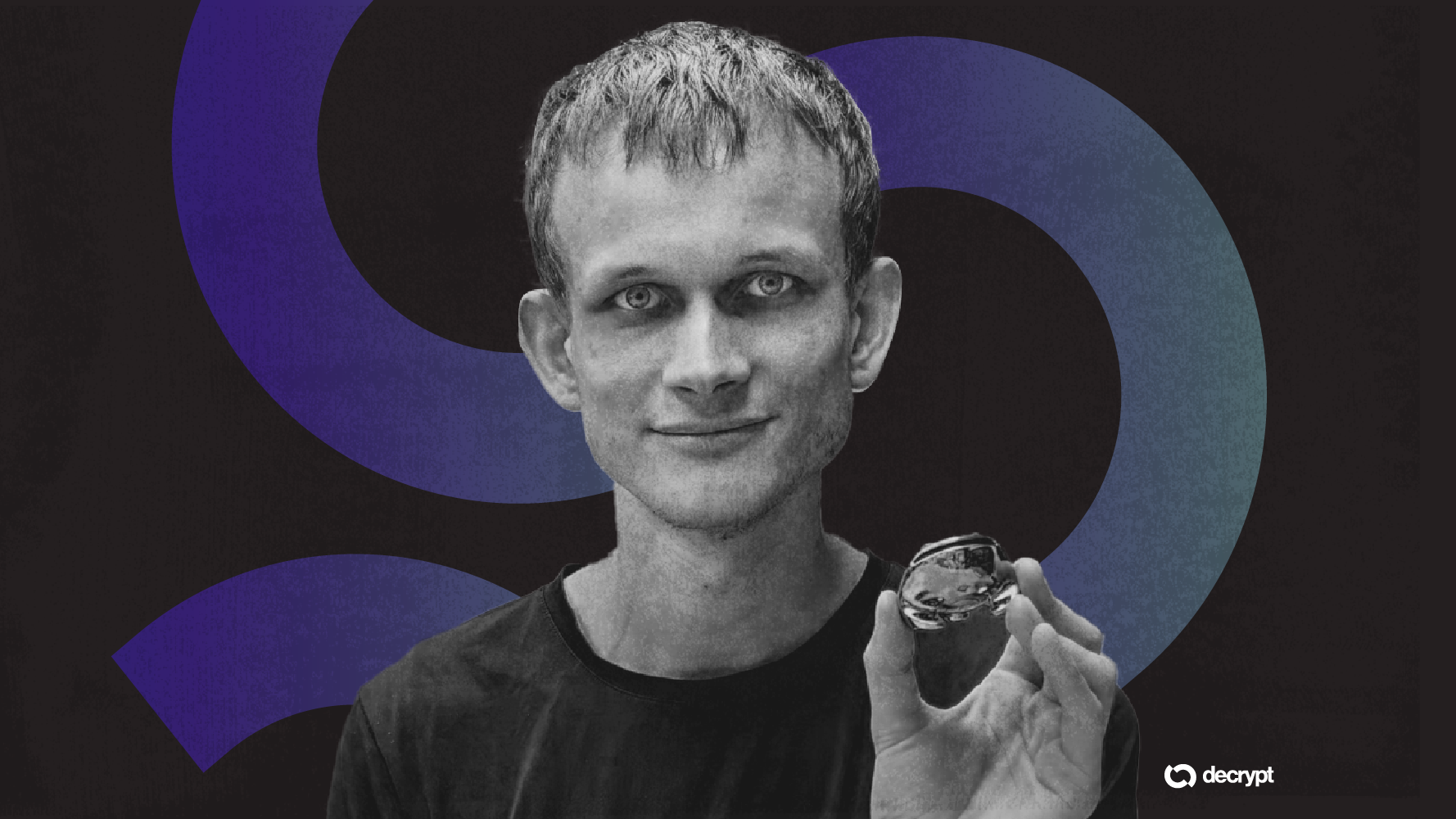
If you thought the transition to Proof of Stake was the end of Ethereum’s heavy lifting, you haven't been paying attention to Vitalik Buterin lately. The latest roadmap coming out of the core team isn't just a simple patch or a set of feature updates. It is a full-scale architectural demolition and rebuild. We are looking at a three-to-four-year horizon where almost every fundamental piece of the Ethereum protocol will be swapped out for something new.
The Radical Transparency Debt
For years, Ethereum has operated on a logic of radical transparency. Every transaction, every gas fee, and every smart contract interaction is etched into a public ledger for the world to see. It worked for the initial growth phase, but it has created a massive privacy debt. Buterin is now signaling that this is no longer sustainable. The next phase of Ethereum is moving toward a default state of privacy, leveraging zero-knowledge proofs not just as a scaling tool, but as a core layer of the user experience.
For builders, this is a massive shift in how we think about data. In the current paradigm, we build with the assumption that data is public unless we take extreme measures to hide it. The new architecture aims to flip that script. If the protocol itself handles the heavy lifting of privacy, the friction of building secure, private applications drops significantly. This isn't just about hiding transaction amounts; it’s about protecting the identity and intent of users in a way that the web2 world never managed to achieve.
Preparing for the Quantum Threat
One of the most technically demanding parts of this overhaul is quantum resistance. There is a lot of debate on how close we are to a quantum computer capable of breaking current encryption methods, but Buterin isn't waiting to find out. The new roadmap focuses on rebuilding Ethereum’s cryptographic foundations to ensure that even a massive jump in computing power won't compromise the network’s security.
This might sound like academic overkill to some, but from a founder’s perspective, it’s about long-term risk management. If you are building a platform that is meant to last for decades, you can’t ignore a looming existential threat just because it’s a few years away. The cost of switching protocols later is infinitely higher than baking in post-quantum safety now.
The Shift to a Modular Reality
The overhaul also reinforces the move toward a modular stack. The days of the monolithic Ethereum where everything happened on L1 are over. The new protocol design treats Ethereum more like a clearing house and a root of trust, while the execution happens elsewhere. This is the biggest change since the Merge because it changes the very definition of what Ethereum is.
We are moving toward a world of rollups and specialized layers. The core protocol is being optimized to support these layers more efficiently. This means lower costs for data availability and a smoother handoff between different parts of the ecosystem. For developers, this means you can no longer ignore the L2 landscape. You have to decide where your application lives based on the specific trade-offs of the stack you choose.
The Founder’s Reality Check
While the vision is ambitious, let’s be honest about the cost. A three-to-four-year timeline in crypto is an eternity. We are essentially asking the market to stay patient while the engine is rebuilt while the plane is flying. This creates a period of uncertainty. When the rules of the base layer are in flux, it can be difficult to commit to a specific technical path.
However, the skepticism shouldn't be about whether they can do it, but how long it will take for the ecosystem to adapt. We’ve seen this with the Merge. The technical feat was incredible, but the market took time to understand the new dynamics of yield and issuance. This next phase will be even more disruptive to the status quo.
What This Means for Builders
- Privacy as a Productivity Tool: Start looking at ZK-proofs as a standard part of your toolkit. You won't be able to ignore privacy-preserving architecture in the new Ethereum.
- Quantum Preparedness: If you are building low-level infrastructure, keep an eye on the specific cryptographic primitives being proposed. Don't lock yourself into legacy tech.
- Layer 2 is the Standard: The new Ethereum is designed specifically to make L1 a settlement layer. If you aren't building with L2s in mind, you are building for a version of Ethereum that will soon be obsolete.
Complexity is the tax we pay for decentralization, but this overhaul is an attempt to finally automate the payment of that tax.
The Bottom Line
Ethereum is trying to reinvent itself to stay relevant for the next century of computing. It’s moving away from the "move fast and break things" ethos of early DeFi and toward a more durable, hardened infrastructure. For founders, this means a more stable, secure, and private environment to build in, but it also requires a period of massive technical adaptation. The roadmap is clear, but the execution will define whether Ethereum remains the dominant platform or becomes a victim of its own complexity.
Read the original at Decrypt →