The Math Behind the Stake
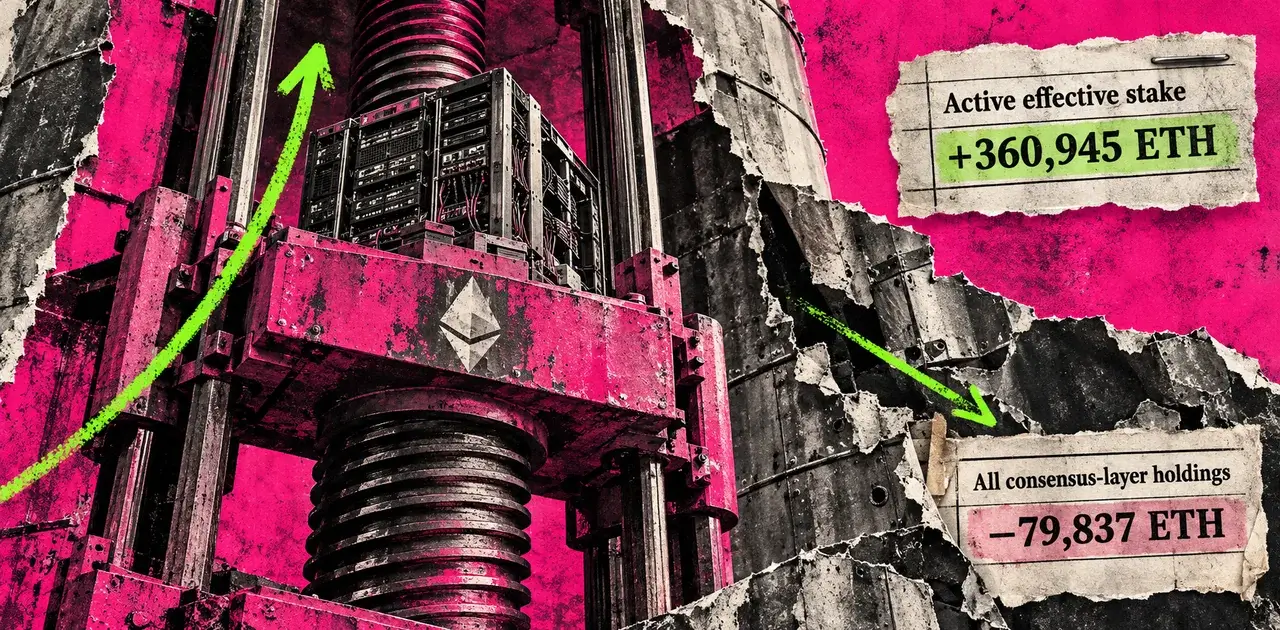
Ethereum is currently giving us a bit of a riddle. According to recent data from October, the network saw a significant increase in active stake—roughly 361,000 ETH joined the fray—yet the total consensus balance actually decreased. If you are a founder looking at these metrics, it might look like a typo. How does the active participation grow while the total pool gets smaller?
This isn't a glitch. It is the result of how Ethereum handles the queue of validators versus the actual amount of ETH sitting in the consensus layer. When we talk about active stake, we are talking about the validators who are actually online, performing work, and earning rewards. The total balance, however, includes everything: the active stake, the rewards that haven't been claimed, and the ETH sitting in the withdrawal queue waiting to exit.
What we saw in October was a massive wave of exits that outpaced new deposits. Even though new validators were being activated and moving from the queue into the "active" category, the total volume of ETH leaving the system was simply higher. This suggests a shifting tide in how people view their capital efficiency on the mainnet.
The Liquidity Trap and the Builder's Dilemma
For builders, this trend is a signal. We have spent the last two years obsessed with the Merge and the Shanghai upgrade, focusing on the technical ability to stake and unstake. But now we are seeing the market's reaction to that liquidity. People are moving ETH around, likely chasing yields or reallocating to Layer 2 ecosystems that offer more immediate utility than a 3-4% base staking reward.
The increase in active validators shows that the infrastructure is maturing. More entities are getting their nodes online and staying there. However, the shrinking total balance tells us that the "passive" holders—those who were perhaps staking just because it was the only game in town—are starting to look elsewhere. As a founder, you have to ask: is your project relying on a version of Ethereum that is just a savings account, or are you building for a world where ETH is a fast-moving asset?
The paradox of rising activity amid falling balances highlights a shift from passive holding to active capital management.
Why Withdrawals Outpaced Deposits
There are a few reasons why the consensus balance took a hit despite the onboarding of new validators. First, we have to look at the reward cycle. As validators accumulate rewards, those gains eventually get swept or withdrawn. If a large enough cohort of early stakers decides to take profits or move their rewards into DeFi, the total balance will naturally dip.
Second, we are seeing the rise of restaking. While restaking often involves keeping ETH in the system, the ways in which that ETH is accounted for can vary. If users are moving away from traditional solo-staking or certain pools in favor of more complex financial instruments, the flow of funds becomes less linear. We are no longer in a world where you just lock ETH and forget about it.
For those of us building in the AI and Web3 space, this churn is healthy. A stagnant pool of staked ETH is safe, but a dynamic one suggests that the asset is actually being used. We want a network that is secure, but we also want one where the underlying capital isn't trapped in a vault. The fact that the active stake is still growing shows that the security budget of the network remains robust, even if the total "AUM" of the staking layer is fluctuating.
The Long-Term Security Narrative
Some skeptics might look at a shrinking staking balance and scream that the sky is falling. I don't see it that way. Ethereum’s security isn't just about the raw number of ETH staked; it is about the distribution and the uptime of the validators. The fact that 361,000 ETH transitioned into an active state means the network is technically more resilient than it was a month ago, even if there is less total ETH sitting in the contract.
This is a founder’s perspective on decentralization. It is better to have 100 people working than 200 people standing in line. The activation of new stake represents the actual labor force of the blockchain. As long as the active stake continues to climb, the network’s ability to resist censorship and finalize blocks remains strong.
What This Means for You
- Infrastructure Stability: The technical side of Ethereum staking is working. The queue is moving, and activations are happening smoothly.
- Capital Reallocation: The net negative balance suggests that the market is looking for higher utility or different risk profiles for their ETH.
- Validator Professionalization: The rise in active stake despite outflows suggests that the people staying in the game are the ones committed to the long-term operation of the network.
The Real Takeaway
Don't get distracted by the headline numbers of total ETH staked. That number will go up and down based on market cycles and withdrawal patterns. The metric that actually matters for the health of the ecosystem is the active stake. The fact that this number grew in October tells me that the commitment to running the network is still there, even if the speculative fervor of just "holding" in the staking contract is cooling off.
If you are building on Ethereum, you should be encouraged. The network is becoming more efficient. We are seeing a purge of idle capital and a steady increase in active participation. That is exactly the kind of environment where sustainable applications can actually grow.
Read the original at CryptoSlate →