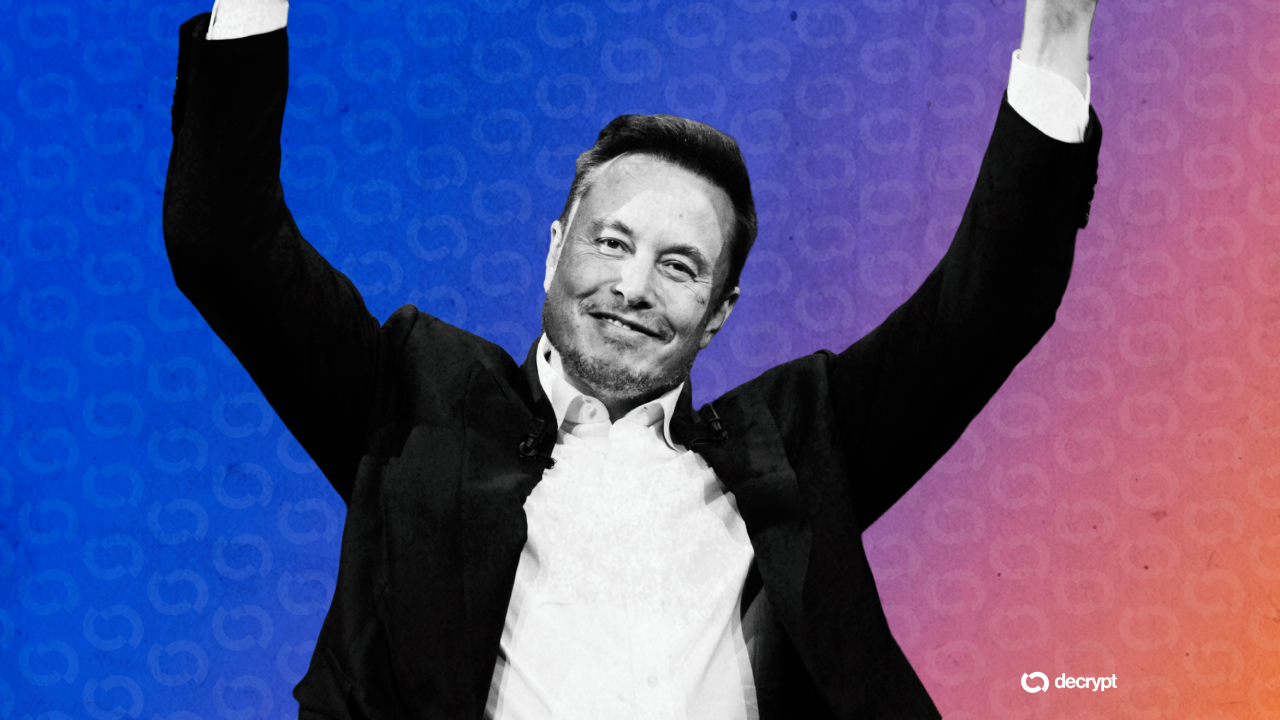
Elon Musk is back at the whiteboard with a number that most people can't even visualize. During a recent public appearance, the SpaceX founder floated a valuation of $118 quintillion for his aerospace company. For context, that is roughly one million times the current global GDP. It is a number so large it feels less like a financial projection and more like a thought experiment in science fiction.
Musk’s logic hinges on the concept of a multiplanetary civilization. He isn't just talking about launching satellites or carrying astronauts to the ISS anymore. He is pricing in the entire economic output of a colonized solar system. While the headlines are focusing on the absurdity of the figure, builders in the crypto and AI space should be looking at the underlying shift in how we define value and infrastructure.
The Math of the Impossible
To reach a quintillion-dollar valuation, you have to assume that Earth is no longer the sole primary market for human commerce. Musk is essentially betting that the extraction of resources from the asteroid belt, the industrialization of Mars, and the logistics of interplanetary travel will dwarf every terrestrial industry combined. It is a bold take, but it serves a specific purpose: it reframes SpaceX not as a transportation company, but as the foundational layer for a new species-wide operating system.
For those of us building in Web3, this sounds familiar. We often talk about 'lindy effects' and network states. Musk is applying that same logic to physical territory. If SpaceX owns the rails to the stars, they theoretically own a piece of every transaction that happens off-planet. But as someone who looks at these things from a founder’s perspective, the skepticism starts with the timeline. We are still struggling to build sustainable habitats in low Earth orbit, let alone a thriving economy on a frozen red rock millions of miles away.
The Distribution Gimmick
Alongside this massive number, Musk mentioned a plan to provide free shares of SpaceX to American children. This is a classic populist move, but it raises questions about the structure of equity and the democratization of high-frontier assets. In the crypto world, we call this an airdrop. The goal is to create a broad base of stakeholders who are financially incentivized to support the mission, regardless of how long the payoff takes.
From a builder's view, this is a masterclass in narrative-led growth. By promising a piece of the future to the next generation, Musk is insulating SpaceX from short-term market pressures. If the public feels they have a stake in the outcome, they are more likely to forgive the explosive failures and the regulatory hurdles that come with deep-tech innovation. It is a strategy designed to manufacture long-term social capital.
Infrastructure First, Hype Second
The real takeaway for those of us in the trenches isn't the $118 quintillion figure. That number is largely meaningless in our current economic reality. The real story is the focus on infrastructure. SpaceX succeeded because they focused on reusability—a fundamental shift in the cost of doing business. They didn't just build a better rocket; they changed the physics of the industry’s balance sheet.
Builders in AI and crypto should take note. We often get caught up in the 'quintillion-dollar' dreams of AGI or global decentralized finance. But the winners aren't usually the ones shouting the biggest numbers. They are the ones solving the boring, difficult problems that make those numbers possible. For SpaceX, it was vertical integration and rapid iteration. For an AI founder, it might be data sovereignty or compute efficiency. For a crypto founder, it is likely scalability and actual utility beyond speculation.
The Risk of the Narrative Bubble
There is a danger in this kind of rhetoric. When a founder starts talking about quintillions, it can signal a shift from execution to evangelism. We saw this during the peak of the 2021 bull run, where every protocol was the 'future of finance' before they had even solved basic user experience issues. Musk has a track record of delivering, but he also has a track record of missed deadlines and hyperbolic claims that take decades to materialize.
If you are building a company today, you cannot bank on a quintillion-dollar future. You have to bank on the next six months of product-market fit.
The skepticism here isn't about whether we will eventually go to Mars. It is about the gap between the vision and the technical debt required to get there. SpaceX is currently private, which allows Musk to make these claims without the immediate scrutiny of quarterly earnings calls. But even for a private giant, the gravity of reality eventually sets in. A company is only worth what someone is willing to pay for it, and right now, there isn't enough money in existence to satisfy a quintillion-dollar valuation.
What This Means for the Future
We are entering an era of 'Mega-Narratives.' Between Musk’s space ambitions, the race for AGI, and the push for decentralized autonomous states, the scale of human ambition is expanding faster than our current financial systems can track. This creates a vacuum where hype often outpaces reality.
For builders, the move is to stay grounded. Use the 'Musk Scale' as a reminder of how big you can dream, but keep your daily operations focused on the tangible. If you can build the tools that make a multiplanetary economy possible—like trustless cross-border (or cross-planet) payments or autonomous resource management—then you don't need to worry about the quintillions. The value will follow the utility.
Ultimately, SpaceX is a reminder that the biggest companies of the next century won't look like the software giants of the last one. They will be physical, industrial, and deeply integrated into the survival of the species. Whether they are worth a quintillion dollars or just a few hundred billion, the impact remains the same: they are moving the needle on what is possible.
- Focus on foundational infrastructure rather than vanity valuations.
- Narrative is a powerful tool for stakeholder alignment, but it requires execution to sustain.
- The transition to a multiplanetary economy is a multi-generational project, not a short-term trade.
Musk is selling a dream of infinite growth. It is a compelling story, and for the sake of human progress, I hope he is at least partially right. But as a founder, I’m more interested in the rockets that are launching next week than the valuation of a colony in 2100. Keep your eyes on the stars, but keep your feet—and your finances—firmly on the ground.
Read the original at Decrypt →