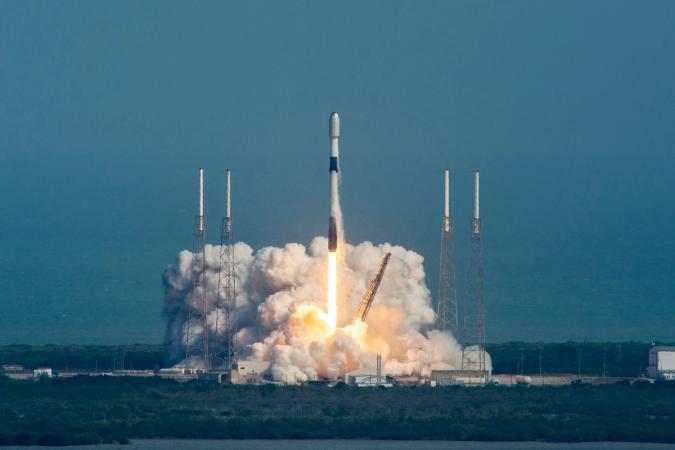
We have reached the point in the cycle where the ground beneath our feet is literally becoming too expensive and too regulated for the next phase of computing. Following a significant political shift that looks likely to bring tighter oversight on energy consumption, the biggest players in the game are already looking at the exit ramp. And by exit ramp, I mean low Earth orbit.
The Terrestrial Ceiling
For the past two years, the AI trade has been simple: buy chips, build warehouses, and hope the local utility company doesn't lose its mind. But the recent election results have introduced a new variable. A potential sweep by policymakers who prioritize climate goals and grid stability over raw compute expansion means that the golden age of the Texas data center might be hitting a wall.
Texas was supposed to be the final frontier for cheap power and hands-off regulation. However, as the political winds shift, builders are facing a reality where high-performance computing (HPC) is viewed less as progress and more as a strain on public resources. When the government starts looking at your server farm as a liability rather than an asset, your margins disappear.
Musk's Orbital Pivot
Elon Musk isn't waiting for the legislation to be signed. By floating the idea of space-based data centers, he is doing what he always does: identifying a bottleneck and proposing a radical, capital-intensive way to bypass it. This isn't just a sci-fi dream; it is a pragmatic response to land-use restrictions and the rising cost of cooling systems on Earth.
In space, you have two things in abundance: solar energy and cold. You don't have to fight a local city council for water rights to cool your racks, and you don't have to worry about the local grid collapsing during a heatwave. You do, however, have to figure out how to get the data back down to Earth without massive latency, but with Starlink already in place, the infrastructure for that conversation is already halfway built.
Why Founders Should Pay Attention
If you are building an AI startup today, you might think this is billionaire theater that doesn't affect your seed round. You would be wrong. This move signals a massive shift in how we value "compute." If the industry's leaders are pricing in the cost of launching hardware into orbit, it means they expect terrestrial compute to become significantly more expensive or restricted.
- Regulatory Arbitrage: Moving data centers to space is the ultimate form of regulatory arbitrage. If your servers aren't in a specific jurisdiction, whose laws do they follow?
- Energy Sovereignty: Getting off the grid isn't just about being green; it's about not being beholden to utility companies that are struggling to modernize.
- The Hardware Renaissance: We are moving away from the era of "software eating the world" and into an era where hardware constraints dictate software possibilities.
The Palihapitiya Perspective
It’s not just Musk. Chamath Palihapitiya and other heavyweights in the venture space are beginning to beat the drum for the space economy. They see the writing on the wall. The AI trade is currently over-concentrated in a few zip codes. Diversification into space isn't just a hedge; it’s a necessity for scaling to the levels required by Large Language Models (LLMs) that are thirsty for more parameters and more power.
We are seeing a convergence of AI, energy, and aerospace. As a founder, if you aren't looking at how these three verticals intersect, you are building on a foundation that could be regulated out of existence within the next four years. The political sweep isn't just a change in leadership; it’s a change in the cost of doing business.
The biggest risk to AI right now isn't a lack of talent or capital; it's the physical reality of energy and the political reality of who gets to use it.
Building for a Post-Grid World
What does this mean for the average builder? It means optimization is back in style. If compute becomes a premium resource because of energy caps or regulatory hurdles, the winners won't just be the ones with the biggest clusters. They will be the ones who can do more with less.
We have spent a decade treating compute like an infinite resource. That era is ending. Whether the solution is space-based clusters or highly efficient edge computing, the goal is the same: decoupling your product's success from the whims of a centralized power grid and the politicians who control it.
The Skeptic's Corner
Is space compute ready for primetime? Probably not. The radiation issues alone are enough to fry most commercial-grade chips, and the cost per rack-unit is astronomical. But we shouldn't dismiss the signal. The fact that this is even being discussed as a viable alternative to terrestrial centers shows how much pressure the industry feels from the recent political shifts.
The "AI trade" is evolving. It is moving from a pure software play to a geopolitical and infrastructure play. If you are still thinking about AI as just code, you are missing the most important part of the story. The real battle is happening at the power plant and, increasingly, in the upper atmosphere.
The Takeaway
The recent election results have signaled that the path of least resistance for data centers is closing. Musk’s pivot to space is a loud warning to every founder and investor: the next phase of AI growth will not look like the last one. You need to be thinking about energy independence and infrastructure resilience now, before the terrestrial grid becomes a cage for your ambitions. Don't just build for the cloud; start thinking about the vacuum.
Read the original at CoinDesk →