The Latent Seed Problem
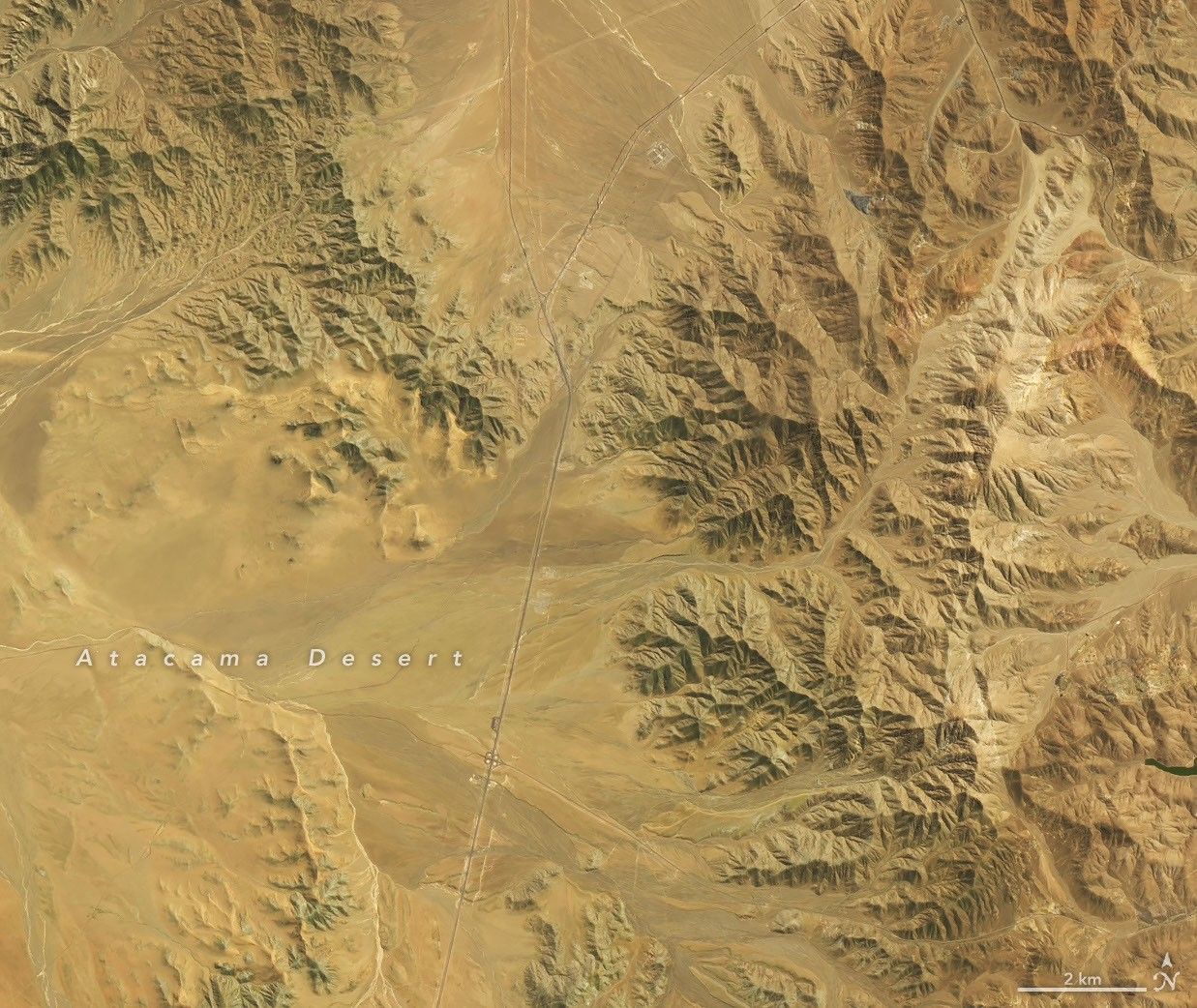
In the crypto and AI space, we talk a lot about 'building in the desert.' Usually, we mean surviving the bear market or trying to find a product-market fit in a space where no one is buying. But recently, NASA released imagery of the Atacama Desert in northern Chile that changes the metaphor. This is one of the driest places on Earth, yet after an unusual winter rain cycle driven by El Niño, the landscape exploded into a massive carpet of flowers.
For builders, this isn't just a nature story. It is a masterclass in dormant potential. The seeds were always there, buried in the dust, waiting for the right environmental trigger. In tech, we often mistake a quiet market for a dead one. We assume that if there is no immediate growth, the soil is barren. NASA’s satellite data proves that the infrastructure for life can sit idle for years, even decades, and still be perfectly functional when the liquidity—or in this case, the rain—finally hits.
Timing Is Not a Feature
The Atacama bloom of 2024 is being cited as one of the most extensive in the satellite era. It wasn't caused by a new 'feature' in the seeds or a change in the soil chemistry. It was a macro event. El Niño shifted the moisture patterns, and the ecosystem responded. As a founder, you can build the most robust protocol or the most efficient LLM wrapper, but if the macro environment is dry, you aren't going to see the 'bloom' of mass adoption.
The skepticism comes in when we look at how people interpret these events. In the tech world, we see a sudden surge in interest—like the recent AI boom—and we act like the technology was just invented. In reality, the seeds of neural networks and generative models have been sitting in the research desert since the 80s and 90s. The 'rain' was simply the convergence of massive compute power and accessible data. If you were building AI in 2010, you were in the Atacama. If you survived until 2023, you saw the flowering.
The Risk of False Positives
There is a danger in these sudden blooms. When the desert turns purple and green, it looks like a permanent shift. It looks like a new ecosystem has taken hold. But NASA’s observations remind us that this is a transient state. The water will evaporate, the flowers will die back, and the seeds will go back underground. This is the 'hype cycle' in its most literal, biological form.
In crypto, we see this during every bull run. A project gets a sudden influx of users because the 'weather' is good. Founders start scaling their burn rates and hiring like the rain will never stop. Then the cycle shifts, the moisture leaves the market, and they realize they didn't build a sustainable forest; they just participated in a temporary bloom. The goal for a builder isn't to just bloom when it rains; it's to ensure your seeds are the ones that survive the next twenty years of drought.
Infrastructure vs. Aesthetics
What makes the Atacama bloom possible isn't the flower itself—it is the seed's ability to remain viable while doing absolutely nothing. This is an underrated engineering principle. We are obsessed with 'active' metrics: DAU, MAU, TVL. We rarely value the 'dormant' strength of a system. Is your codebase easy to pick back up after a two-year hiatus? Is your community robust enough to survive a discord that goes quiet for six months?
NASA’s Earth Observatory used the OLI (Operational Land Imager) on the Landsat 8 satellite to capture this. Even from space, the difference is jarring. Deep greens and vibrant purples where there was once only brown. It’s a visual representation of latent energy becoming kinetic. When builders look at these images, they should see their own cap tables and GitHub repos. Are you building something that requires constant watering to stay alive, or are you building something that can survive the heat and wait for its moment?
The Founder's Takeaway
The lesson from the Atacama is that the environment dictates the outcome more than the effort of the organism. You can be the hardest-working seed in the desert, but if it doesn't rain, you stay in the dirt. Conversely, when the rain does come, the seeds that have positioned themselves in the right drainage basins are the ones that dominate the landscape.
Small shifts in the macro environment create massive opportunities for those who have already done the work of being present.
Stop trying to 'force' the bloom. Focus on being a viable seed. Build the infrastructure, keep the overhead low, and ensure that when the metaphorical El Niño hits your sector, you have the root structure ready to take advantage of it. The satellite era of tech moves fast, and if you aren't already in the soil, you’ll miss the window before the desert returns to brown.
The Long View
We need to get comfortable with silence. The most successful founders are the ones who don't panic when the flowers disappear. They know the seeds are still there. They use the dry season to harden their systems and prepare for the next cycle. NASA’s sensors will continue to watch the Atacama, and the rain will eventually return. The only question is which species will have the resilience to wake up when it does.
Read the original at NASA Breaking News →