The Sovereignty Scare
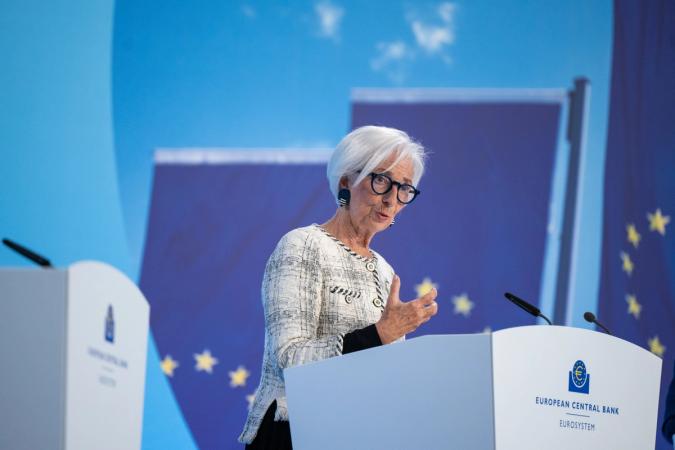
Christine Lagarde is looking at the scoreboard and she doesn't like the spread. As the President of the European Central Bank, her job is to keep the Euro relevant and the financial pipes of the continent leak-proof. But there is a new plumbing system being built—one based on tokenization—and the ECB is worried they won't own the wrenches.
The catalyst for this latest round of concern was a successful test run: a 1 billion-euro digital bond transaction. It is a massive number that proves blockchain settlement isn't just for small-time experimenters or retail speculators anymore. It is institutional, it is heavy, and it is happening on rails that the central bank didn't design from the ground up. Lagarde’s warning is simple: if Europe doesn't establish common rules for this market now, they risk losing control of it entirely.
The Multi-Billion Dollar Pipe Dream
For those of us building in this space, tokenization is the ultimate endgame. It is the process of taking a real-world asset—a bond, a piece of real estate, a stock share—and putting it on a ledger. This isn't just about "crypto." It is about efficiency. It is about removing the five middle-men who take a cut and a week of time just to verify that a piece of paper moved from Person A to Person B.
When the ECB sees a billion-euro bond settle on a blockchain, they aren't just seeing a technological win. They are seeing a jurisdictional threat. In the legacy world, the ECB has total oversight. In a tokenized world, assets can move across borders with a keystroke. If the settlement layers are decentralized or, worse for them, controlled by foreign entities, the ECB loses its ability to pull the levers of monetary policy effectively.
Fragmentation is the Enemy
Lagarde’s biggest fear is fragmentation. Right now, Europe is a patchwork of different sandbox projects and local regulations. While the Markets in Crypto-Assets (MiCA) regulation provided some clarity for stablecoins and exchanges, the actual tokenization of traditional financial instruments is still a bit of a Wild West.
If France develops one standard, Germany another, and Italy a third, the liquidity remains trapped in silos. For builders, this is a nightmare. You can’t build a pan-European platform if you have to integrate with twenty different technical standards. Lagarde is calling for a unified approach because she knows that without it, European capital will simply flow to whoever provides the smoothest, most compliant experience—likely US-based platforms or decentralized protocols that don't care about EU borders.
The Founder’s Perspective: Control vs. Innovation
From where I sit, there is a clear tension here. The ECB wants "control," which usually translates to "slower innovation and more reporting requirements." Founders want "interoperability," which means the ability to build tools that work everywhere without asking for permission at every milestone.
The fact that the ECB is even talking about this is a massive signal. Five years ago, tokenization was a fringe topic discussed at niche conferences. Today, it’s a billion-euro reality discussed by the most powerful central bankers in the world. They are no longer ignoring us; they are trying to figure out how to box us in.
For builders, this means the era of "move fast and break things" in financial infrastructure is hitting a wall of reality. If you are building a protocol for tokenized assets, you have to realize that the regulators aren't just looking at consumer protection anymore. They are looking at systemic risk and national sovereignty. If your tool makes it too easy for capital to flee a specific currency or jurisdiction, you will find yourself in the crosshairs.
Why the Billion-Euro Bond Matters
Let's look at the mechanics of that 1 billion-euro transaction. This wasn't a group of degens flipping a memecoin. This was a structured financial instrument. The fact that it worked proves that the technology is ready for prime time. The latency issues are being solved, the security audits are holding up, and the institutional appetite is there.
But the real story isn't the technology—it's the settlement. In traditional finance, settlement is the "back office" work that confirms the trade. It is often slow and expensive. Digital settlement is instantaneous. This creates a massive amount of "trapped" capital that suddenly becomes liquid. Governments want to make sure that liquidity stays within their taxable and observable reach.
What This Means for the Roadmap
If you are a founder in the DeFi or RWA (Real World Asset) space, Lagarde’s comments should change your 2025-2026 roadmap. You can no longer assume that being "permissionless" is a viable long-term strategy for institutional assets. There is a middle ground emerging—often called "permissioned DeFi" or "institutional subnets."
- Compliance as a Feature: Builders who integrate automated compliance and jurisdictional gating directly into their smart contracts will be the ones who win the institutional mandates.
- Standardization: We need to stop fighting over which L1 is better and start talking about how these assets move between them. If we don't create the standards, the ECB will dictate them to us.
- The Euro Problem: If the ECB feels the Euro is being sidelined by dollar-denominated stablecoins or decentralized assets, they will crack down. Supporting a digital Euro (CDBC) or Euro-pegged tokens might be a necessary evil for survival in the European market.
"We cannot afford to leave the development of these new markets to others. Europe must be a leader in the digital age of finance, or we will be a follower of rules set elsewhere."
That quote, paraphrased from the sentiment in Brussels, is the heart of the issue. The ECB is scared of becoming a digital colony. They see the efficiency of blockchain, but they are terrified of the autonomy it gives to the users and the builders.
The Takeaway
The 1 billion-euro digital bond wasn't a finish line; it was a starting gun. The ECB has signaled that they are ready to move from observation to regulation. For builders, this is the time to get a seat at the table. If we let the central banks design the rules of tokenization in a vacuum, we will end up with a system that looks exactly like the old one, just with a different database.
The opportunity is to prove that we can build a system that is both compliant and revolutionary. We have to show that common rules don't have to mean centralized control. If we fail at that, Lagarde’s fear will come true—not because Europe lost control to foreign powers, but because they choked out their own innovators in an attempt to keep the status quo.
Read the original at CoinDesk →