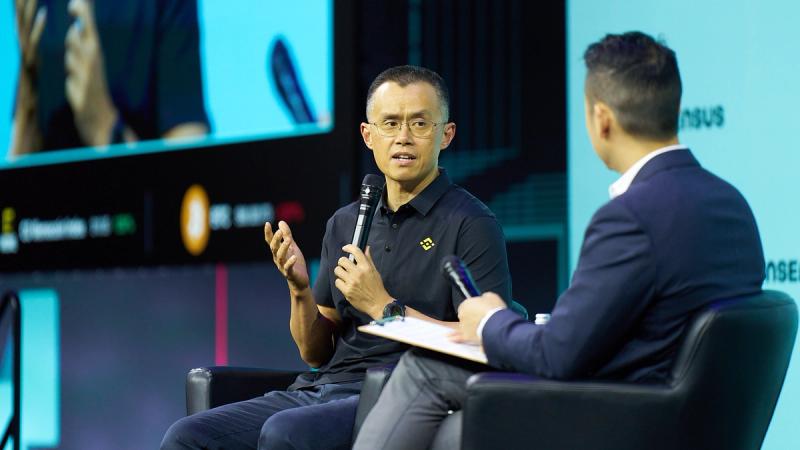
We have reached the point in the cycle where the lines between venture capital, artificial intelligence, and retail speculation are officially blurred. Changpeng Zhao, back in the mix, has signaled that tokenized versions of Anthropic shares will land on the BNB Chain the moment the AI company hits the Nasdaq. This is being driven by a collaboration between bStocks, Ondo, and xStocks, following a reported $500 million rush for pre-IPO exposure.
For anyone building in the space, this isn't just another listing. It is a stress test for the concept of tokenized real-world assets (RWAs). Anthropic is one of the few genuine rivals to OpenAI, and its valuation has skyrocketed as Claude becomes a staple for developers. The demand to own a piece of it before the public bell rings is massive, but the mechanics of how this works on-chain deserve a skeptical look.
The Logistics of Synthetic Equity
When someone tells you they are selling you a tokenized share of a company that isn't public yet, you have to ask where the actual stock is. In most of these pre-IPO setups, you aren't buying the stock directly from Anthropic's treasury. Instead, you are buying a derivative or a piece of a Special Purpose Vehicle (SPV) that holds the rights to those shares. When these launch on the BNB Chain, they will likely be wrapped tokens representing these legal claims.
The promise here is liquidity. Traditionally, if you own pre-IPO shares, you are locked in for years. You can't just sell them on an app while you're waiting for your coffee. By moving these onto the BNB Chain, the goal is to create a secondary market where people can trade their upside in Anthropic as easily as they trade BNB or stablecoins. For builders, the infrastructure needed to handle the compliance, the price feeds, and the legal transfers of these assets is where the real work lies.
Why BNB Chain?
Choosing the BNB Chain for this launch is a tactical move. It has the throughput to handle high-frequency retail trading, and it remains the home base for the ecosystem CZ built. While Ethereum is the legacy choice for high-value RWAs, the gas fees often price out the very retail investors these pre-IPO tokens are targeting. If you want to move $500 worth of Anthropic exposure, you can't spend $50 on a transaction fee.
However, this puts a lot of pressure on the bridge and oracle providers. If the price of the tokenized asset deviates significantly from the actual private market valuation of Anthropic, you end up with arbitrage gaps that can drain liquidity pools. Builders in the DeFi space should be watching how Ondo and bStocks handle the price discovery for an asset that technically doesn't have a public ticker yet.
The Reality of the Fine Print
There is always a catch. The $500 million influx of capital into these pre-IPO vehicles comes with a mountain of fine print. Most of these structures include heavy management fees, carry interest, and strict KYC requirements that often exclude the very people who think crypto is an escape from traditional gatekeeping. Just because an asset is on a blockchain doesn't mean the SEC or other regulators have stopped watching.
The biggest risk here isn't the technology; it's the underlying legal bridge. If the SPV holding the shares faces a legal challenge, the token on the BNB Chain becomes a receipt for an empty vault.
Founders looking to replicate this model need to understand that the "token" part is the easy bit. The hard part is the custody and the legal wrapper. If you are building a protocol that intends to use these Anthropic tokens as collateral, you need to account for the possibility of a total liquidity freeze if the underlying legal entity runs into trouble during the IPO process.
What This Means for the AI-Crypto Intersection
We are seeing a convergence where crypto isn't just providing the compute or the data for AI, but the financial layer for AI companies themselves. Anthropic is a heavy hitter. Having their value represented on-chain gives crypto a level of legitimacy that memecoins simply can't provide. It moves the conversation from "is this a scam?" to "how do we regulate this institutional asset?"
For builders, this is an invitation to create better tools for transparency. We need on-chain proof of reserves for these equity-backed tokens. If xStocks or bStocks says they have the shares, there should be a cryptographic way to verify the standing of the SPV without waiting for a quarterly audit. That is where the founder-perspective innovation should be focused—building the trust layer for synthetic assets.
The Long Game
Is this a sign of a maturing market or just another way to pump volume on a specific chain? It’s probably both. CZ is a master of distribution, and putting a high-demand asset like Anthropic on the BNB Chain is a guaranteed way to drive activity. But for those of us building the plumbing of the future, we have to look past the IPO day hype.
The real win isn't the launch; it's the stability of the asset six months after the IPO. If these tokens can survive the transition from private to public markets without crashing or suffering from massive de-pegging, it will pave the way for every major tech unicorn to have a parallel life on the blockchain. That would change how venture capital works forever, shifting the power from the few to the many, provided the tech holds up.
Takeaway for Builders
- Regulatory Reality: Tokenizing equity is 90% legal work and 10% coding. Do not skip the compliance layer.
- Liquidity Risks: Pre-IPO assets are inherently illiquid. Ensure your smart contracts can handle extreme volatility or trading halts.
- Oracle Dependency: Accurate pricing for non-public assets is difficult. Builders should look into decentralized identity and proof-of-asset protocols to verify the underlying holdings.
The Anthropic experiment on BNB Chain will be a case study for years. Whether it succeeds or becomes a cautionary tale depends entirely on how well the legal wrappers hold up under the pressure of a global retail market. Keep your eyes on the fine print, and don't let the AI hype blind you to the structural risks of synthetic equity.
Read the original at CoinDesk →