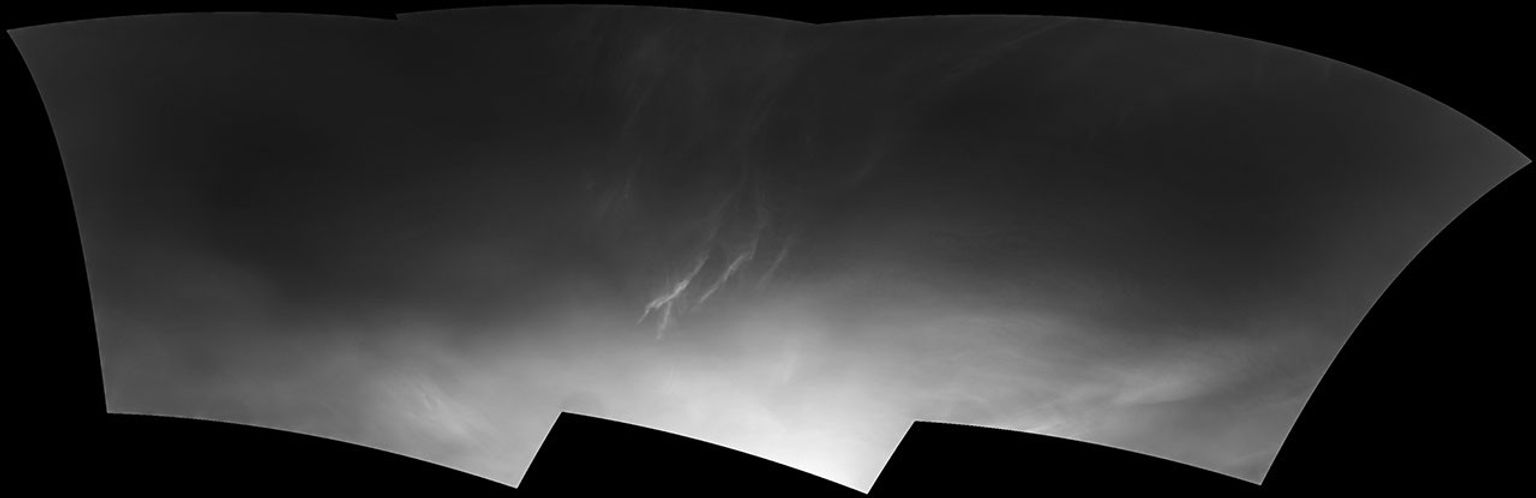
I spend most of my time looking at code repositories and token economics, but every so often, a piece of legacy hardware does something that reminds me why we build in the first place. This week, NASA’s Curiosity rover sent back images of drifting twilight clouds over the Gale Crater. It is the 5,061st Martian day of its mission. For those keeping track at home, that is over twelve years of operating in a literal vacuum of maintenance.
The Longevity of Hardened Systems
In the software world, we complain if a server has ninety-nine percent uptime over a month. Curiosity is currently operating with 100% uptime in an environment designed to kill electronics. These latest images of iridescent, post-sunset clouds aren't just pretty pictures; they are a testament to what happens when you prioritize stability and redundant systems over the 'move fast and break things' culture that has permeated both crypto and AI lately.
The rover used its navigation cameras to catch these clouds during a specific seasonal window. On Mars, these twilight clouds only appear for a short duration each fall. Because the clouds are so high in the atmosphere, they catch the light of the sun even after it has dipped below the horizon for the rover on the ground. This is a technical feat of timing and autonomous scheduling that should make any systems architect take note.
Why Builders Should Care About Gale Crater
If you are building a decentralized protocol or a local LLM implementation, you might think Martian meteorology is irrelevant. You would be wrong. The way NASA manages Curiosity is the ultimate case study in resource constraints. The rover has limited bandwidth, limited power, and no physical access for repairs. When we talk about 'unstoppable' code in the context of smart contracts, this is the physical equivalent.
- Extreme Resource Management: Curiosity has to decide which data is worth the power consumption of a transmission.
- Hardware Resilience: The navigation cameras being used are old tech by today’s standards, yet they are producing high-value scientific data because the software layers have been optimized over a decade.
- Autonomous Scheduling: The rover isn't being remote-controlled with a joystick in real-time. It operates on sophisticated, pre-programmed logic gates that allow it to capture transient events like these clouds without human intervention.
We see a lot of 'vaporware' in the AI space right now—models that look good in a demo but fall apart when the API hits any real load. Curiosity is the opposite. It is a slow, methodical, and incredibly durable machine that continues to deliver ROI long after its primary mission was supposed to end.
The Engineering of the Transient
Capturing these clouds is difficult because they are faint and move quickly. To the skeptics, this might look like a PR stunt, but there is real data here regarding the Martian water cycle and atmospheric composition. For founders, the takeaway is about the value of the 'edge case.' Most of the time, Mars is a dry, dusty rock. But by engineering for the rare moment—the twilight cloud—NASA gains insights that aren't available during the standard operating hours.
In your own projects, are you building just for the 'sunny day' scenario? Most crypto projects are designed for high-liquidity bull markets. Most AI startups are designed for cheap, subsidized compute. Very few people are building the 'Curiosity' of their niche—the tool that keeps working when the conditions turn hostile and the primary resources dry up.
The Reality of Deep Tech
I’ve been tracking the crossover between space exploration and decentralized infrastructure for a while. There is a reason why projects like Filecoin or various DePIN (Decentralized Physical Infrastructure Networks) look toward space. When you can't send a technician to fix a hard drive, the code has to be perfect. The Curiosity rover is essentially a decentralized node with a twelve-year lead time.
Building for the long term isn't about having the newest shiny object; it is about how much utility you can squeeze out of your existing stack when the environment gets tough.
These drifting clouds over Gale Crater are a reminder that even in a cold, dead landscape, there is movement and complexity. But you only see it if you’ve built a system capable of waiting five thousand days for the right light. Most founders I talk to can't even commit to a five-month roadmap without pivoting. There is a level of discipline in the Curiosity mission that we are sorely lacking in the current tech cycle.
The Takeaway for the Ecosystem
Stop worrying about whether you have the latest H100s or the fastest L2. Start asking if your system can survive a decade of neglect and still ship something meaningful. The clouds on Mars don't care about Curiosity’s specs, and your users don't care about your tech stack’s novelty. They care about the output.
NASA’s ability to turn a navigation camera—a tool meant for basic obstacle avoidance—into a scientific instrument for atmospheric study is the ultimate 'builder' move. It is about repurposing what you have to achieve what was previously thought impossible. If we applied half of that ingenuity to the way we structure our current software architectures, we wouldn't be dealing with the constant outages and security vulnerabilities that plague the modern web.
The drifting clouds are a signal. They tell us that even on a planet where nothing has lived for billions of years, there is still something to learn if your hardware is tough enough to stay awake. For those of us building the next generation of the internet, the goal should be the same: build something that lasts long enough to see the sunset, and then keep working through the dark.
Read the original at NASA Breaking News →