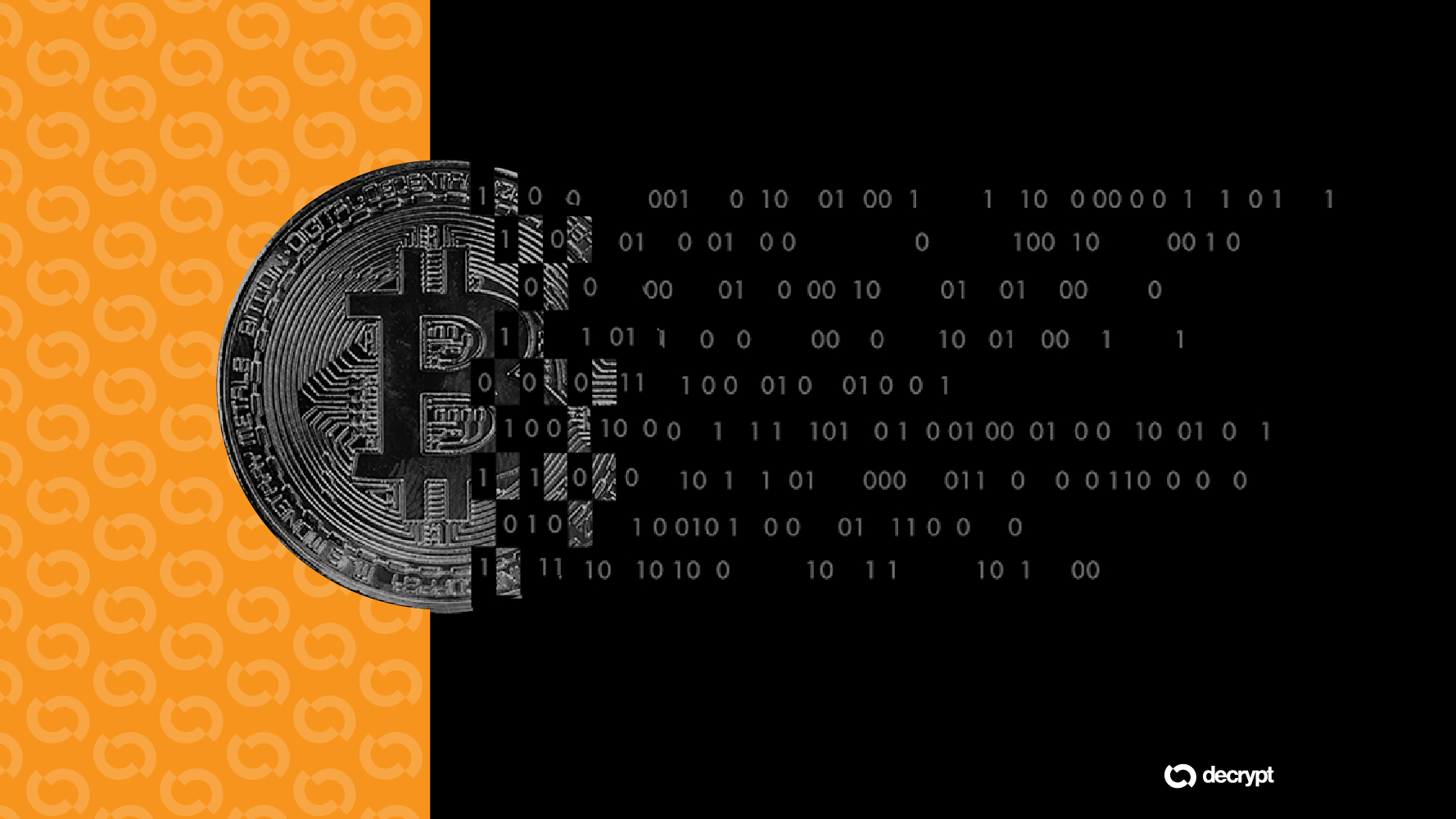
We have spent a decade worrying about the wrong things. While the industry bickered over block sizes and gas fees, a quiet mathematical ticking clock has been running in the background. The threat isn't a regulatory crackdown or a market crash—it is the reality that the very math protecting our assets is aging out of utility.
A new coalition of nine crypto companies has recently formed an alliance to tackle the quantum threat. They are modeling themselves after the Internet Engineering Task Force, which is a sober, necessary approach. They aren't selling a new token or promising a moonshot. They are trying to figure out how to stop the eventual erasure of private keys by machines that don't exist in a practical sense yet, but are coming faster than most founders want to admit.
The Six Million Bitcoin Problem
The numbers here are sobering. According to current estimates, roughly 6 million Bitcoin are currently sitting in addresses that are vulnerable to quantum computing. These aren't just any addresses; they are mostly older P2PK (Pay to Public Key) addresses and reused addresses where the public key has already been revealed to the network.
In a pre-quantum world, knowing a public key doesn't help you. The elliptical curve cryptography (ECDSA) we use is a one-way street. You can get a public key from a private one, but you can't go backward. Quantum computers, specifically those running Shor’s algorithm, turn that one-way street into a two-lane highway. If a machine with enough qubits becomes stable, it can derive the private key from the public one in minutes.
For the millions of BTC held in dormant wallets, including the Satoshi stash, there is no way to "update" them without moving the funds. If the owner is gone or the keys are lost, those coins are essentially sitting in a glass vault that is waiting for someone to invent a hammer strong enough to break it.
Building Standards, Not Hype
The alliance is focusing on open standards for testing quantum-resistance claims. This is the most "builder-first" move I’ve seen in a while. Currently, if a project claims to be "quantum-secure," you basically have to take their word for it or hire a specialized cryptographer to audit their math. There is no benchmark.
By creating a framework similar to how the early internet was standardized, this group is trying to move away from marketing jargon and toward verifiable security. They are looking at the late 2020s as the arrival date for the first practical attacks. That sounds like a long time in crypto years, but for infrastructure, it’s tomorrow. You don't swap out the fundamental cryptography of a multi-billion dollar network overnight.
What This Means for Founders
If you are building a protocol today, you can no longer ignore the post-quantum (PQ) transition. It isn't just about Bitcoin. Every Layer 2, every smart contract platform, and every decentralized identity solution relies on the same mathematical assumptions. Here is the reality for builders:
- Technical Debt: If you build on legacy crypto libraries now, you are just creating a massive migration headache for your future self.
- User Friction: Moving to quantum-resistant signatures usually means larger transaction sizes and higher computational costs. You need to account for this in your gas models now.
- Trust as a Product: In two years, "Quantum Ready" will be a requirement for institutional custody. If you aren't thinking about it, you won't get the big money.
The Skeptic’s View
I’m naturally skeptical of alliances because they often devolve into talking shops or marketing vehicles for the founding members. However, the focus here on "testing claims" is what gives me hope. We have a lot of "snake oil" in the security space. Founders often claim their chain is unhackable until the moment it gets drained. Having a third-party standard to hold these projects accountable is a net win for the industry.
The real challenge isn't the math—it's the coordination. Bitcoin, for example, is notoriously hard to change. Getting the community to agree on a soft fork to implement Lamport signatures or other PQ-alternatives will be a governance nightmare. The alliance can provide the tools, but the networks have to choose to use them.
The threat of quantum computing isn't a 'maybe'—it is a 'when.' The math is already solved; we are just waiting for the hardware to catch up.
A Reality Check on Timelines
The late 2020s estimate for a practical attack might even be optimistic. We are seeing breakthroughs in error correction and qubit stability every few months. As a founder, you have to assume that whatever timeline the experts give you, a well-funded nation-state will get there two years earlier. If a state-level actor can crack ECDSA, they aren't going to announce it. They are going to quietly drain the most valuable dormant wallets in history.
This isn't just about protecting your bags; it’s about the integrity of the ledger. If 6 million BTC move suddenly because the underlying math failed, the social contract of Bitcoin breaks. The value of the remaining 15 million coins would likely crater as trust evaporates.
The Founder’s Takeaway
Don't wait for the headlines in 2028 to start looking at your cryptographic stack. We are moving toward an era where "classical" cryptography will be viewed the same way we now view plaintext passwords—as a negligent security flaw. Support open standards, question every 'quantum-proof' claim that lacks independent verification, and start planning for a migration. The hammer is being built; make sure your vault isn't made of glass.
Read the original at Decrypt →