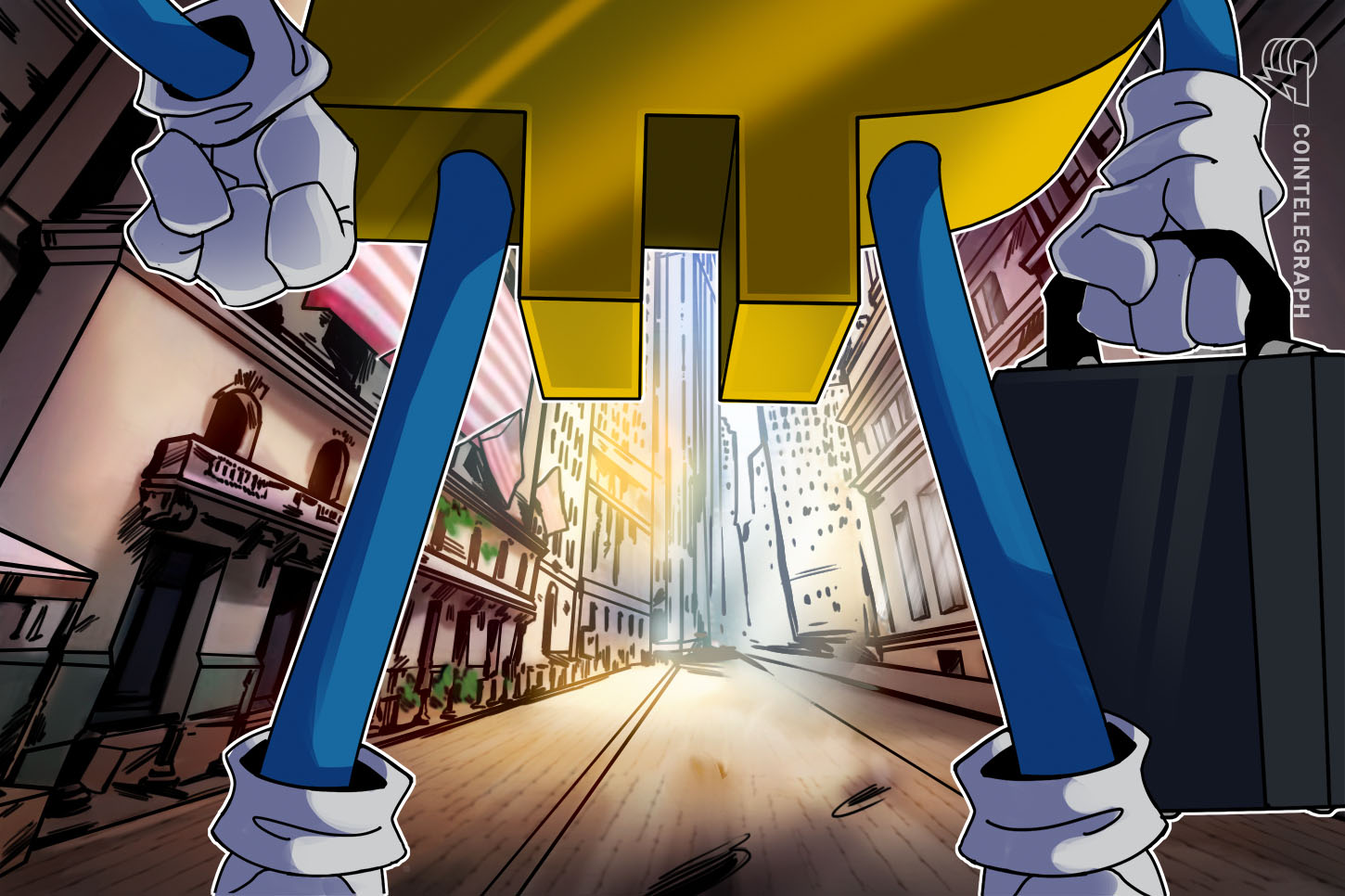
We just saw Bitcoin hit $80,000, and as expected, the mood in the industry has shifted from quiet survival to aggressive expansion. But while the price action makes for great headlines, the real story for those of us building in this space is the structural shift happening in the background. Wall Street is no longer just watching from the sidelines; they are actively filling out the paperwork to integrate crypto into the traditional financial plumbing.
The Institutional Stamp of Approval
When Bitcoin rallies like this, the first thing people look at is the price of crypto-linked stocks. We are seeing companies like MicroStrategy and Coinbase become the primary vehicles for institutional exposure. For a long time, the narrative was that Bitcoin was a hedge against the system. Now, it is becoming a cornerstone of the system.
MicroStrategy’s move to keep accumulating Bitcoin is no longer viewed as a fringe gamble. It is now seen as a sophisticated treasury management strategy that other corporations are beginning to study. For builders, this means the 'corporate' door is swinging wide open. If you are building tools for treasury management or institutional custody, your addressable market just got a lot bigger.
Circle and the Stablecoin Infrastructure
Circle is another major piece of this puzzle. Their recent moves toward a public listing and their continued focus on regulatory compliance show that the stablecoin market is maturing. We are moving past the era of 'trust us, we have the cash' to a period of 'here is the audit, here is the filing, and here is the legal framework.'
For developers, the stability of USDC and the infrastructure Circle is building provides a reliable foundation. If you are building decentralized finance applications or cross-border payment solutions, you need a stable leg to stand on. The fact that Circle is aligning itself so closely with traditional capital markets gives us a hint at where the next wave of liquidity is coming from. It isn’t coming from retail speculators; it is coming from global trade and institutional settlement.
Solana and the Onchain Reality
While the big money talks about ETFs and SEC filings, Solana is proving that onchain activity is where the actual innovation lives. The growth we are seeing on Solana isn't just about memecoins, though they certainly drive volume. It is about the fact that the network can actually handle the throughput required for real-world applications.
Solana has become the testing ground for what high-speed, low-cost blockchain interactions look like. For founders, the lesson here is simple: users care about performance and cost. They don't care about the underlying philosophy of your consensus mechanism if the transaction costs ten dollars and takes five minutes to settle. Solana’s resurgence is a reminder that utility eventually wins out over theory.
What This Means for Founders
If you are a founder in the crypto or AI space right now, you need to ignore the noise of the $80,000 price tag and look at the infrastructure. We are seeing a convergence of three major forces: institutional capital, regulated stablecoins, and high-performance blockchains. This is the 'holy trinity' for building scalable applications.
The skepticism we’ve felt over the last two years was healthy. It burned away the projects that had no substance. What remains is a much tougher, more pragmatic ecosystem. The opportunity today isn't in launching another token; it’s in building the middleware that connects these three forces. We need better bridges between traditional finance and onchain liquidity. We need AI agents that can navigate these financial rails autonomously.
The Skeptic's Corner
I still have my doubts about how quickly the legacy financial world can actually move. Paperwork is one thing; actual integration is another. We should expect a lot of friction as traditional banks try to wrap their heads around self-custody and 24/7 markets. There will be regulatory setbacks, and there will be technical hurdles that we haven't even anticipated yet.
However, the direction of travel is clear. You don't have this much capital and this much regulatory effort moving in one direction without a permanent shift in the landscape. The 'crypto winter' is over, but that doesn't mean it's time to get lazy. It means it's time to build the things that will survive the next cycle.
The real value isn't in the price of the coin; it's in the permanence of the infrastructure.
We are moving into a phase where the technology becomes invisible. Just like people don't think about TCP/IP when they send an email, they won't think about blockchain when they move money or verify an AI's training data. That is the goal. If we do our jobs right, 'crypto' will just be the plumbing for the new global economy.
Takeaway for Builders
- Focus on institutional-grade security: If you want the big money, you have to speak their language.
- Scalability is non-negotiable: Users will not tolerate slow or expensive networks anymore.
- Stablecoins are the bridge: Integrate USDC or similar regulated assets early and often.
- Watch the filings: The SEC and other regulators are providing a roadmap, even if it's a messy one.
The rally is fun to watch, but the paperwork is where the future is being written. Don't get distracted by the green candles. Keep your head down and keep shipping.
Read the original at Cointelegraph →