I have spent a lot of time looking at tech stacks that claim to be revolutionary. In the crypto world, every new L2 claims it will be the one to finally settle global finance. In AI, every model update is supposedly a step toward sentience. But if you want to see what actual, functioning infrastructure looks like when the hype dies down and the utility begins, look at the Pacific Ocean on October 8, 2026.
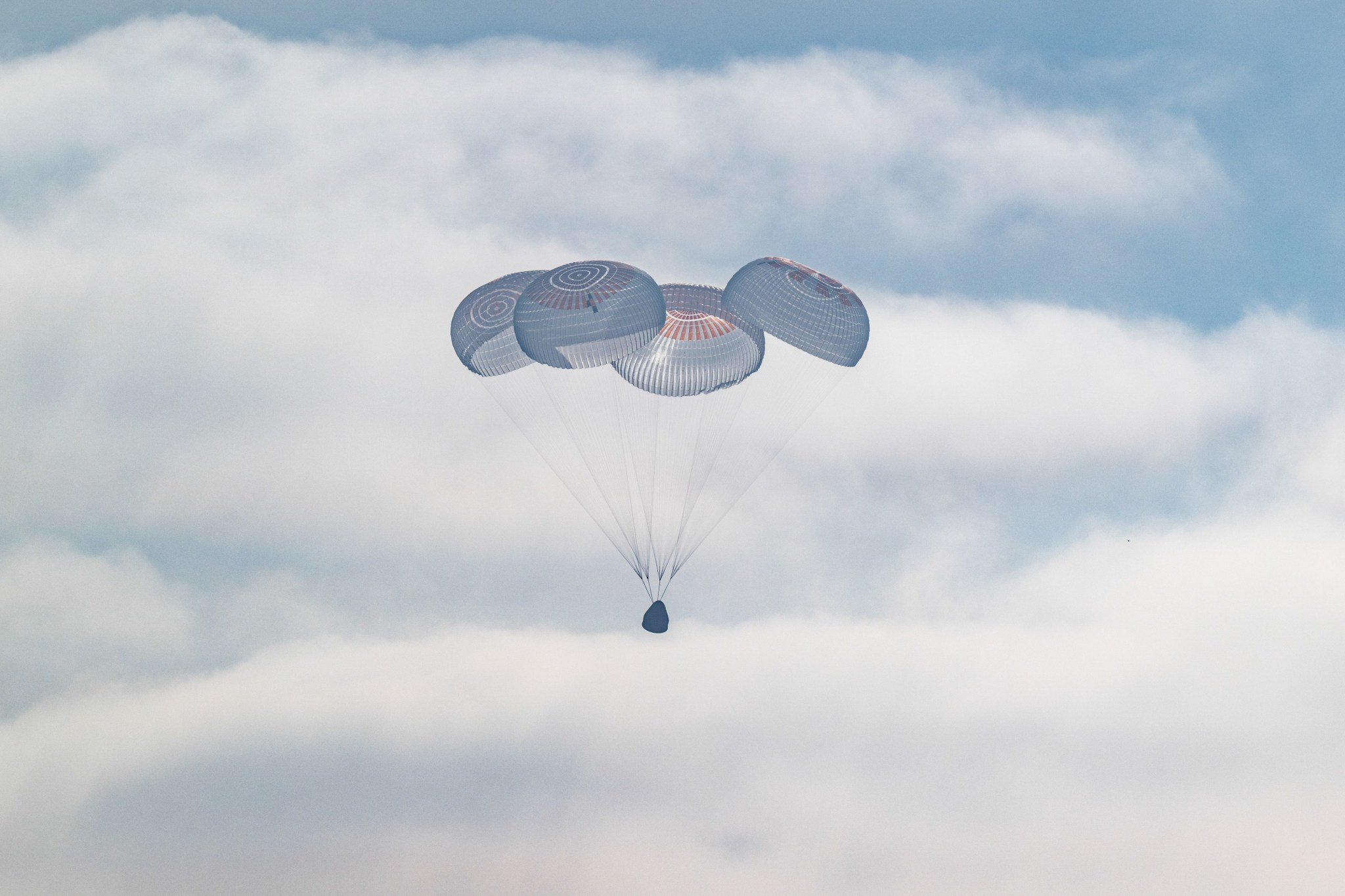
NASA astronauts Jessica Meir and Jack Hathaway, alongside ESA’s Sophie Adenot and Roscosmos’s Andrey Fedyaev, just bobbed around in the SpaceX Crew Dragon Freedom after a routine return to Earth. They were coming back from the International Space Station, a place that is becoming less of a scientific miracle and more of a high-altitude office space. This is Crew-12. Not Crew-1, not a test flight, not a billionaire’s vanity project. It is the twelfth time this specific logistical loop has been closed.
The Utility Phase of Innovation
For founders and builders, there is a massive lesson in the splashdown of the Freedom. We often get caught up in the 'genesis' phase of technology—the whitepapers, the seed rounds, the first proof of concept. But the real money and the real impact live in the 'utility' phase. SpaceX has moved the needle from 'can we do this?' to 'how many times can we do this before it becomes boring?'
When technology becomes boring, it becomes a platform. The Crew Dragon is no longer the story; the work being done inside the station is the story. In the crypto space, we are still largely obsessed with the rockets—the blockchains themselves. We argue about gas fees and consensus mechanisms like people arguing about the fuel mixture in a Falcon 9. But the end user doesn't care about the fuel. They care about the cargo. The Crew-12 mission is a reminder that the goal of every builder should be to make their tech so reliable that no one talks about the tech anymore.
Cross-Border Collaboration in a Fractured World
It is also worth noting the roster on this flight. You have NASA, the ESA, and Roscosmos sharing a ride. In a world where geopolitical tensions are high and 'de-globalization' is a buzzword in every venture capital newsletter, space remains an oddly persistent vacuum of cooperation.
For those building in decentralized finance or global AI governance, this is a blueprint. The Crew-12 mission succeeded because the protocols—the docking mechanisms, the safety standards, the communication arrays—were standardized. It didn't matter that the crew came from three different agencies with three different political backdrops. The hardware and the software spoke the same language. If we want to build truly global digital infrastructure, we have to stop building walled gardens and start building docking ports.
The Founder Perspective: Reliability Over Features
If you are a founder right now, you are likely being told to pivot to AI, to add a token, or to chase the latest trend. But look at the Dragon Freedom. This spacecraft has been through the fire—literally—multiple times. It isn't chasing trends. It is fulfilling a contract with 99.9% reliability.
Building for the long haul means prioritizing the boring stuff:
"Redundancy is better than a new feature. Stability is better than a rebrand. Trust is earned through repeated, successful exits and entries, not through a flashy roadmap."
The return of Hathaway, Meir, Adenot, and Fedyaev is a win for SpaceX, sure. But it is a bigger win for the concept of reusable infrastructure. Every time a Dragon capsule splashes down safely, the cost of access to orbit drops a little further. For the builders of the 2030s, this means the 'App Store' for space is finally getting its first set of reliable developer tools.
Why This Matters for AI and Crypto Builders
We are currently seeing a massive overlap between aerospace, autonomous systems, and decentralized networks. The telemetry data from missions like Crew-12 is being fed into AI models to optimize future flight paths. The logistics of managing international crews are being handled by increasingly complex coordination software.
- Scalability: SpaceX has proven that you can scale high-stakes hardware.
- Interoperability: The ISS remains the gold standard for multi-party systems.
- Sustainability: Reusability isn't just a green initiative; it is a margin-expansion strategy.
If you are building a protocol or a platform, ask yourself: Is your project a one-time firework, or is it a Dragon capsule? Are you building something that can be used twelve times, or are you just trying to survive the first launch? The builders who win the next decade won't be the ones with the loudest marketing—they will be the ones who, like SpaceX, make the incredible look like a routine Tuesday afternoon in the Pacific.
The Takeaway
The successful return of Crew-12 signifies that the era of experimental spaceflight is giving way to the era of industrial space logistics. For builders in any sector, the goal is the same: move past the hype, standardize your 'docking ports,' and focus on the reliability that turns a miracle into a utility.
Read the original at NASA Breaking News →