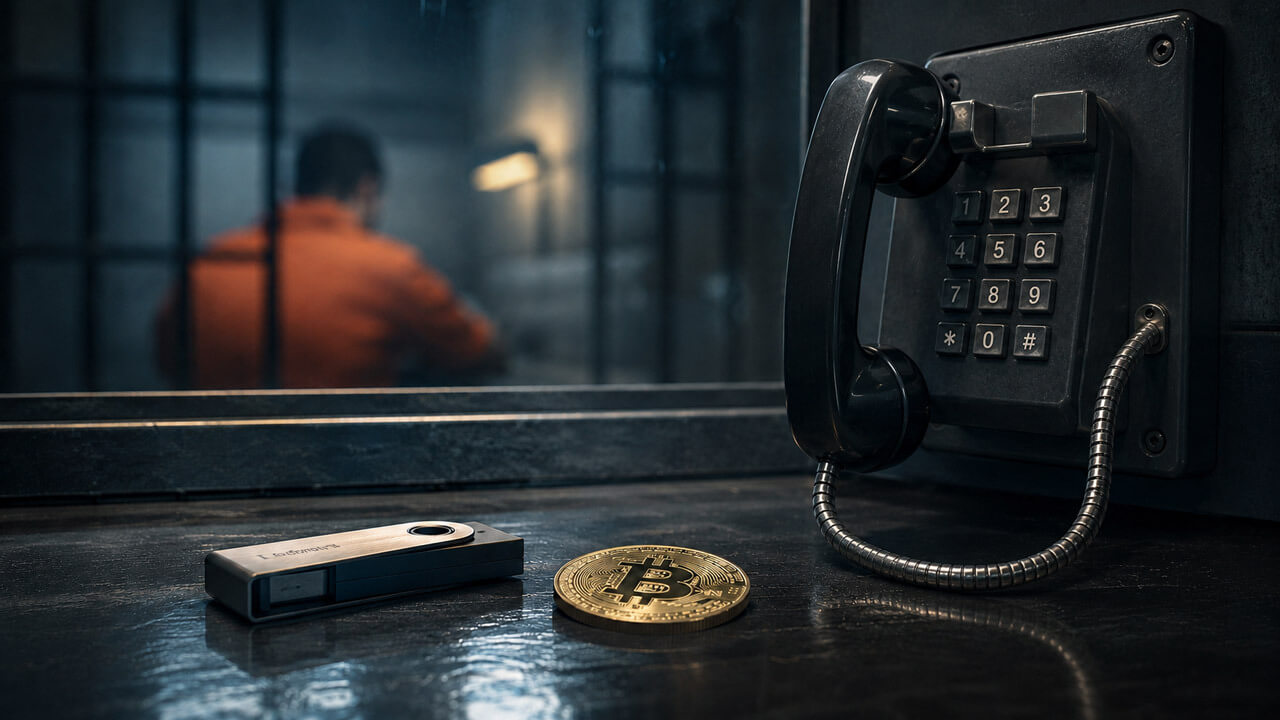
The Illusion of Control
In the traditional financial system, when the Department of Justice says they have seized your assets, it means the bank has frozen your account. The numbers on the screen stay put because the bank owns the rails. In crypto, the rails are owned by math, and the DOJ is finding out the hard way that a court order isn't a private key.
We recently saw a scenario involving a convicted scammer where funds that were legally 'forfeited' and 'seized' simply walked out the front door. While the individual was behind bars, millions in digital assets moved to unknown wallets. This isn't just a failure of bureaucracy; it is a fundamental misunderstanding of how sovereign digital assets work at the protocol level. If you don't have the seed phrase, you don't have the money. It doesn't matter what the judge signed.
The Gap Between Law and Code
The core of the issue lies in the timeline between a legal forfeiture order and the physical securing of assets. The government often operates on a legacy schedule. They get a judge to agree that funds should be seized, they file the paperwork, and they inform the defendant. However, in the time it takes to print that PDF, anyone with the private keys can broadcast a transaction to the mempool.
In this specific case, the DOJ had a forfeiture order, but they had not yet established the technical infrastructure—or perhaps the procedural urgency—to move those funds into a government-controlled multisig or cold storage device. This created a window of opportunity. Whether the defendant used a hidden device, a pre-programmed smart contract, or an outside accomplice, the result is the same: the assets are gone, and the blockchain doesn't care about the sentencing guidelines.
Why Builders Should Care
For those of us building in this space, this story is a reminder of why non-custodial tools are so powerful and why the regulatory 'guardrails' being proposed are often laughably ineffective. If the highest level of American law enforcement cannot secure funds they have already legally claimed, how can we expect blanket regulations to prevent illicit activity?
It highlights a massive opportunity for startups focusing on institutional-grade recovery and seizure tech. There is a version of the future where legal compliance is baked into the multisig process, but we are nowhere near that today. Right now, we are in the 'Wild West' phase where the sheriff takes your horse but forgets to lock the gate, and the horse knows how to teleport.
The Multi-Sig Problem
The government's account of events suggests a separation between the legal right to the money and the technical authorization to move it. This is a nuance that most people miss. When a court orders a seizure, they are claiming the legal title. But the blockchain only recognizes the cryptographic signature. This disconnect is where the risk lives.
If I am a founder building a decentralized protocol, I look at this and see the ultimate stress test. If a state actor can't stop a transfer, it proves the resilience of the network. On the flip side, it creates a massive PR headache for the industry. Every time a criminal successfully obscures funds while under state supervision, it gives ammunition to those who want to ban self-custody entirely.
A Lesson in OpSec
This incident also serves as a masterclass in OpSec—for both the hunter and the hunted. For the government, the lesson is that 'seized' is a verb that requires immediate action, not a status update. For developers, it is a reminder that the tools we build are truly neutral. The same censorship resistance that protects a dissident in a regime protects a scammer in a cell.
- Code is Law: Until the transaction is on-chain, the law is just a suggestion.
- Latency Kills: Legal processes move in weeks; crypto moves in seconds.
- Custody is Everything: If the government doesn't hold the keys, they don't hold the assets.
The Real Takeaway
We are watching a collision between two incompatible operating systems. The DOJ is running on Law 1.0, which relies on intermediaries and physical jurisdiction. Crypto runs on Math 2.0, which relies on verification and private keys. When Law 1.0 tries to exert force on Math 2.0 without understanding the technical requirements, the result is exactly what we saw here: a total loss of assets.
The skepticism here isn't toward the technology—it's toward the competence of the oversight. We are told that we need more regulation to keep the system safe, yet the regulators can't even hold on to the loot they've already recovered. If you're building a project that interacts with legal frameworks, you better have a plan for how to bridge this gap. You cannot rely on a court order to protect your users' interests if the protocol allows for an end-run around that order.
The blockchain doesn't have a jail. It only has a ledger. If the ledger says the money moved, it moved.
As we move forward, expect to see the DOJ get much more aggressive about 'pre-seizure' tactics. We might see more pressure on hardware wallet manufacturers or more 'sneak and peak' warrants to grab seed phrases before a defendant even knows they are under investigation. The 'slow' approach to seizure is officially dead.
If you're a founder, watch this space closely. The tension between cryptographic sovereignty and state enforcement is the defining battle of our decade. This failed seizure isn't a fluke; it's a feature of the system we've built. Now, we have to decide if we're okay with the consequences of that feature.
Read the original at CryptoSlate →