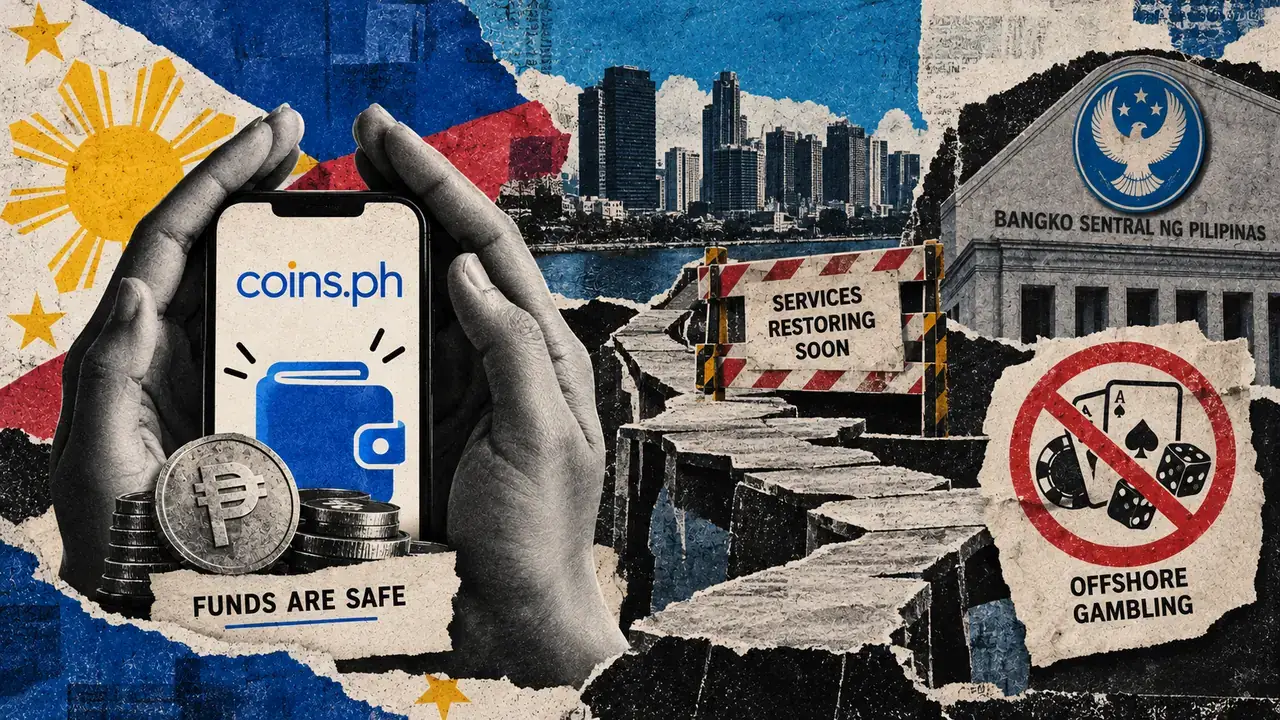
When you are building in the crypto space, you often hear that getting a license is the finish line. Founders spend years and millions of dollars chasing regulatory approval, thinking it acts as a permanent shield. But as we just saw with Coins.ph in the Philippines, a license is just a lease that the government can renegotiate whenever they feel like it.
The Shutdown Reality Check
Coins.ph, one of the oldest and most prominent exchanges in Southeast Asia, recently saw its users locked out of their accounts. This wasn't a hack, and it wasn't a rug pull. It was the direct result of intervention from the Bangko Sentral ng Pilipinas (BSP), the country's central bank. When the regulator steps in, the app goes dark. That is the reality of centralized gateways.
For those outside the region, you might think this is a local issue. It isn't. It is a blueprint for how regulators globally are tightening their grip on the on-ramps and off-ramps that allow the average person to participate in the digital economy. The BSP is specifically looking at how these platforms might be facilitating offshore gambling operations, a massive shadow industry in the Philippines.
Why the BSP Pulled the Plug
The core of the issue stems from money laundering concerns. In the Philippines, the POGO (Philippine Offshore Gaming Operators) industry has been a lightning rod for controversy. The government has been trying to purge these entities, and they view crypto exchanges as a potential back door for moving illicit funds. Even though Coins.ph is a licensed institution, they found themselves in the crosshairs.
The company issued a response on October 14, basically stating that they are implementing stricter controls to ensure offshore gambling operators stay off the platform. They were quick to remind everyone that they are still a BSP-licensed entity. But the damage to user trust is already done. When a user can't access their money because a government official decided to flip a switch, the promise of crypto being "sovereign money" feels like a bad joke.
The Builder Perspective: Compliance is a Moving Target
If you are building a fintech or a crypto startup, there is a hard lesson here. You can follow every rule in the handbook, hire the most expensive compliance officers, and still get shut down overnight. The problem isn't that Coins.ph wasn't compliant; the problem is that the definition of compliance changed, and the regulator chose to act first and talk later.
For founders, this means your business model cannot rely solely on the grace of a single regulator. If your entire user base is gated by one app that can be switched off by a central bank, you don't own your business. You are a tenant in a building owned by the state.
- Diversify your jurisdictional risk: Never put all your eggs in one regulatory basket.
- Transparency is your only defense: When these lockouts happen, companies that communicate clearly and honestly survive. Those that hide behind corporate speak die.
- Build for self-custody: The more you can encourage your users to hold their own keys, the less liability you have when the regulator comes knocking.
The Trust Deficit
We are seeing a growing trend of "de-banking" within the crypto sector. It used to be that banks would just close your accounts. Now, regulators are going after the crypto service providers themselves to ensure they act as deputies for the state. Coins.ph is being forced to police their users to a degree that makes the original ethos of crypto unrecognizable.
The users who were locked out aren't just numbers on a spreadsheet. They are people who might have needed that money for rent or food. When a central bank intervenes, they aren't just protecting the financial system; they are disrupting the lives of individual citizens. This is why builders need to stop chasing the "blessing" of the state and start building tools that can't be turned off.
What Happens Next?
Coins.ph will likely survive this. They will implement the new controls, they will ban anyone even remotely suspected of gambling ties, and they will eventually get back to business as usual. But the relationship between the Philippine crypto community and the BSP has changed. The mask has slipped.
We should expect more of this. As governments get more sophisticated in how they track blockchain data, they will demand that licensed exchanges become even more invasive. The "gatekeeper" model of crypto adoption is hitting a wall. If we want to reach the next billion users, we can't do it through apps that can be locked out by a memo from a central bank.
The hard truth for builders: A license doesn't protect you from the regulator; it just gives them a direct line to your kill switch.
Final Takeaway for Founders
Don't just build for compliance. Build for resilience. If your platform is centralized, you are vulnerable to the whims of whatever politician is currently in power. Use this Coins.ph situation as a case study. Look at your own infrastructure and ask yourself: "If the government told me to shut down tomorrow, what happens to my users?" If the answer is "they lose everything," then you aren't building the future of finance; you're just building a faster version of the old one.
Read the original at CryptoSlate →