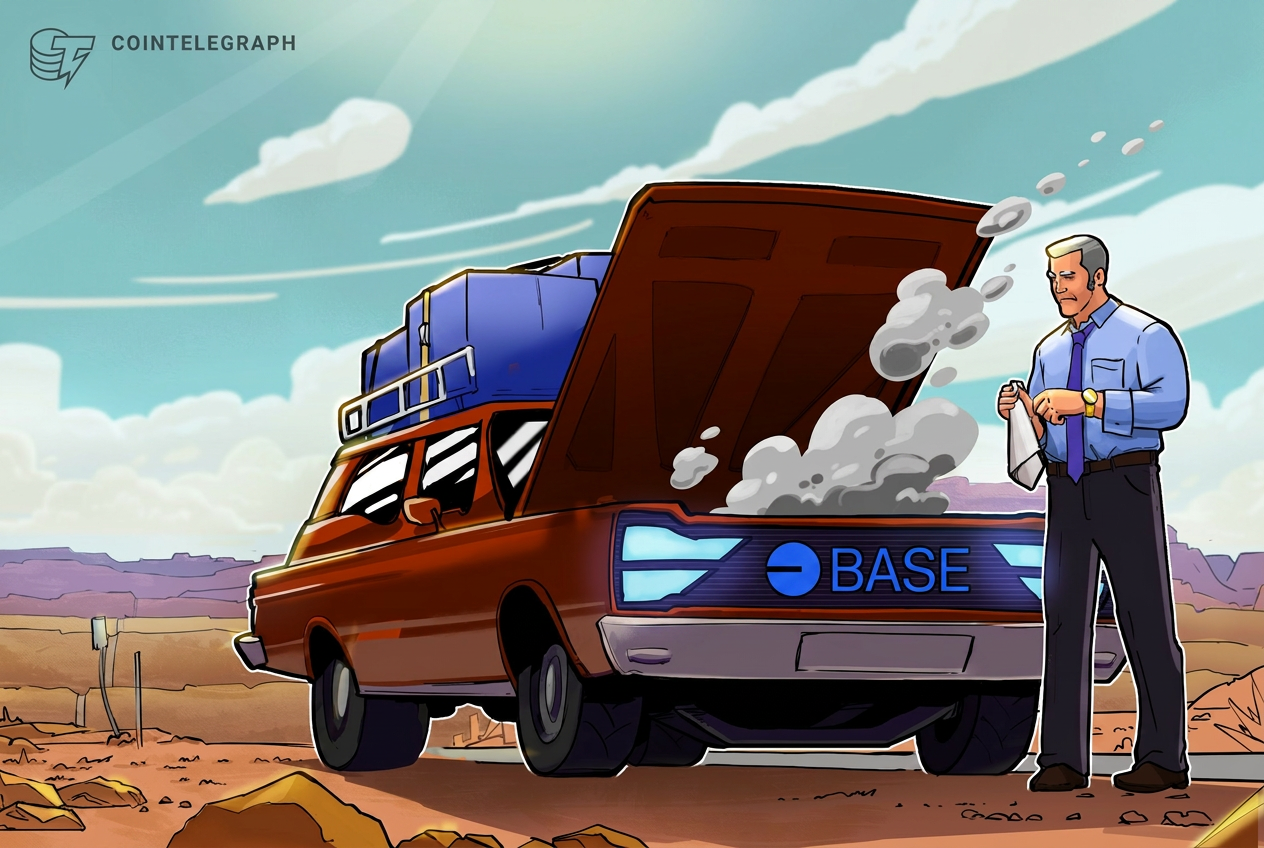
Decentralization is currently a marketing slogan, not a technical reality for most of the industry. When Coinbase's Layer 2 network, Base, stops producing blocks for two hours due to a consensus error, it exposes the fragile scaffolding holding up the next generation of finance. If your entire business logic relies on a single sequencer or a centralized set of nodes, you don't own a protocol, you own a dependency.
The Illusion Of Uptime In Early Cycles
Cointelegraph reported that Base suffered a two-hour outage on Thursday caused by a consensus problem. For two hours, transactions sat in limbo. For two hours, the "on-chain summer" went dark. This isn't the first time a major network has blinked, and it won't be the last. Early-stage infrastructure is inherently unstable, but the marketing departments at these firms tend to ignore that. They sell the dream of a 24/7 global settlement layer while the engineering teams are still trying to keep the lights on during routine upgrades.
The deeper problem isn't the code itself. Code has bugs. Distributed systems are hard to build. The problem is the misplaced trust of founders and operators who build mission-critical applications on top of these networks without a contingency plan. We saw this in 2017 with Ethereum congestion and again with various "Ethereum killers" since 2021. Operators treat these networks like they are AWS or Azure, but without the Service Level Agreements or the maturity. In the rush to capture users and liquidity, builders are ignoring the structural risk of centralized sequencers.
Reliability isn't a feature you can patch in later. It is either the foundation of your brand or the reason for its eventual collapse.
The Sequencer Bottleneck
Most Layer 2 solutions today operate on a "training wheels" model. They use a single sequencer to order transactions before they hit the main Ethereum chain. This creates a massive point of failure. If that sequencer hits a consensus snag, the music stops. For an investor, this represents a concentration risk that is rarely accounted for in the valuation of the ecosystem. If a network can go offline for two hours, it can go offline for twenty-four. That is an eternity in a market where liquidations are automated and prices move in milliseconds.
We are seeing a repeat of the "move fast and break things" era of Web2, but with a dangerous twist. In Web2, if your photo sharing app went down, the damage was largely social. In Web3, if the network goes down, users lose their ability to hedge their positions, exit trades, or move capital. It is a liquidity trap. If you are building a product that requires 100 percent uptime, you have to look at the underlying architecture with a skeptical eye. You cannot market your way out of a chain freeze.
Systemic resilience requires a shift in how we evaluate where to deploy capital and code. We have to move past the hype of "low fees" and "fast finality" and start asking harder questions about infrastructure.
- How many independent entities are actually running the consensus mechanism?
- What is the documented failover procedure when the primary sequencer halts?
- Does the application layer have a "lite mode" or a cross-chain fallback?
- Are you communicating the technical risks clearly to your end users?
Establishing Your Own Redundancy
As an operator, you cannot control whether Base or any other network stays online. You can only control your response to the outage. This is where brand authority is built or destroyed. Many founders go silent during an outage, waiting for the parent company to issue a statement. That is a mistake. Your users aren't Coinbase's users, they are yours. You need a communication system that is independent of the chain you are building on.
I have seen this cycle repeat since 2007. Whenever a new platform promises the world, builders flock to it, ignore the red flags, and then act surprised when the physical limitations of the technology manifest. The fix is a redundancy framework. If you are an operator, you must assume the network will fail. Build your frontend to handle it gracefully. Use multi-chain or cross-chain state management if your business depends on continuous uptime. Don't be the founder who has to explain to investors why your revenue stopped because a single server in Virginia or a consensus bug in a sequencer took you offline.
Proof of this pattern exists in every major network outage over the last five years. When Solana went down, a subset of developers moved to diversify their deployments. When Ethereum's gas fees spiked, others moved to Layer 2s. Now that Layer 2s are showing their own teething pains, the smart money is moving toward modularity and decentralization of the sequencer itself. This isn't just a technical hurdle, it is a prerequisite for institutional adoption.
The Takeaway
The Base outage is a reminder that the infra layer is still in its beta phase regardless of the total value locked. You cannot outsource your primary business risk to a third party and expect to maintain a premium brand. Audit your stack today to identify every single-point failure, then document a transition plan for when the next outage inevitably occurs.