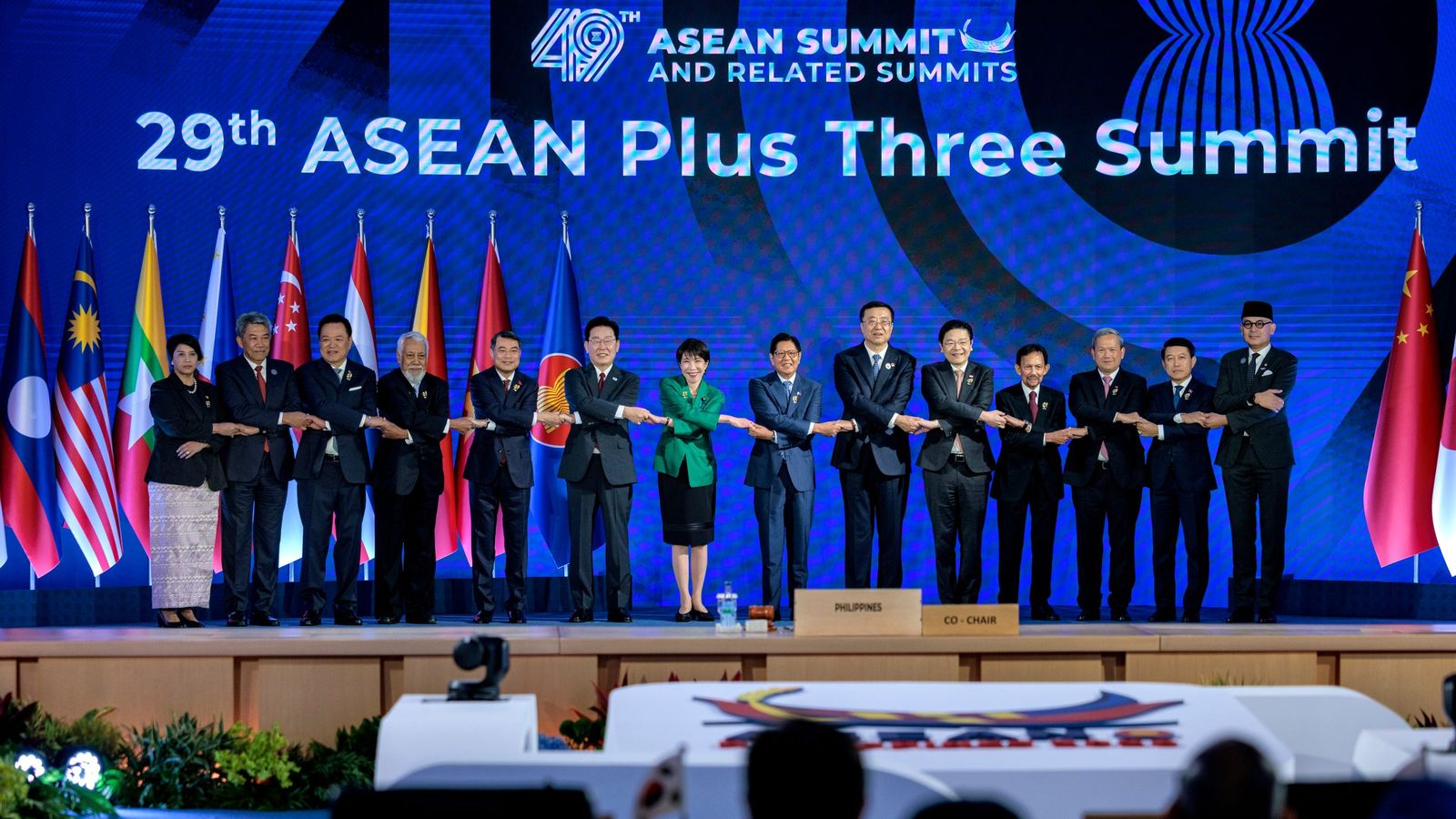
We are watching a massive architectural shift in how money moves across Asia. China, Japan, and South Korea, alongside the ASEAN bloc, have officially decided to form a specialized working group focused on digital payments and cryptocurrency regulation. This isn't just another committee meeting. It is a signal that the East is getting serious about building a financial stack that doesn't rely on Western legacy systems.
The Uzbekistan Seed
This move didn't come out of nowhere. The groundwork was laid back in May during a meeting in Uzbekistan. While most of the Western crypto world was distracted by ETF flows and meme coins, these regional powers were identifying cross-border digital payments as their next primary area of cooperation. They realized that their economies are too tightly linked to be operating on fragmented, high-friction payment rails.
For builders, this is the starting gun. When governments of this scale start talking about "digital payment cooperation," they are effectively asking for a unified interface for value. They want to settle trades without waiting three days for a correspondent bank in New York to wake up and click a button.
Sovereignty vs. Interoperability
The friction here is obvious: China has the e-CNY and a very specific, controlled view of what blockchain should look like. Japan has a relatively mature legal framework for stablecoins and exchanges. South Korea has some of the highest retail participation in the world but is tightening the screws on domestic exchanges. Then you have the ASEAN nations, ranging from the high-tech hubs of Singapore to emerging markets like Vietnam and Indonesia.
The goal of this working group isn't necessarily to create a single Asian currency. That is a pipe dream. The real goal is interoperability. They want to ensure that if a merchant in Bangkok wants to accept a digital payment from a tourist in Seoul, the plumbing works instantly and the regulators on both sides are happy with the AML checks.
Why Builders Should Care
If you are building in the DeFi or payments space, you need to look at this as a roadmap for infrastructure. We are moving away from the era of "move fast and break things" toward an era of "move fast and comply with the regional standard."
- Stablecoin Rails: There will be a massive demand for compliant, cross-border stablecoin solutions that can bridge these different regulatory regimes.
- KYC/AML Oracles: If these nations are going to cooperate, they need shared data standards for identity. Middleware that can verify a user's status across borders without leaking PII will be worth its weight in gold.
- Settlement Layers: We are likely to see more focus on Layer 2s or private subnets that can handle high-throughput retail transactions while staying within the legal guardrails of this new working group.
The Skeptical Take
I have seen enough of these working groups to know that they often result in 200-page PDF reports and very little code. There is a version of this story where the group spends two years arguing about data sovereignty and ends up doing nothing. Geopolitical tensions between China and Japan, or the complex dynamics in the South China Sea, can easily derail financial cooperation.
However, the economic incentive to bypass the US Dollar for regional trade is a powerful motivator. If they can lower the cost of doing business by even 1% through digital rails, the GDP gains for the region are astronomical. That kind of math usually wins out over old-school grudges.
The real victory for builders won't be a new government coin. It will be the standardization of the APIs that allow private innovation to plug into state-backed digital infrastructure.
The ASEAN Factor
ASEAN is the wildcard here. These nations are digital-first. In places like the Philippines and Indonesia, mobile wallets are already the primary way people interact with money. They aren't trying to fix a broken banking system; they are building a new one from scratch. By joining forces with the "Big Three" (China, Japan, Korea), they are ensuring that their local innovations have a path to scale across the entire continent.
What to Watch Next
Keep an eye on the technical standards this group proposes. If they lean toward a specific blockchain architecture—like a modified Ethereum Virtual Machine (EVM) or a specific private ledger technology—that becomes the default stack for the most populous region on earth. You don't want to be the founder building on an island when the mainland is building a bridge.
This is a transition from the "Wild West" of crypto to the "Industrial East" of digital finance. It won't be as chaotic, but the scale will be much, much larger.
The Takeaway
The formation of this working group is a clear indicator that the era of fragmented digital assets in Asia is ending. Governments are moving from observation to integration. For founders, the opportunity isn't in fighting the regulation, but in building the interoperability layers that make this massive regional vision actually function. If you can solve the cross-border payment friction between these ten-plus nations, you aren't just building a dApp—you're building the new financial backbone of the global economy.
Read the original at The Block →