We have spent the last decade watching regulators try to figure out what to do with toys they do not understand. Usually, it is a debate about whether a token is a security or a commodity. But lately, the conversation has shifted to something much more fundamental to the human experience: betting on the future. The Commodity Futures Trading Commission is currently at the center of a storm involving prediction markets, and a new face in the mix is asking the kind of questions that should make every founder in this space pay attention.
The Public Benefit Litmus Test
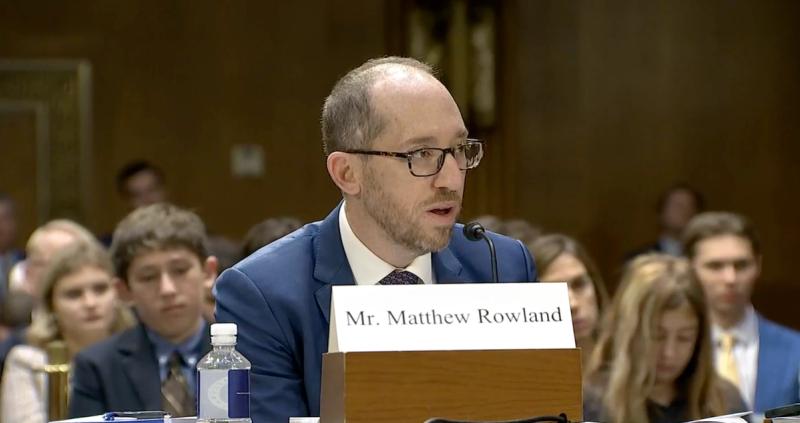
Matthew Rowland, a Democratic nominee for the CFTC, recently voiced a sentiment that should sound familiar to anyone who has dealt with federal oversight. He is not just looking at the technical legality of these platforms; he is asking what they actually do for the public. This idea of a public benefit is a subjective, often dangerous metric for builders because it moves the goalposts from compliance to optics.
Prediction markets like Polymarket and Kalshi have exploded in volume recently, mostly because they were the only places providing real-time, financially-backed data on the U.S. election. While traditional polling was failing, the money was moving toward the actual outcomes. You would think this would be seen as a win for market efficiency, but the regulatory lens is different. Rowland is suggesting that the commission needs to think hard about whether these markets serve a purpose beyond mere speculation.
Why Builders Should Be Worried
When a regulator asks about public benefit, they are usually looking for a reason to say no. In the world of finance, if you cannot prove that your tool helps a farmer hedge the price of wheat or helps a bank manage interest rate risk, you are often labeled as a casino. And in the eyes of the U.S. government, unauthorized casinos are a problem.
For those building in DeFi or decentralized prediction protocols, this is a direct challenge to the permissionless ethos. If the standard for staying legal is proving that your platform makes society better in a way that a government employee understands, the innovation cycle slows to a crawl. We are no longer talking about code; we are talking about lobbying and narrative crafting.
The Legal Tug-of-War
The timing of Rowland's comments is not accidental. The CFTC has been in a long-standing legal scrap with Kalshi, trying to block them from offering bets on election outcomes. The agency lost a major round in court recently, which opened the floodgates for the massive volume we saw in November. But regulators do not like losing, and they rarely go away after one defeat in court.
Rowland is signaling that he wants a seat at the table for the rulemaking process that will inevitably follow this litigation. If he is confirmed, he will be part of a body that decides whether to create new barriers to entry. This could include higher capital requirements, stricter KYC, or outright bans on certain types of contracts that the commission deems against the public interest.
The Founder Perspective
If you are building in this niche, you have to stop thinking about your product as just a betting engine. You need to start documenting the utility of the data you generate. Prediction markets are, at their core, truth machines. They aggregate fragmented information into a single price point. That has massive value for journalists, researchers, and businesses trying to plan for the future.
However, the skepticism coming from the CFTC suggests that truth is not enough. They want to see how these markets prevent manipulation and protect the average retail user. The irony, of course, is that the decentralized nature of these markets often makes them more transparent than the back-room deals of traditional finance, but that is a hard argument to win when the person across the table is looking for a reason to regulate you out of existence.
A Shift in Strategy
We are seeing a trend where the government is no longer just chasing scams. They are chasing successful models that they cannot easily control. The fact that prediction markets actually worked during the election cycle is exactly why they are under fire. Success breeds scrutiny. When you prove you can do something better than the legacy institutions, those institutions will use every regulatory tool at their disposal to reclaim that territory.
Rowland’s focus on the public benefit is a call to arms for the industry to better articulate why we exist. We cannot rely on the argument that the technology is cool or that the math is sound. We have to prove that these markets are essential infrastructure for a modern, information-heavy economy. If we fail to do that, we will be relegated to the same category as offshore sportsbooks.
What Comes Next
The confirmation process for Rowland will tell us a lot about the direction of the CFTC under the next administration. Even if there is a shift toward a more pro-crypto stance generally, the specific niche of event contracts remains a primary target. Prediction markets sit at the intersection of gambling, finance, and political speech, which is a regulatory trifecta.
Founders should be preparing for a period of intense rulemaking. This is the time to stress-test your compliance layers and your data reporting. If the CFTC decides that your market does not provide a public benefit, you need to have a mountain of evidence ready to prove them wrong. This is not just about staying out of jail anymore; it is about staying in business.
The Takeaway
The regulatory honeymoon for prediction markets is ending. The massive visibility they gained this year has put them squarely in the crosshairs of nominees like Matthew Rowland. Builders need to move past the move fast and break things phase and start thinking about the long-term political and social narrative of their platforms. If you cannot explain your public benefit in plain English, a regulator will be happy to decide it for you.
Read the original at CoinDesk →