The Finished Roadmap Dilemma
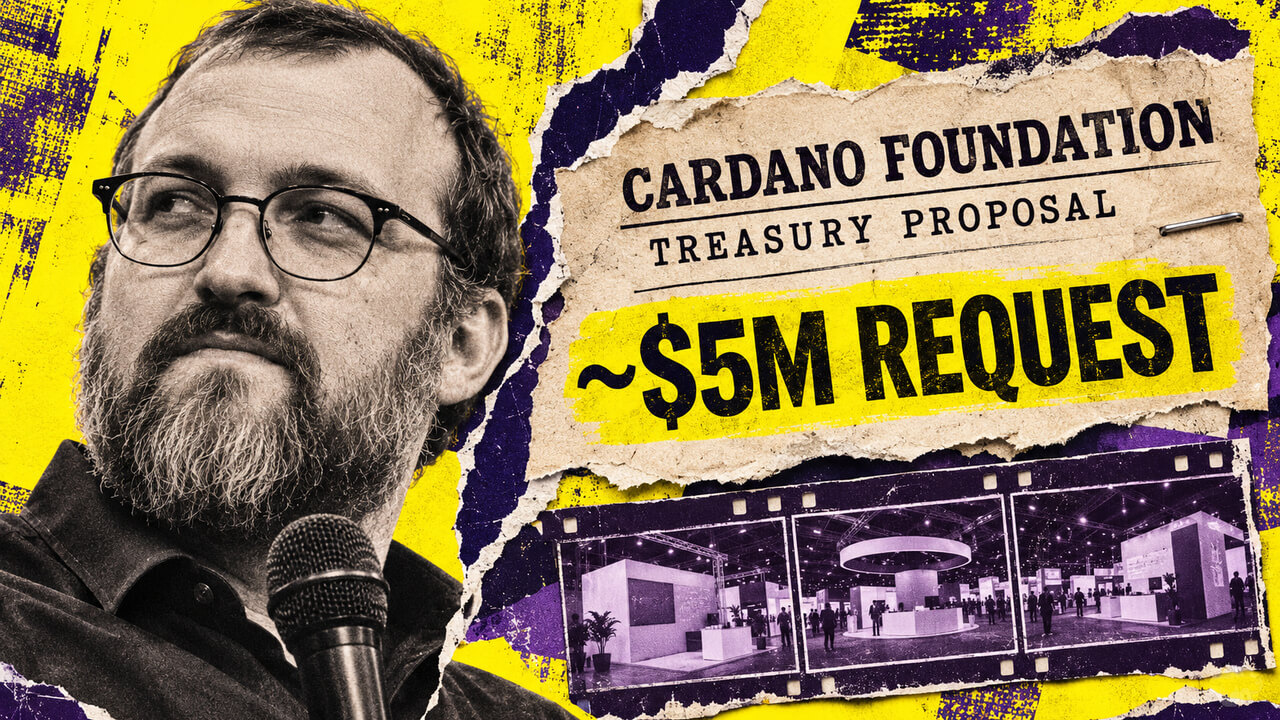
Cardano founder Charles Hoskinson recently made a statement that would make any product manager sweat: the original roadmap is officially complete. In the software world, 'complete' is a dangerous word. It implies a transition from the exciting, speculative phase of building to the gritty, often boring reality of maintenance and adoption. For Cardano, this milestone has immediately collided with a reality check in the form of a $5 million budget request from the Cardano Foundation.
Frederik Gregaard, the Foundation's CEO, is currently seeking nearly 25 million ADA to fund adoption efforts. To the casual observer, this looks like a standard marketing play. To a founder, it looks like a desperate attempt to bridge the gap between technical perfection and actual utility. Cardano has spent years building a rigorous, peer-reviewed fortress. Now that the drawbridge is down, they are realizing the surrounding landscape is remarkably quiet.
The Ghost in the Machine
The core tension here is one that every builder eventually faces: having a superior product does not matter if nobody uses it. Gregaard has been vocal in defending the network's resilience, pointing to its decentralization and technical robustness as reasons for optimism. He is not wrong about the tech. Cardano's UTOXO model and its formal verification methods are feats of engineering. However, the market has a funny way of ignoring 'better' tech in favor of 'faster' ecosystems.
The $5 million adoption test is less about marketing and more about survival. When a founder declares the roadmap done, the community expects the growth to become organic. If you still need to spend millions to convince people to show up after the work is supposedly finished, it raises hard questions about the product-market fit of the original vision. For years, the Cardano narrative was focused on the horizon. Now that we have reached the horizon, we are looking around and wondering where the users went.
Founder Dynamics and the Decentralization Paradox
Hoskinson's remarks have always been a double-edged sword for the ecosystem. His personality drives engagement, but his recent declarations have put the Foundation in a tough spot. By claiming the roadmap is finished, he has effectively handed the baton to the community and the Foundation at a time when the broader crypto market is pivoting toward high-speed L2s and memecoin liquidity. Cardano is trying to sell institutional stability in a market that currently rewards chaotic experimentation.
This is the decentralization paradox. Cardano is arguably one of the most decentralized networks in terms of stake distribution and governance protocols, yet it remains heavily influenced by the rhetoric of its primary founder. Gregaard’s push for millions in funding is an attempt to institutionalize the growth process so it doesn’t rely on a single voice. For builders, this is the most critical part of the story. Can a project transition from 'founder-led' to 'foundation-led' without losing its soul or its momentum?
The Cost of Being Right
In crypto, there is a high cost to being 'academically right.' Cardano chose the slow path. They chose Haskell. They chose formal proofs. While other chains were breaking things and moving fast, Cardano was writing papers. The result is a network that rarely goes down and handles complex logic with high security. But while Cardano was being right, Solana was being used. Ethereum was being scaled. Base was being integrated.
The $5 million requested by the Foundation is essentially an 'awareness tax' for choosing the slow route. They now have to work twice as hard to attract developers who have already spent the last three years building in EVM-compatible environments. The hurdle for a developer to switch to Cardano is not just financial; it’s cognitive. You have to learn a new way of thinking about state and transactions. That is a hard sell when the roadmap is 'complete' and there isn't a clear path to the next massive technological leap.
What This Means for Builders
If you are a founder looking at Cardano, this moment is a case study in execution risk. The tech is proven, the roadmap is checked off, and the governance is in place. But the liquidity and the developer mindshare are still lagging. The Foundation’s request for 25 million ADA tells you that they know they have a distribution problem.
For builders, the opportunity lies in the void. If the Foundation succeeds in buying its way into adoption, the early movers on a 'finished' chain could reap significant rewards. However, the risk is that the $5 million is a drop in the bucket compared to the billions being poured into rival ecosystems. You have to ask yourself if you want to build on a fortress that is finished but empty, or in a construction site that is loud, messy, and full of people.
The Credibility Gap
We need to be honest about what 'roadmap complete' actually looks like in 2024. In any other sector of tech, a finished roadmap means you are now in a legacy phase. In crypto, if you aren't constantly shipping new, disruptive features, you are dying. The Cardano Foundation is trying to reframe this 'completion' as a sign of maturity and readiness for institutional adoption. It sounds good in a press release, but the markets are skeptical.
The skepticism comes from the fact that we have seen this movie before. A project spends years on R&D, hits its milestones, and then realizes the market moved the goalposts while they were in the lab. Cardano is now fighting to prove it isn't a relic of the 2017 era of blockchain philosophy. Gregaard’s defense of the network’s future is necessary, but the fact that he has to defend it at all after reaching the 'end' of the roadmap is telling.
The Bottom Line
The next twelve months will determine if Cardano is a sleeping giant or a historical footnote. If the 25 million ADA budget translates into real-world applications and a surge in Total Value Locked (TVL), then the 'slow and steady' approach will be vindicated. If it just funds more conferences and white papers, the 'finished' roadmap will be remembered as the point where the project stopped evolving.
The takeaway for founders is clear: completion is a myth. In a competitive market, a finished roadmap is just an invitation for someone else to out-innovate you. Cardano has the tech; now we see if it has the pulse.
Do not mistake a finished checklist for a successful business. Cardano has built the pipes, but they are still waiting for the water to flow. Whether $5 million is enough to prime the pump remains to be seen, but as a builder, you should be looking for where the friction is lowest and the energy is highest. Right now, Cardano is high on structure and low on friction, but it is still searching for its spark.
Read the original at CryptoSlate →