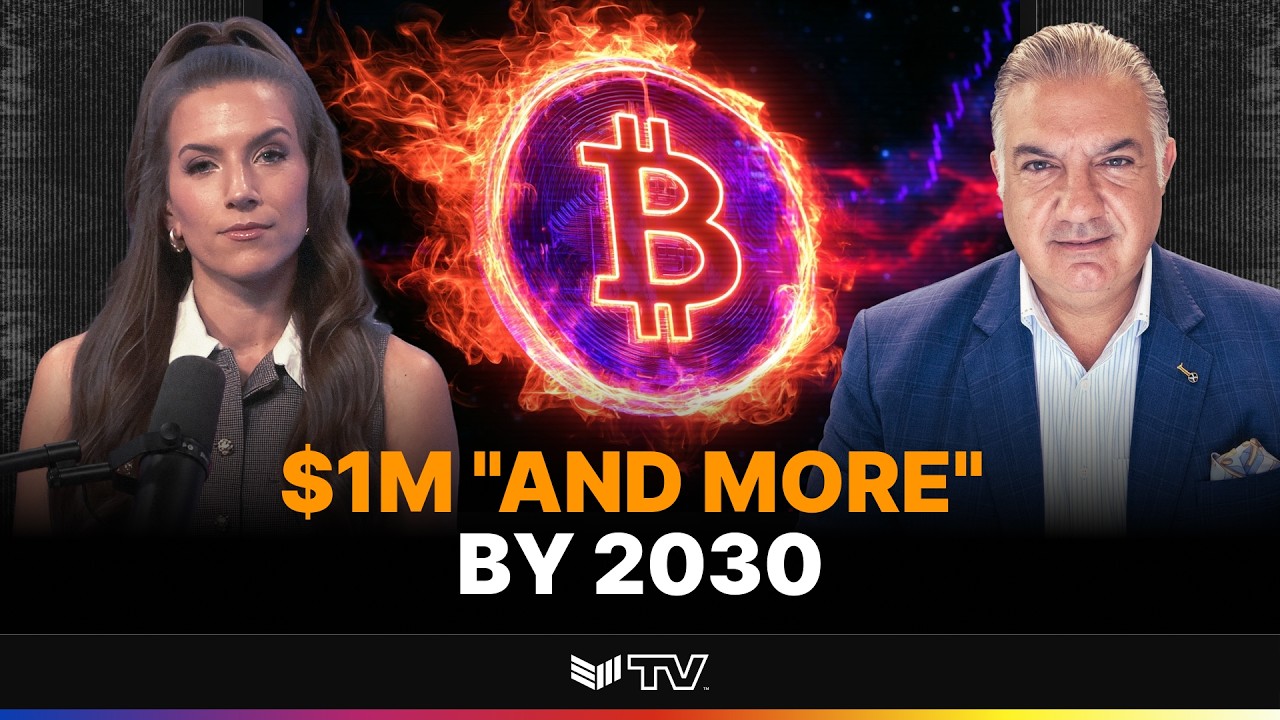
When a guy like John Koudounis speaks, people in suits usually lean in. As the CEO of Calamos Investments, he represents the old guard of finance—the kind of firm that manages billions and historically looked at Bitcoin as a curious, if not dangerous, experiment. Now, he is out here calling for a $1 million Bitcoin price tag by the year 2030. It is a bold number, even by crypto standards, but we have to look past the price tag to understand the mechanics he is actually describing.
For those of us building in this space, price targets are mostly noise. We have seen the 100k forecasts come and go. But what Koudounis is highlighting is not just market sentiment; he is talking about the physical plumbing of the financial world finally connecting to the blockchain. He is betting on a structural shift in how banks handle assets, and that is where the real opportunity lies for founders and developers.
The Institutional Lending Engine
The core of the Calamos argument rests on institutional lending. For years, Bitcoin has been a "trapped" asset. You could buy it, you could hold it, and you could maybe trade it on a sketchy offshore exchange. But you couldn't really use it as high-quality collateral in the traditional banking system. Koudounis points out that this is changing. As banks get the green light to hold and lend against Bitcoin, the liquidity floodgates open.
Think about what this means for a builder. We are moving away from the era of simple retail speculation and into an era of complex financial products. If a massive institution can pledge Bitcoin to secure a loan for a real estate development or a corporate acquisition, the velocity of the asset changes entirely. We aren't just talking about HODLing anymore; we are talking about Bitcoin becoming the foundational layer of global credit.
ETFs Were Just the Introduction
Koudounis also leans heavily on the success of Bitcoin ETFs. While the industry spent months celebrating the launch, the Calamos perspective suggests we are still in the very early innings. The ETF is not just a way for your uncle to buy Bitcoin in his 401k; it is a regulatory wrapper that makes Bitcoin "safe" for the massive pools of capital that are governed by strict compliance mandates.
From a founder's perspective, this is a signal to build for compliance and scale. The demand is no longer coming from individuals with a few hundred dollars; it is coming from pension funds and sovereign wealth funds that need institutional-grade reporting, custody, and insurance. The "wild west" days are being paved over by the asphalt of Wall Street, and while that might sting for the cypherpunks, it creates a massive market for infrastructure startups.
The Seven-Figure Skepticism
Is $1 million by 2030 realistic? It is a massive jump from where we sit today. To get there, Bitcoin would need to cannibalize a significant portion of the gold market and a healthy chunk of the global monetary base. Koudounis is essentially betting on the total failure of traditional fiat currencies to maintain their value relative to hard assets. It is a macro play as much as it is a crypto play.
However, as builders, we should be wary of these round-number targets. Price predictions like this serve two purposes: they garner headlines and they provide a narrative for asset managers to sell products. While the math for a million-dollar Bitcoin exists—based on supply halving and projected institutional inflows—the path there is never a straight line. We should expect volatility that would make most traditional investors quit the game.
What This Means for the Builder Community
If you are building an AI-driven trading bot, a new Layer 2, or a decentralized finance protocol, this institutional shift changes your target demographic. You are no longer just building for the "degens." You are building for a world where Bitcoin is a standard balance sheet item. This requires a shift in how we approach security and user experience.
- Infrastructure over Apps: The next five years will favor those building the pipes—custody solutions, settlement layers, and audit tools that institutions can trust.
- Regulatory Clarity as a Feature: Instead of trying to bypass regulations, the most successful projects will likely be those that integrate compliance directly into the code.
- Interoperability: If Bitcoin is to hit $1 million, it needs to move. Solutions that bridge Bitcoin to other ecosystems without compromising security will be worth their weight in gold.
The Founder's Takeaway
Don't get distracted by the $1 million headline. Whether it hits that number in 2030 or 2040 is secondary to the fact that the world's largest financial players are no longer asking "if" Bitcoin matters, but "how" they can own it. The skepticism that once defined the banking industry's view of crypto is being replaced by a fear of missing out on the next global reserve asset.
As a founder, your job is to build the tools that make this transition possible. The institutionalization of Bitcoin is a one-way street. The banks are coming for the liquidity, and the ETFs were just the invitation. If Koudounis is even half right, the scale of the financial infrastructure we need to build is orders of magnitude larger than what exists today. Focus on the plumbing, and the price will take care of itself.
The real story isn't the price target; it's the fact that the people who run the global financial system are now the ones setting the targets.
Stay grounded, keep building, and don't let the hype cycles distract you from the technical reality. We are moving from a speculative niche to the core of global finance. It's time to act like it.
Read the original at Bitcoin Magazine →