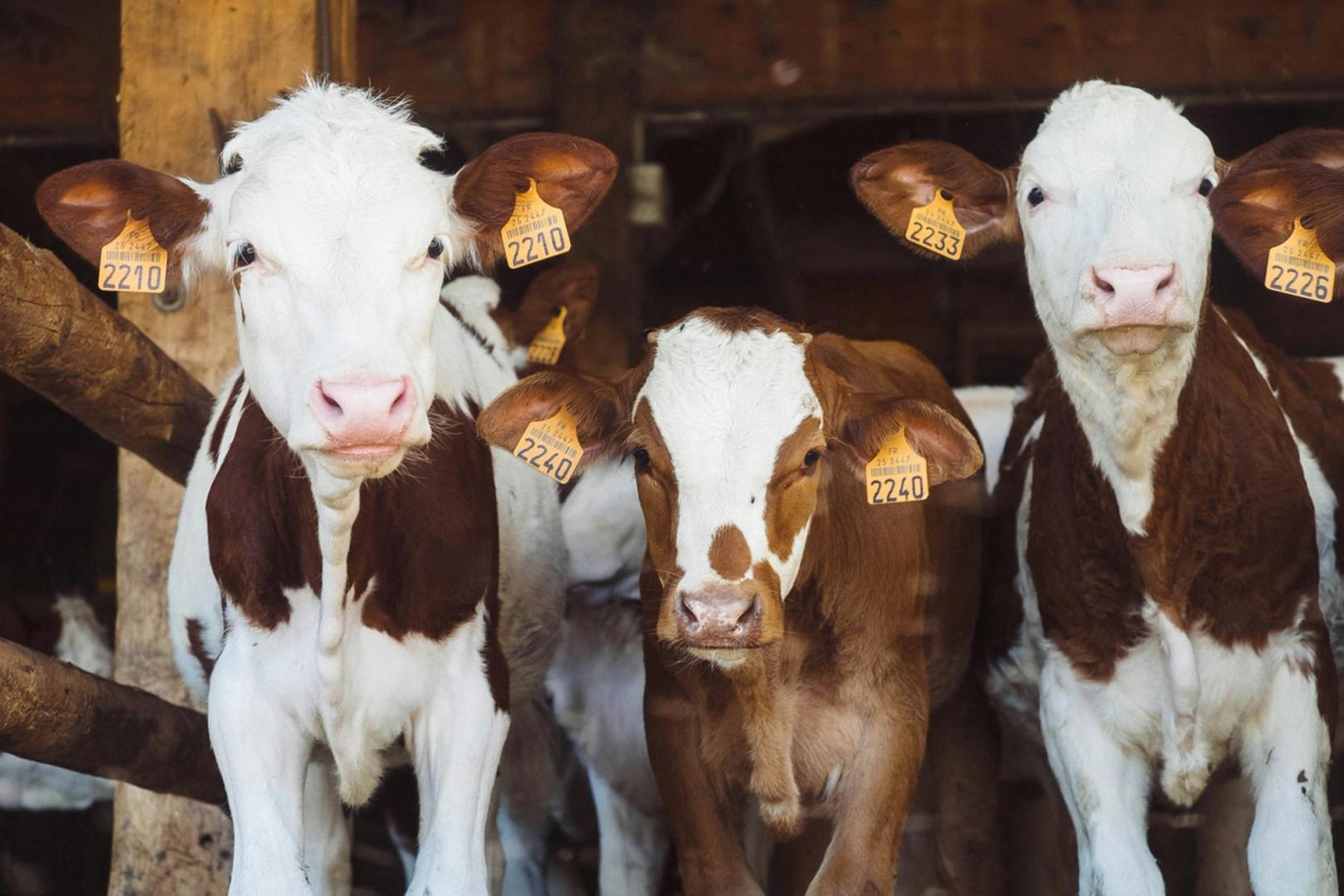
Cows on the Chain
In the tech world, we spend a lot of time talking about high-level abstractions like zero-knowledge proofs and decentralized identity. We often forget that the most powerful use cases for blockchain are usually the ones that involve dirt, sweat, and actual physical assets. Down in Brazil, a group of dairy farmers is currently putting on a masterclass in pragmatic decentralized finance by doing something most Silicon Valley founders would find boring: they are tokenizing their cows.
This isn't about some speculative meme coin based on a nursery rhyme. It is a direct response to a massive bottleneck in the traditional financial system. In Brazil, and many other emerging markets, the agricultural industry is the backbone of the economy, yet it is stifled by rigid bank lending limits. For a farmer, your wealth is literally walking around in the pasture, but to a bank, that livestock is often considered too risky or too hard to track to serve as reliable collateral.
By putting smart collars on their herds and recording that data on a blockchain, these farmers are creating a transparent, real-time audit trail. This allows them to secure loans that would have been impossible eighteen months ago, bypassing the gatekeepers who usually dictate who gets to grow and who stays stagnant.
The Real-Time Audit Problem
The biggest reason banks hate lending against livestock is fraud. It is remarkably easy to lie to a loan officer about the health or quantity of a herd if that officer is sitting in an office three hundred miles away. In the past, by the time an inspector arrived at the farm, the assets could be gone, sick, or moved to a neighbor's property to pad the numbers.
The Brazilian model solves this with IoT (Internet of Things) integration. These cows are wearing collars that monitor their health, movement, and vital signs in real time. If a cow stops moving or leaves a designated geofenced area, the system knows immediately. That data is fed into a blockchain ledger that lenders can view. It turns a biological asset into a digital twin that provides a constant heartbeat of the loan's security.
For builders, this is the part you need to pay attention to. We often talk about RWA (Real World Assets) as if it just means putting real estate titles on-chain. But the real breakthrough is the marriage of hardware and ledger. Without the IoT collars, this is just a spreadsheet with more steps. With the hardware, it becomes an automated trust machine.
Bypassing the Gatekeepers
Traditional banks operate on a set of legacy rules that don't always scale with reality. A farmer might have a million dollars worth of healthy dairy cattle but be capped at a fifty-thousand-dollar credit line because of arbitrary regional risk assessments or bank liquidity constraints. This creates a ceiling for growth that talent and hard work can't break through.
Tokenizing these assets allows the farmers to tap into a different pool of capital. When you move the collateral onto a decentralized or private lending platform, you aren't just competing for the attention of the local bank manager. You are opening up the opportunity to private investors and larger liquidity pools that are looking for yield backed by something tangible. A cow that produces milk every day is a productive asset with a predictable cash flow. That is exactly what a smart investor wants, especially when the risk of fraud is mitigated by technology.
This isn't just a workaround; it's a fundamental shift in how credit is established. We are moving from a system based on "Who do you know at the bank?" to a system based on "What can your data prove?"
The Practicality of Cattle
I like this story because it is rugged. It’s hard to hype up a dairy farm. There are no lingo-heavy whitepapers promising to change the world with a new consensus mechanism. There is just a problem—farmers need money to buy feed and equipment—and a solution—using a ledger to prove they have the assets to pay it back.
For the crypto skeptics who ask what the point of all this is, this is the answer. It’s about liquidity. For a farmer in rural Brazil, the difference between getting a loan and not getting a loan is the difference between expanding the family business or going underwater. If blockchain is the tool that facilitates that transaction faster and cheaper than a bank can, then it has already won. The end-user doesn't even need to know they are using a blockchain; they just need to know their cows are now working for them in more ways than one.
Implications for the RWA Sector
We are going to see this model exported to every sector that involves moving parts and high-value physical goods. Think about construction equipment, shipping containers, or even specialized medical hardware. Anything that can be tracked with a sensor can be tokenized and used as collateral.
The hurdle for builders right now isn't the code. The smart contracts for this stuff are relatively simple. The real challenge is the physical layer. How do you ensure the sensor isn't tampered with? How do you handle the legal recourse if a borrower defaults on a tokenized cow? Brazil is providing a testing ground for these questions. They are figuring out the intersection of local law and decentralized ledger technology in real-time.
The Bottom Line
The lesson here is simple: stop looking for the next shiny thing and start looking for the next bottleneck. The most successful founders in the next five years won't be the ones building the five-hundredth DeFi swap protocol. They will be the ones building the bridges between physical reality and digital finance.
These Brazilian farmers aren't trying to be pioneers of the New Economy. They are just trying to run their farms. But in doing so, they are proving that when you give people the tools to bypass inefficient systems, they will take them every single time. Real-world utility isn't found in a boardroom; it's found in the field.
The Takeaway for Builders
- Hardware is the anchor: For real-world assets, the ledger is only as good as the data source. Integrating IoT is the only way to solve the trust gap.
- Solve for liquidity: The best use cases for tokenization are industries where traditional credit is capped or non-existent.
- Friction is the enemy: The success of these programs depends on how easily a non-technical user can interact with the system.
Read the original at CoinDesk →