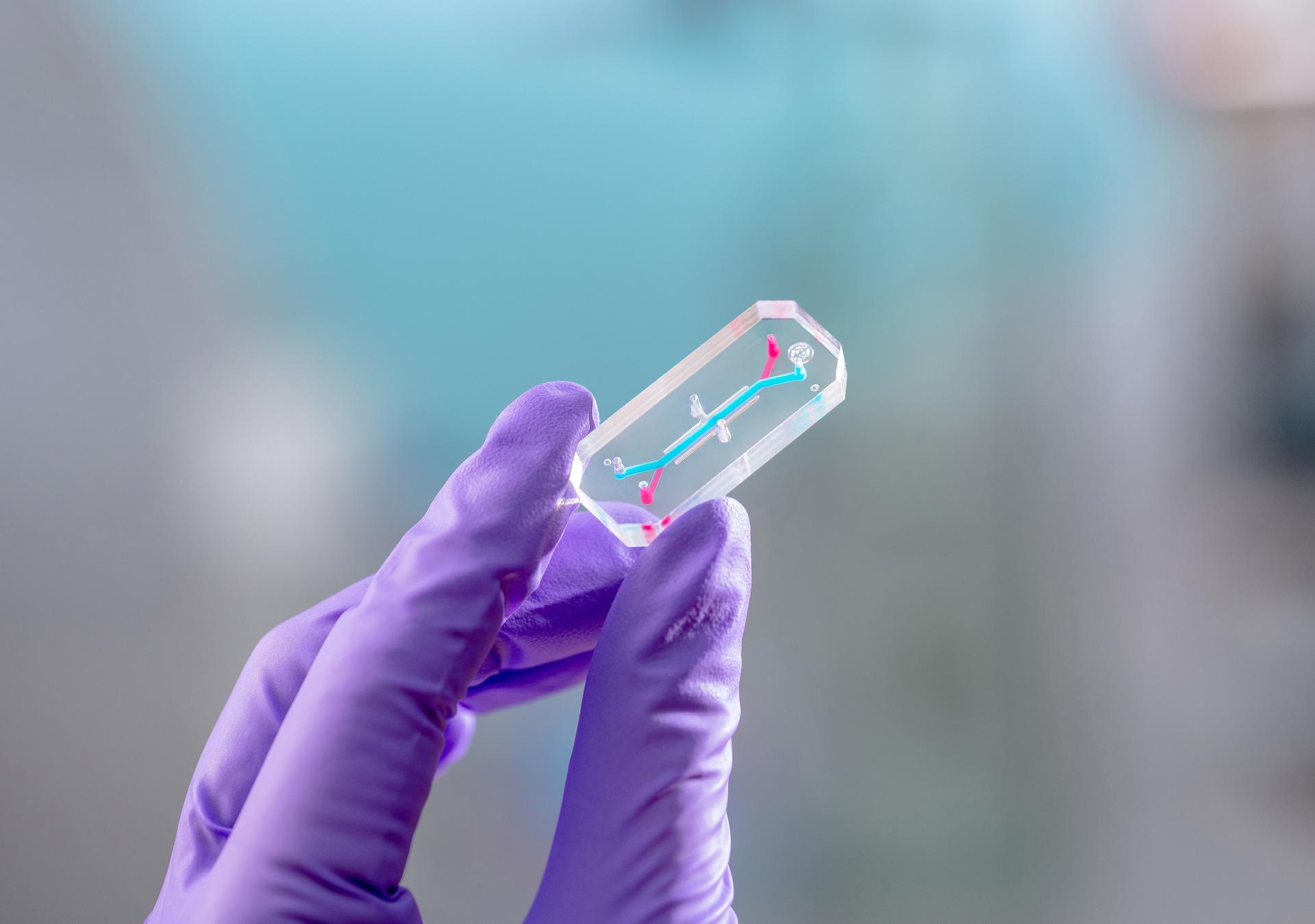
NASA is finally admitting they cannot solve the biological puzzle of deep space on their own. They have launched the BPS Digital AVATAR Challenge, a project aimed at building computational models that can predict how the human body reacts to the absolute mess that is space radiation and microgravity. For builders in the AI and crypto space, this is a massive signal: the era of the 'Digital Twin' is moving from industrial machinery into the realm of complex organic systems.
The Problem with Sending Meat to Mars
Sending humans to the moon was a feat of engineering. Sending humans to Mars is a feat of biology. When you leave Earth's orbit, you aren't just floating; you are being pelted by ionizing radiation and dealing with magnetic fields so low they mess with your cellular signaling. We know it is bad, but we do not know exactly how bad it gets over a three-year round trip.
Currently, our data is fragmented. We have bits of info from ISS astronauts, some mouse studies, and a lot of ground-based simulations. NASA’s Biological and Physical Sciences (BPS) Division realizes that they need a way to synthesize this into a predictive model. They need an avatar—not the blue skin kind, but a digital representation of biological systems that can be poked and prodded with variables like elevated CO₂ levels and zero-G before we risk a human life.
Why Builders Should Care About Digital Twins
As someone who spends a lot of time looking at data infrastructure, I find this fascinating because it is the ultimate 'edge case' for data modeling. If you are building AI agents or data pipelines, you are used to dealing with noisy data. But biological data from space is the noisiest of all. It spans from the molecular level up to the entire organism.
NASA is looking for solutions that can integrate multi-omics data. This means genomics, transcriptomics, proteomics, and more. For developers, the takeaway is clear: the demand for platforms that can handle massive, disparate, and highly sensitive datasets is about to skyrocket. If you can build a model that predicts how a heart cell reacts to a solar flare, you can build a model for just about anything on Earth.
The Crowdsourcing Pivot
It is worth noting that NASA is using the Center of Excellence for Collaborative Innovation (CoECI) for this. This is the government's way of saying 'we don't have all the answers in-house.' They are looking for outsiders. This is a recurring theme in the modern tech landscape. The smartest people in the world don't all work for one agency; they are spread out in garages, DAOs, and small startups.
This is a call to action for the open-source community. The AVATAR challenge isn't just about winning a prize; it is about setting the standard for how we model life itself. If we get this right, we aren't just helping astronauts. We are creating a framework for personalized medicine that could change how we treat disease on the ground. A digital twin that can survive a trip to Mars can certainly survive a clinical trial for a new drug.
The Skeptic's Corner: Can We Actually Model Life?
I am always a bit skeptical when I hear 'digital avatar' used in a press release. It sounds a bit like the metaverse hype of 2021. The reality is that biology is incredibly non-linear. One small change in radiation exposure doesn't lead to a predictable 1:1 outcome in cell mutation. There are feedback loops we don't even understand yet.
The challenge for builders is avoiding the trap of 'overfitting.' It is easy to create a model that looks great on historical data but fails the moment a new variable is introduced. NASA doesn't need a model that explains what happened on the last Apollo mission; they need one that tells them what will happen on the next one. This requires a level of algorithmic transparency and robustness that most current AI models lack.
The Intersection of AI and Space Bio
We are seeing a convergence here. AI is getting better at pattern recognition in biology, and space exploration is providing the most high-stakes environment possible to test those patterns. This isn't just about 'big data'; it is about 'deep data.' We are looking at how living systems respond across the full spectrum of biological organization.
- Microgravity: How do fluids and bones behave when the constant of gravity is removed?
- Ionizing Radiation: Can we predict DNA repair mechanisms in real-time?
- Low Magnetic Fields: What does the absence of Earth's shield do to our neurological pathways?
- Elevated CO₂: How does the closed-loop environment of a spacecraft affect long-term cognitive function?
The Takeaway for the Tech Community
NASA's AVATAR challenge is a reminder that the most important work being done right now isn't in social media apps or speculative tokens. It is in the infrastructure of survival. If you are a founder or a developer, look at the tools being requested here: data fusion, predictive modeling, and system-wide biological simulations.
The tech stack required to get us to Mars is being built today. It is decentralized, it is collaborative, and it is increasingly driven by AI. Don't let the 'NASA' branding intimidate you. They are looking for the same things every other industry is: better insights from messy data. The difference is, in space, the stakes are literal life and death.
The digital twin isn't just a copy of a human; it is a shield. We build the avatar so the explorer doesn't have to break.
We are moving toward a world where 'testing in production' doesn't apply to humans. We test on the avatar, we refine the model, and then we launch. That is the builder-first way to approach the stars.
Read the original at NASA Breaking News →