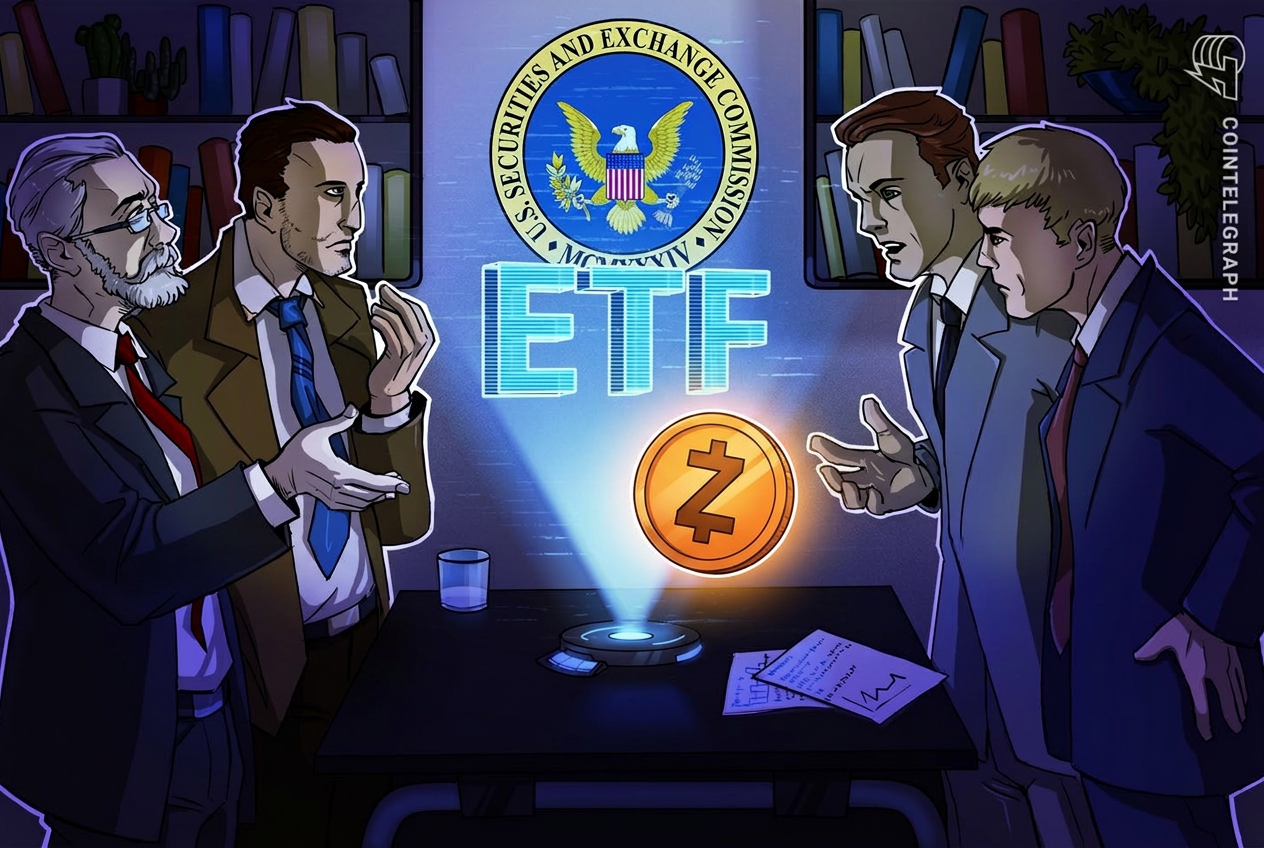
We have spent years watching the financial industry try to sanitize crypto. The goal for most institutional players has been to strip away the weirdness, the anonymity, and the volatility to make it look like a boring mutual fund. That is why the latest filing from Bitwise is so interesting. They aren't just filing for another index fund; they are aiming for a Zcash ETF, and they want to list it on the up-and-coming Texas Stock Exchange.
This isn't a safe play. Bitwise is leaning into the privacy sector at a time when regulators are increasingly hostile toward anything they cannot easily track. By choosing Zcash, they are backing a project that has long been the gold standard for zero-knowledge proofs, even if its market cap has seen better days. For builders, this is a signal that the infrastructure for "dark" liquidity and private transactions is finally being tested at the institutional level.
The Texas Connection
The choice of venue here is just as important as the asset itself. The Texas Stock Exchange, or TXSE, is positioned as a challenger to the New York status quo. It is backed by heavy hitters like BlackRock and Citadel Securities, and it represents a geographic shift in where financial power sits. For a privacy-focused asset like Zcash, launching in a state that prides itself on limited government oversight and individual rights is a deliberate branding move.
If the TXSE becomes the home for alt-ETFs, it changes the landscape for founders. We have spent a decade assuming that every major crypto financial product had to pass through the filter of Wall Street and the Nasdaq. If Texas creates a parallel track, we might see more experimental or niche assets getting the ETF treatment without having to conform to the specific cultural pressures of the New York financial establishment.
Why Zcash Matters Now
Zcash has always been the intellectual darling of the privacy world. Unlike Bitcoin, which is a public ledger where every transaction can be traced if you try hard enough, Zcash uses zk-SNARKs to allow for shielded transactions. You can prove you have the money and that the transaction is valid without revealing the sender, receiver, or the amount. To a regulator, that sounds like a nightmare. To a builder, it sounds like the only way to actually scale a global financial system without exposing every user to data harvesting.
Bitwise is betting that the market is ready to differentiate between "crime" and "privacy." For a long time, the narrative was that privacy coins were only for bad actors. But as we move into an era of AI-driven surveillance, the need for private rails becomes a basic requirement for business. No corporation wants their entire payroll or supply chain payments visible on a public block explorer for their competitors to analyze.
The Custody Hurdle
The filing names Coinbase Custody as the partner responsible for holding the ZEC. This is a critical detail. For an ETF to work, the underlying asset has to be secured in a way that satisfies the SEC’s concerns about theft and loss. Coinbase has become the default vault for the American crypto industry. Their involvement suggests that the technical challenges of storing shielded assets at scale have been solved to a degree that an institutional manager feels comfortable putting their name on it.
However, builders should keep a close eye on how the "shielded" vs "transparent" address debate plays out here. If the ETF only interacts with transparent addresses to satisfy anti-money laundering rules, it arguably defeats the purpose of Zcash. The real test will be whether the fund can maintain the integrity of the privacy features while living inside the box of a regulated security.
What This Means for Founders
If you are building in the ZK-proof space or working on privacy-preserving middleware, this filing is your green light. It proves that the appetite for these technologies isn't limited to the fringes of the internet. When a firm like Bitwise spends the legal fees and time to file for a Zcash ETF, they are signaling that there is institutional demand for privacy as an asset class.
It also suggests a shift in how we think about liquidity. An ETF brings a massive influx of passive capital. If Zcash gets an ETF, it ceases to be a speculative privacy play and becomes a legitimate component of a diversified portfolio. This provides a price floor and a level of legitimacy that makes it easier for developers to build apps on top of the Zcash protocol without fearing that the rug will be pulled by a sudden exchange delisting.
The Regulatory Skepticism
We shouldn't get ahead of ourselves. The SEC has historically been allergic to privacy coins. They have pressured centralized exchanges to delist them in the past, and they view the inability to track transactions as a fundamental risk. Bitwise is essentially picking a fight here, or at the very least, testing the waters of a post-election regulatory environment that might be more lenient.
The skepticism remains: can a privacy coin truly exist as a regulated security? The tension between the two concepts is significant. If the SEC forces Bitwise to compromise on the privacy features of the underlying ZEC, the product loses its soul. Founders should watch the comment periods and the SEC’s responses closely. It will tell us exactly where the line is drawn for the next four years.
Takeaway
The Bitwise Zcash filing is a high-stakes bet on the future of financial privacy. By aiming for a listing on the Texas Stock Exchange, they are distancing themselves from the traditional gatekeepers and embracing a more decentralized, privacy-centric ethos. For builders, this is the moment to double down on zero-knowledge tech. The infrastructure is moving toward you; the only question is whether the regulators will let it cross the finish line.
Privacy is not about hiding something wrong; it is about protecting something right. If the institutional world is finally waking up to that, the entire ZK ecosystem is about to get a lot more crowded.
Read the original at Cointelegraph →