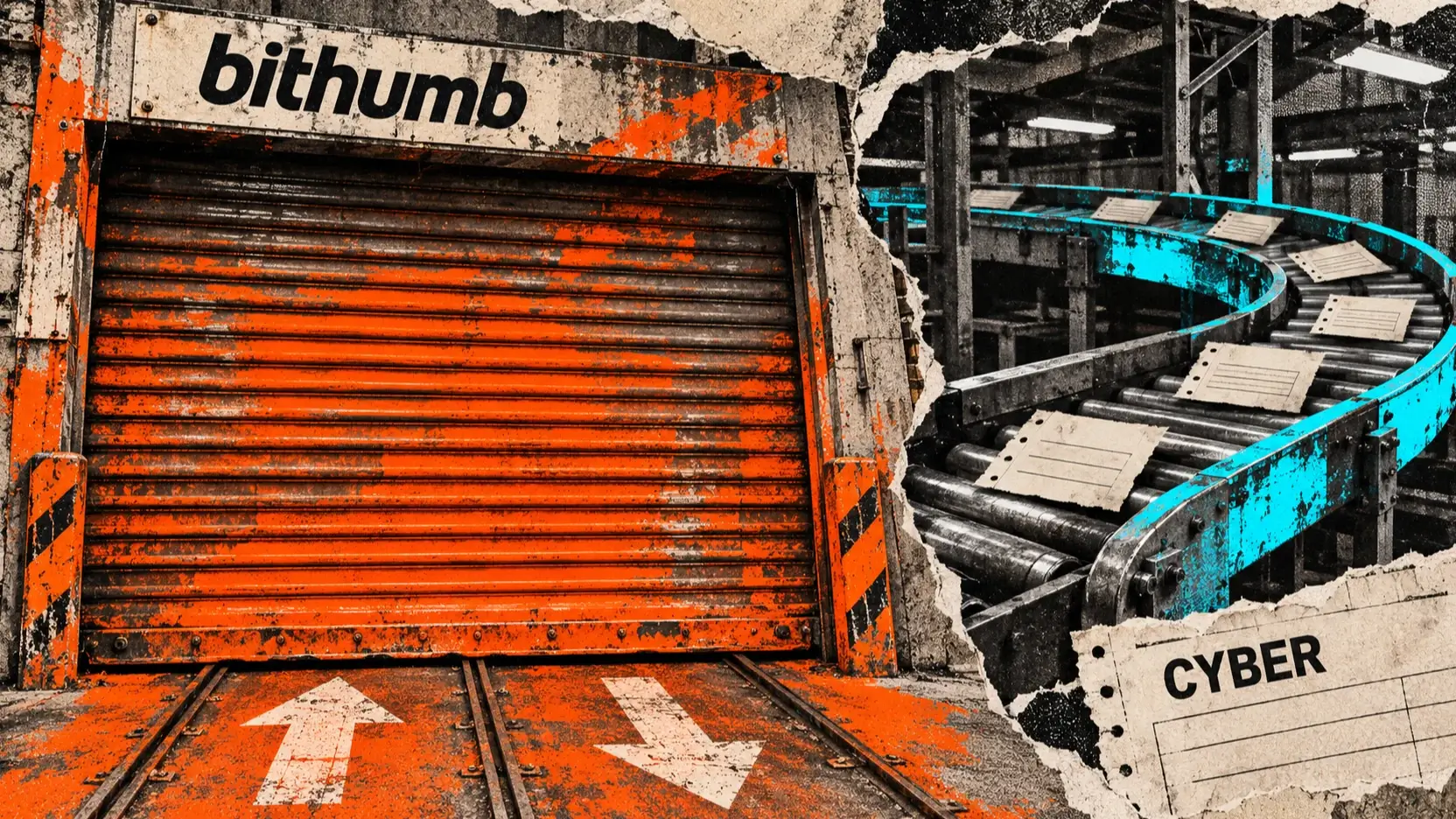
We have seen this movie before, and it rarely ends with a standing ovation. Bithumb, one of South Korea's most active exchanges, recently hit the kill switch on deposits and withdrawals for the CYBER token. They kept the trading pairs open, which is its own kind of chaos, but the gates to the outside world are locked tight. Almost simultaneously, Kraken flagged potential delays for the same asset when moved via the Optimism network.
The Fragility of the Bridge
When an exchange stops the flow of a specific asset while leaving the market active, it is usually a sign that the plumbing is leaking. In this case, the focus is on a suspected security issue. For those of us building in this space, this isn't just another headline about a token price moving; it is a reminder that the infrastructure we rely on for cross-chain functionality is still incredibly brittle.
CyberConnect, the project behind the CYBER token, is trying to build a decentralized social graph. That is a noble and difficult goal. But the friction here isn't about their social protocol; it is about the movement of value across disparate networks. When Bithumb freezes the rails, it creates a closed-loop ecosystem where price discovery becomes a hallucination. If you cannot move the asset out to arbitrage or settle, the price on that specific exchange stops reflecting global reality.
Why Builders Should Care About Liquidity Silos
If you are a founder, your first instinct might be to ignore exchange drama. That is a mistake. The way these platforms handle your token during a security scare tells you everything you need to know about the robustness of your distribution. If a major exchange like Bithumb detects a vulnerability in the way deposits are processed, it suggests a failure in the integration layer.
We talk a lot about the 'multi-chain future,' but we rarely talk about the technical debt that comes with it. Every time you bridge a token or support a new Layer 2 like Optimism, you are adding a new point of failure. Kraken's warning about Optimism-based deposits for CYBER highlights that even the most reputable L2s have synchronization issues or indexing lags that can spook a compliance department.
- Exchange freezes create artificial volatility.
- Security 'suspicions' often stem from smart contract logic flaws in the bridging mechanism.
- Founders need to audit their exchange integrations as heavily as their core protocol.
The Bithumb Disconnect
Bithumb is known for its 'Kimchi Premium,' where assets trade higher than the global average due to capital controls and local demand. When you stop deposits but keep trading alive, you are essentially creating a synthetic environment. Users can buy and sell, but they are trading IOUs that they cannot redeem for the actual underlying asset on-chain. This is a dangerous game for retail users and a headache for market makers.
The official word from Bithumb was vague, citing security concerns. In crypto-speak, that could mean anything from a double-spend vulnerability to an exploit in the token's minting logic on a specific chain. The fact that Kraken also flagged issues suggests the problem is not isolated to Bithumb's internal database but is likely tied to how the token interacts with the Optimism bridge or the sequencer.
Infrastructure is the Real Bottleneck
We spent the last two years obsessed with UI/UX and onboarding 'the next billion users.' But as this CYBER situation shows, we haven't even mastered the plumbing for the current million. If a user sends a deposit and it disappears into a void for forty-eight hours because of a network lag, that user is gone forever. If an exchange freezes withdrawals because they can't verify the provenance of the tokens, the 'trustless' narrative takes another hit.
For founders building social protocols or any consumer-facing dApp, the takeaway is clear: your choice of chain and your choice of bridge are not just technical decisions; they are reputation decisions. If your token gets flagged on a top-tier exchange because the bridge you chose is buggy, your project carries that stain.
The most dangerous part of a crypto project is the moment the token leaves the controlled environment of your smart contract and enters the messy reality of an exchange's hot wallet.
What Happens Next
Usually, these situations resolve in one of two ways. Either the project team patches a minor bug in the bridge contract and the exchanges resume service, or we find out there was a legitimate exploit that drained a pool. Regardless of the outcome for CYBER, the pattern is the problem. We are building massive financial structures on top of bridges that are essentially experimental software.
I am not here to tell you to stop building on L2s or to avoid exchanges. I am telling you to be skeptical of the 'seamless' marketing. If you are a founder, you need to be asking your lead engineers what happens if the sequencer goes down, or what happens if an exchange's indexer fails to read your token's mint event. If you don't have an answer, you aren't ready for a listing.
The Founder's Checklist
Before you push for that next big exchange listing, ask yourself these three things:
- Is our token contract compatible with the standard indexing tools used by major exchanges?
- Do we have a direct line of communication with exchange security teams for when—not if—a deposit stall happens?
- Are we relying on a single bridge that represents a single point of failure for our entire liquidity pool?
The situation with Bithumb and Kraken is a localized fire, but the conditions that caused it are everywhere. We are still in the era of 'move fast and break things,' but in finance, when things break, people lose their life savings. It is time we start building with a bit more paranoia.
The Takeaway
The CYBER deposit freeze is a warning shot. Security isn't just about your code; it is about the entire lifecycle of the token. If the rails between the chain and the exchange are weak, the whole system is weak. Stop chasing hype and start auditing your infrastructure. If the plumbing doesn't work, the house isn't livable.
Read the original at CryptoSlate →