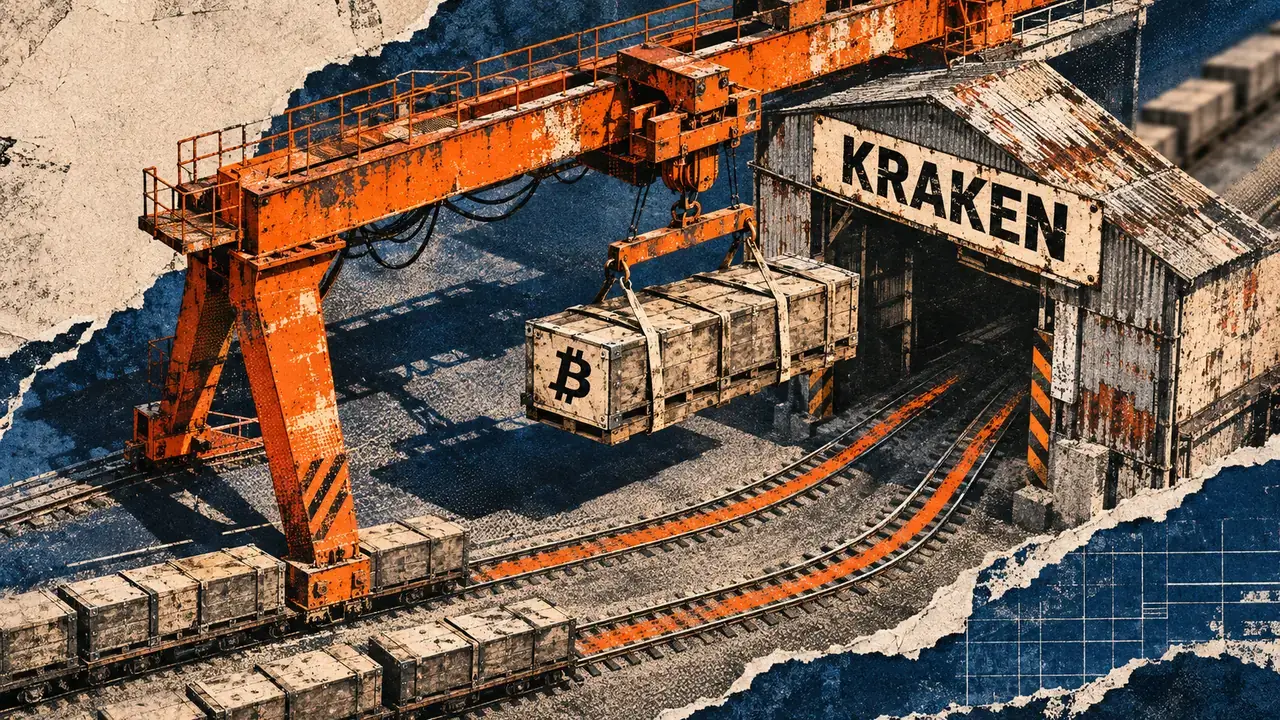
We have been told a specific story for the better part of two years: Bitcoin is leaving exchanges, the supply is drying up, and a massive price squeeze is inevitable. It is a clean, simple narrative that makes for great social media posts. But if you are building in this space, you know that clean narratives usually hide messy realities. The recent movement of 11,000 BTC to Kraken is a perfect example of why we need to stop taking exchange outflow data at face value.
For those tracking the movement of coins, the headline numbers looked great last week. Thousands of Bitcoin were marked as leaving major platforms like Coinbase and Binance. In the traditional interpretation, this signifies holders moving their assets to cold storage, signaling long-term conviction and reducing the available supply for sale. However, the blockchain tells a different story once you follow the hops. A significant portion of these coins did not go to a private vault. They went to Kraken.
The Shell Game of Liquidity
This isn't just a minor accounting error. It exposes a fundamental flaw in how we measure market sentiment. When we see 11,000 BTC move between exchanges, it isn't a supply squeeze; it is a liquidity migration. One platform loses depth while another gains it. For a founder or a developer building tools that rely on market data, this distinction is everything. If your models are built on the assumption that exchange outflows equal bullish accumulation, your data is fundamentally broken.
The move involved five massive transfers from wallets tagged to Binance and Coinbase. In the eyes of most automated bots, these were "outflows." But since they landed back in the trading ecosystem via Kraken, the net impact on the circulating supply available to the market is zero. We are watching a shell game, and the audience is falling for the trick.
Why the Supply Squeeze Narrative is Fragile
The supply squeeze thesis relies on the idea that the liquid supply of Bitcoin is at multi-year lows. While it is true that more people are holding for the long term, the "exchange balance" metric is becoming increasingly unreliable. Modern crypto infrastructure is much more complex than it was in 2017. Large institutions use prime brokerages, over-the-counter (OTC) desks, and multi-custodial setups that blur the lines of what constitutes an "exchange wallet."
When 11,000 BTC moves, it could be a market maker rebalancing their books to provide better spreads on a specific pair. It could be an institutional client moving funds to take advantage of different fee structures or geographical jurisdictions. None of these actions imply that the coins are being "taken off the table." In fact, moving to Kraken suggests these coins are very much on the table, ready to be traded or used as collateral.
The Founder Perspective: Build for Volatility, Not Narratives
If you are building a DeFi protocol, a trading bot, or a treasury management tool, you cannot afford to be a narrative extremist. The industry loves the supply squeeze story because it implies a guaranteed price floor. But as a builder, you have to look at the plumbing. The plumbing shows that liquidity is fluid. It moves where it is treated best, and it doesn't always move into a black hole.
We have to ask: why Kraken? And why now? Kraken has traditionally been a stronghold for Euro liquidity and institutional spot trading. Large movements there often precede shifts in market structure. If you are building tools for traders, this movement is a signal of a coming shift in volatility, not necessarily a signal of a moon mission. You should be preparing your systems for increased volume and potential price swings, rather than betting the farm on a supply-side crunch that isn't actually happening.
The Problem with Tagged Wallets
Part of the reason these narratives gain so much steam is our reliance on third-party data providers who tag wallets. While these services provide a vital utility, they aren't perfect. Exchanges regularly rotate their hot and cold wallet addresses. A wallet that was tagged as "Coinbase" yesterday might be a generic internal address today, or it might be an intermediary wallet that the tracking software hasn't identified yet.
When these 11,000 BTC moved, the trackers caught the departure but struggled to immediately contextualize the arrival. This delay creates a window where false narratives can flourish. For a few hours, the market believed the supply was shrinking. By the time the truth caught up—that the coins just changed their zip code—the damage to the data integrity was already done.
The Reality of Institutional Custody
We also need to consider the rise of institutional custody. As more traditional finance players enter the space, they aren't just using one exchange. They are using sophisticated routing systems that move assets between venues to find the best price or the most secure storage at any given moment. What looks like a "withdrawal" to a retail observer is often just an internal transfer for a billion-dollar fund.
This suggests that the "supply squeeze" might be more of a "liquidity fragmentation." The Bitcoin isn't gone; it is just spread across more silos, making it harder to track with the simple tools we have been using. For builders, this is an opportunity to create better, more granular on-chain analytics that can see through these exchange-to-exchange hops.
What This Means for You
- For Investors: Don't buy the hype of every "exchange outflow" alert. Verify the destination. If the coins land on another exchange, the supply hasn't changed.
- For Developers: Build tools that track the total liquid environment, not just individual exchange balances. We need better attribution for inter-exchange transfers.
- For Founders: Base your long-term strategy on utility and adoption, not on the hope that a supply crunch will bail out your tokenomics.
The 11,000 BTC move to Kraken is a reality check. It reminds us that the blockchain is transparent, but our interpretation of it is often clouded by what we want to believe. The supply squeeze might happen one day, but it won't be because coins moved from one centralized exchange to another. It will happen when the utility of holding Bitcoin outweighs the utility of trading it. We aren't there yet.
The biggest risk to a builder is believing their own marketing. If you think the supply is disappearing just because the dashboard says so, you aren't looking close enough.
We need to stop looking for reasons why the price *must* go up and start looking at how the pipes actually work. Liquidity is shifting, not vanishing. Plan accordingly.
Read the original at CryptoSlate →