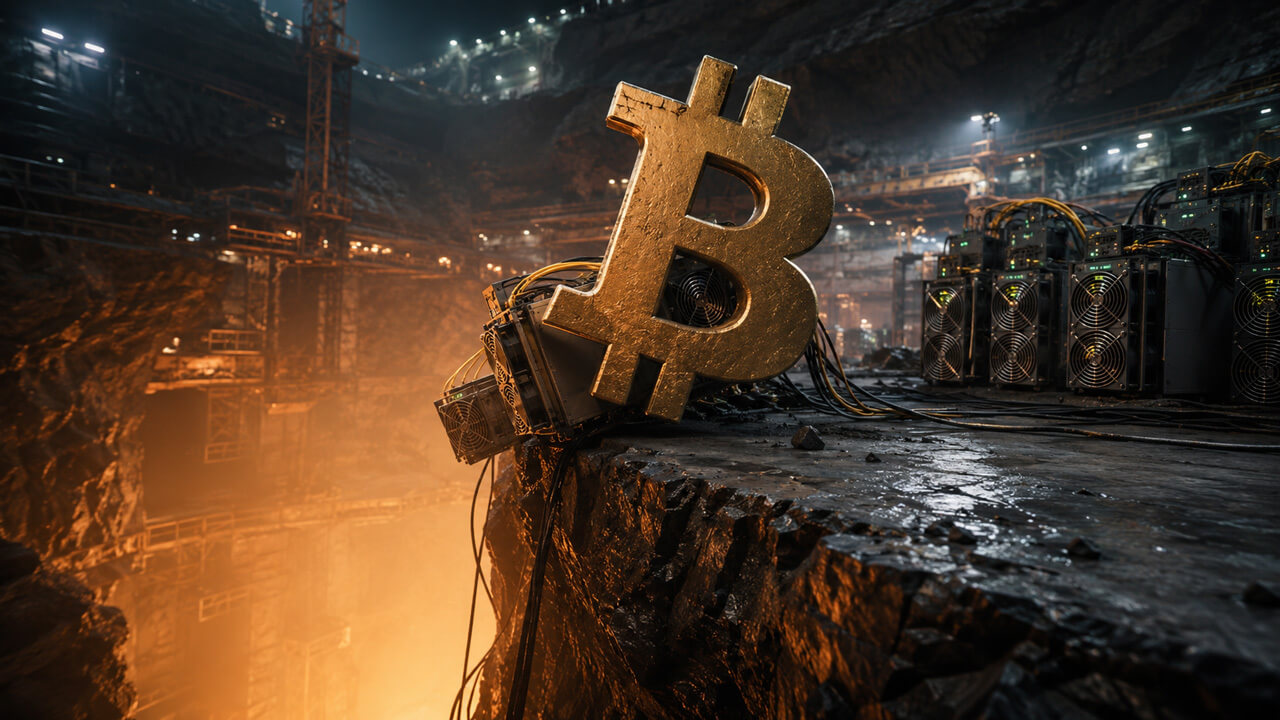
Bitcoin is currently trading just above $60,000 while it costs roughly $84,300 to mine a single coin. This is not a temporary dip or a market quirk. It is a fundamental breaking of the production cost floor that separates the operators from the hobbyists.
The Illusion of the Cost Floor
For years, a popular narrative suggested that Bitcoin’s price would always be supported by its production cost. The theory was simple. If it costs $50,000 to mine a coin, the market price cannot stay below that level for long because miners would simply shut down, supply would contract, and the price would correct upward. This theory is now dead. Data reported by CryptoSlate shows a gap of nearly 25 percent between the current price and the all-in cost of production. We are witnessing a phase where the floor has become a ceiling for the inefficient.
The deeper problem is that many mining operations were built for a decade of cheap money and rising prices. They treated capital expenditures as a secondary concern because the perpetual bull market hid their flaws. Now, the math is cruel. When you are spending $84,300 to produce an asset you can only sell for $60,000, you are not a business. You are a charity for the network. The survivors in this environment are not the ones with the most machines. They are the ones with the lowest cost of carry and the strongest balance sheets.
Efficiency is not just a metric; it is the only viable strategy when the market removes your safety net.
The Darwinian Split
We are seeing a hard split in the industry. On one side, you have the sellers. These are the miners who are forced to liquify their holdings just to keep the lights on. They are chasing the market down, adding sell pressure, and feeding the very cycle that is crushing them. On the other side, you have the survivors. These operators have secured long term energy contracts, upgraded to the latest hardware, and diversified their revenue streams. They are the ones who can afford to wait for the next halving cycle to play out.
This is a classic pattern in maturing industries. The early phase is defined by land grabs and speculation. The middle phase, where we are now, is defined by consolidation. The weak hands are forced to sell their infrastructure and their Bitcoin to the strong hands. This transition is usually painful, but it is necessary for the long term health of the ecosystem. It flushes out the leverage and rewards the builders who focused on unit economics rather than hype.
- The cost of energy is the only variable that truly matters for long term survival.
- Hardware depreciation happens faster than most balance sheets account for.
- Liquidity reserves are the only buffer against a broken production floor.
Infrastructure as a Competitive Moat
In 2007, I watched businesses fail because they lacked a digital identity. In this cycle, I am watching miners fail because they lacked an operational identity. They viewed themselves as financial speculators rather than industrial operators. If your entire business model relies on the price of Bitcoin stayng above your cost of production at all times, you do not have a business. You have a bet. And right now, that bet is losing.
Building a brand in the mining space today means building a reputation for efficiency and resilience. Investors are no longer looking for the highest hash rate. They are looking for the lowest cost per terahash. This requires a shift in mindset from growth at all costs to optimization at all costs. You cannot market your way out of a $24,000 delta per coin. You can only execute your way through it by cutting waste and securing cheaper power. Execution speed in upgrading hardware is now the difference between staying solvent and going bust.
The Margin Crisis Framework
To survive this gap, operators must adopt a margin crisis framework. First, identify your true all-in cost, including debt service and administrative overhead. Most operators lie to themselves by only looking at electricity costs. Second, determine your "turn-off price." This is the point where it is cheaper to buy Bitcoin on the open market than it is to mine it. Third, pivot to a service-based or auxiliary revenue model if possible, such as high-performance computing or grid balancing.
History shows us that whenever the production floor breaks, the subsequent consolidation creates a much leaner, more aggressive industry. We saw this in the shale oil boom and in traditional gold mining. The companies that survived those periods were those that treated their operations as a commodity business first and a speculative play second. Bitcoin mining is no different. The current $24,000 gap is a stress test designed to see who actually knows how to run a business.
The Takeaway
The belief that Bitcoin’s price Must stay above its production cost has been proven false, leaving underwater miners to choose between liquidation and evolution. If you are an operator or investor, ignore the price charts and audit your energy contracts and operational overhead immediately. Your next step is to calculate your definitive "buy vs. mine" threshold and adjust your hash rate deployment before your reserves run dry.