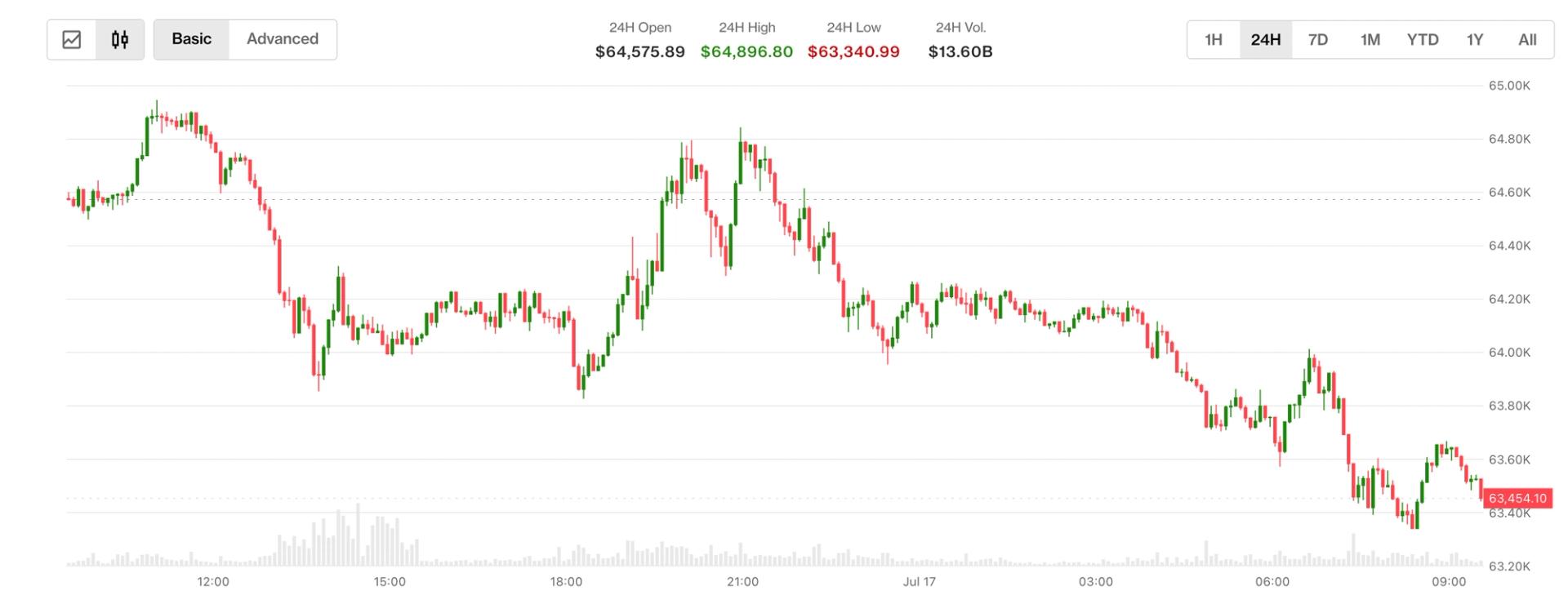
We keep hearing the same story from the Bitcoin maximalist crowd: Bitcoin is a flight to safety. It is digital gold. When the world goes to hell, the orange coin goes to the moon. But if you look at the charts today, that narrative is hitting a wall. Bitcoin is trading under $63,000, and it is not because of a protocol bug or a whale dump. It is because the physical world is messy, and markets are scared.
We are currently seeing a confluence of two major pressures. First, a fresh U.S. strike on Iran has spiked geopolitical tensions in the Middle East. Second, comments from Donald Trump regarding trade and defense as they relate to China have investors questioning the stability of the global supply chain and international relations. When things get loud and kinetic in the real world, investors do not usually run toward the asset class with the highest volatility. They run toward cash or treasuries.
The Proxy War and the Liquidity Trap
As a builder, you have to understand that most of the capital driving Bitcoin’s price right now is not ideological capital. It is institutional and retail capital that views BTC as part of the "risk-on" bucket. When a missile hits a target in Iran, the algorithm-driven trading desks do not stop to think about decentralization or the 21-million supply cap. They think about liquidation. They think about de-risking.
The strike on Iran acts as a reminder that Bitcoin still trades more like a tech stock than a bar of gold. If there is a threat of a broader regional conflict, energy prices go up, shipping lanes get disrupted, and the cost of capital tends to climb. For a founder, this means the venture capital environment gets tighter. If the primary asset in our space is taking a hit because of geopolitical instability, the secondary and tertiary assets—your tokens and your startup valuations—are going to feel it twice as hard.
The China Factor and the Trump Effect
Donald Trump’s recent comments about China and Taiwan add another layer of complexity. We are moving into an era of deep economic nationalism. If the U.S. shifts its stance on Taiwan or heightens the trade war with China, the impact on the hardware side of the crypto and AI industries could be massive. Most of the silicon we use for mining rigs and AI training comes through that specific bottleneck.
When Trump speaks, the market listens, not because they like what he says, but because he represents a potential return to a highly transactional and unpredictable foreign policy. Unpredictability is the enemy of the builder. If you are trying to project your operational costs two years out, you need a stable global trade environment. These comments suggest that stability is far from guaranteed.
What This Means for Builders
If you are building in the crypto space, you need to stop over-indexing on the "Safe Haven" meme. It is a great marketing line for podcasts, but the data does not support it during active military escalations. Here is how I am looking at the current landscape:
- Expect volatility, not correlation: Bitcoin is still tied to the NASDAQ and broader risk assets. Your treasury management should look like a software company's, not a gold bug's.
- Watch the hardware: If tensions with China escalate, the cost of compute is going up. Whether you are running nodes or training models, your margins might get squeezed by logistics and tariffs.
- Capital is getting cautious: The era of easy money was over a while ago, but geopolitical shocks make it even harder to close a round. Investors want to see how the macro shakes out before they commit to an unproven crypto-AI play.
The Myth of the Hedge
I have always been a skeptic of the idea that Bitcoin is a hedge against a failing world. Bitcoin is a hedge against a failing financial system, which is a different thing entirely. If the banks stop working, Bitcoin shines. But if the world is on the brink of a kinetic war, the internet is at risk, and supply chains are broken, Bitcoin’s utility is hampered by its reliance on a stable, high-tech infrastructure.
We have to be honest with ourselves: crypto thrives in peace and prosperity. It is a luxury of a digital society. When we see Bitcoin drop several percentage points following news of a military strike, it shows that the market still views it as a speculative tool for the wealthy, not a fundamental necessity for the survivor. We aren't there yet.
The market is telling us that it doesn't care about the halving or the ETF inflows when there is a risk of a hot war. It cares about survival and liquidity.
For those of us in the trenches building products, this is a signal to focus on real-world utility that works regardless of the price of Bitcoin. If your product only makes sense when BTC is at $100k, you aren't building a business; you're building a bet. The current dip below $63,000 is a stress test for our conviction and our business models. It is a reminder that the digital world is still very much a prisoner of the physical one.
The Takeaway
The takeaway here is simple: stop waiting for Bitcoin to save the world. It is a protocol, not a peacemaker. When geopolitical tensions rise, expect the price to fall as liquidity dries up. Build your company to survive a 24-month bear market and a trade war with China, because that is the reality of the 2020s. The builders who survive this period will be the ones who didn't bank on the "digital gold" narrative to do their heavy lifting for them.
Read the original at CoinDesk →