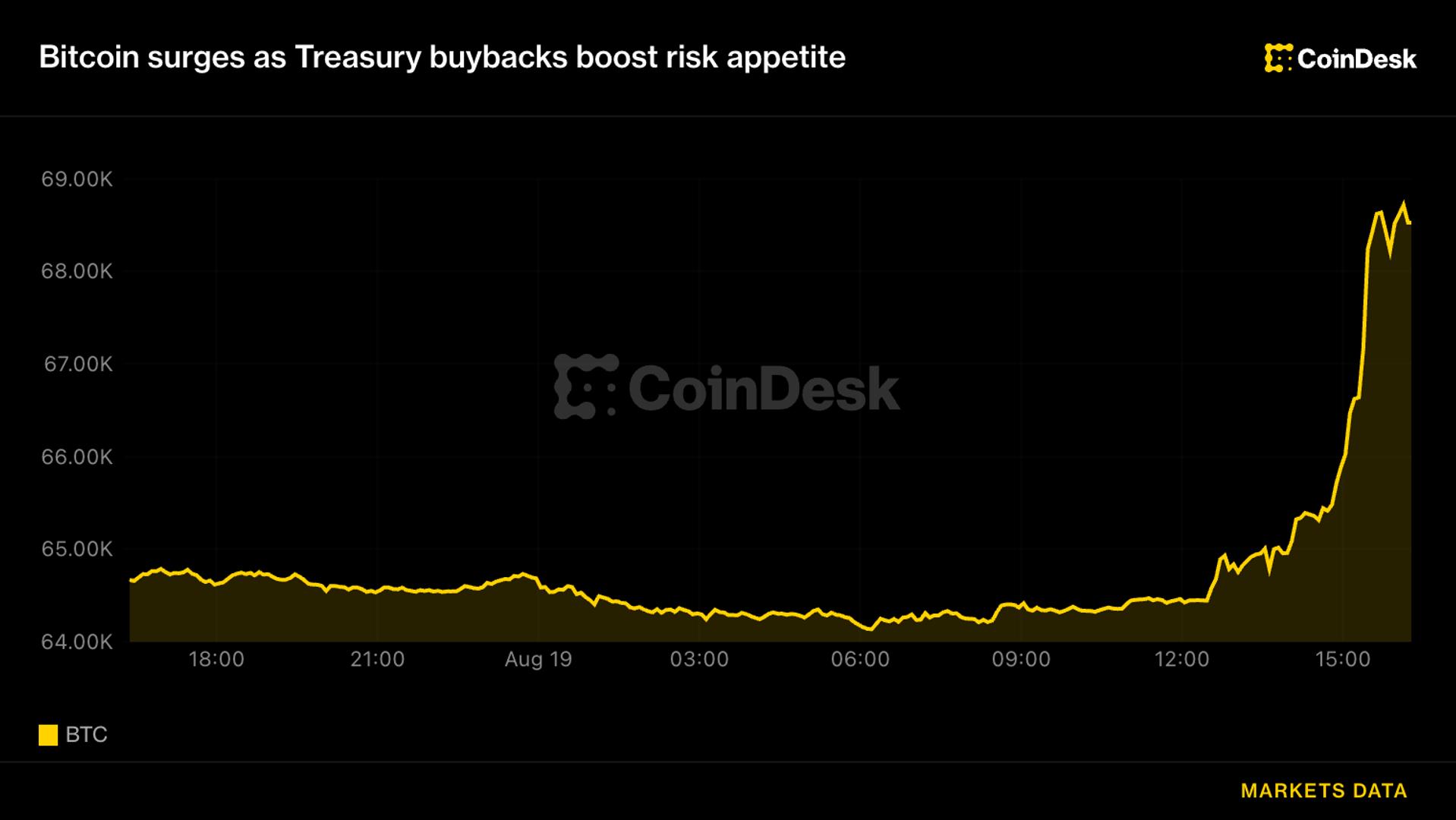
We just saw Bitcoin rip through $68,000, and while the headlines are screaming about price action, the real story is under the hood of the U.S. Treasury. This wasn't a sudden burst of retail FOMO or a breakthrough in blockchain technology. This was a liquidity injection disguised as boring government fiscal policy. When the Treasury decided to double the size of its bond buybacks, they effectively rang the dinner bell for risk assets.
The $1.4 Billion Squeeze
In the last 24 hours, over $1.4 billion in short positions were vaporized. If you were betting against the market, you didn't just lose; you were forced to buy back your position at a premium, adding fuel to the fire. We see this cycle repeat constantly in crypto. Leverage builds up, people get confident that the trend is down, and then a single macro catalyst flips the switch.
For builders, these liquidations are a distraction, but they illustrate the volatility we have to design around. If your project relies on stable collateral or predictable gas fees, these 6% candles are the stress tests you should be watching. It is easy to build for a sideways market; it is much harder to build for a market that liquidates a billion dollars in an afternoon.
Treasury Buybacks are the Real Signal
The catalyst here wasn't a new ETF filing or a tweet from a billionaire. It was the U.S. Treasury doubling down on bond buybacks. To keep it simple: the government is stepping in to buy its own debt, which puts cash back into the financial system. When the system is flush with cash, that money looks for a home. Lately, that home has been Bitcoin, Solana, and even the lagging Ether.
I have always been skeptical of the "digital gold" narrative because Bitcoin often trades more like a high-beta version of the Nasdaq. When the Treasury makes moves that increase risk appetite, Bitcoin moves first and moves fastest. This isn't about decentralization; it's about global dollar liquidity. As a founder, you need to stop looking at crypto charts and start looking at the bond market. That is where the real leverage is being pulled.
Why Altcoins Followed the Leader
Solana and Ether weren't left behind this time. Usually, we see a Bitcoin-only pump where the king steals all the oxygen, but the scale of this liquidity shift was large enough to lift the entire harbor. Even crypto-adjacent stocks are seeing green. This tells me that the market isn't just betting on Bitcoin's scarcity; it's betting on a broader return to risk.
If you are building in the Solana or Ethereum ecosystems, this price action buys you time. High prices bring back the developers who wandered off to work in AI, and they bring back the VCs who were too afraid to sign checks last month. But don't get comfortable. This growth is driven by macro policy, not by a sudden influx of a billion new users using your DApp.
The Skeptic's View on Sustainability
Let's be honest: $68,000 feels good, but it is built on a foundation of government intervention and forced liquidations. A $1.4 billion short squeeze is a violent event, and markets usually need to cool off after that kind of trauma. We are seeing a massive transfer of wealth from bears to the market makers who facilitated these trades.
I’ve seen this movie before. The Treasury injects liquidity, the market pumps, everyone thinks the bull market is back, and then a new piece of inflation data or a shift in Fed hawkishness pulls the rug. As a founder, your job is to use these windows of high liquidity to shore up your runway and ship features that actually matter when the price is back at $50,000.
What Builders Should Do Now
When the market turns green, the temptation is to start marketing like crazy. Resist that. Instead, look at how your infrastructure handled the spike. Did your RPC providers hold up? Did your protocol's liquidations trigger correctly? These moments are the best audits you will ever get.
- Check your treasury: If you are holding native tokens, this is a moment to diversify into stables to ensure you can survive the next dry spell.
- Filter the noise: Ignore the price targets on social media. They don't know why this happened, and they won't know when it ends.
- Focus on utility: Use the renewed interest to gather user feedback while people are actually active on-chain again.
Liquidity is a fickle friend. It arrives without warning when the government gets nervous, and it leaves just as quickly when they decide to tighten the belt.
The Takeaway
The move to $68,000 is a reminder that Bitcoin is the primary barometer for global liquidity. The Treasury’s decision to double buybacks was the spark, and the $1.4 billion in liquidated shorts was the gasoline. For those of us building the future of this industry, the price is a secondary metric. The primary metric is whether or not we are creating something that people will still use when the government stops buying back its own debt and the easy money dries up. Stay skeptical, stay building, and don't let a green candle dictate your roadmap.
Read the original at CoinDesk →