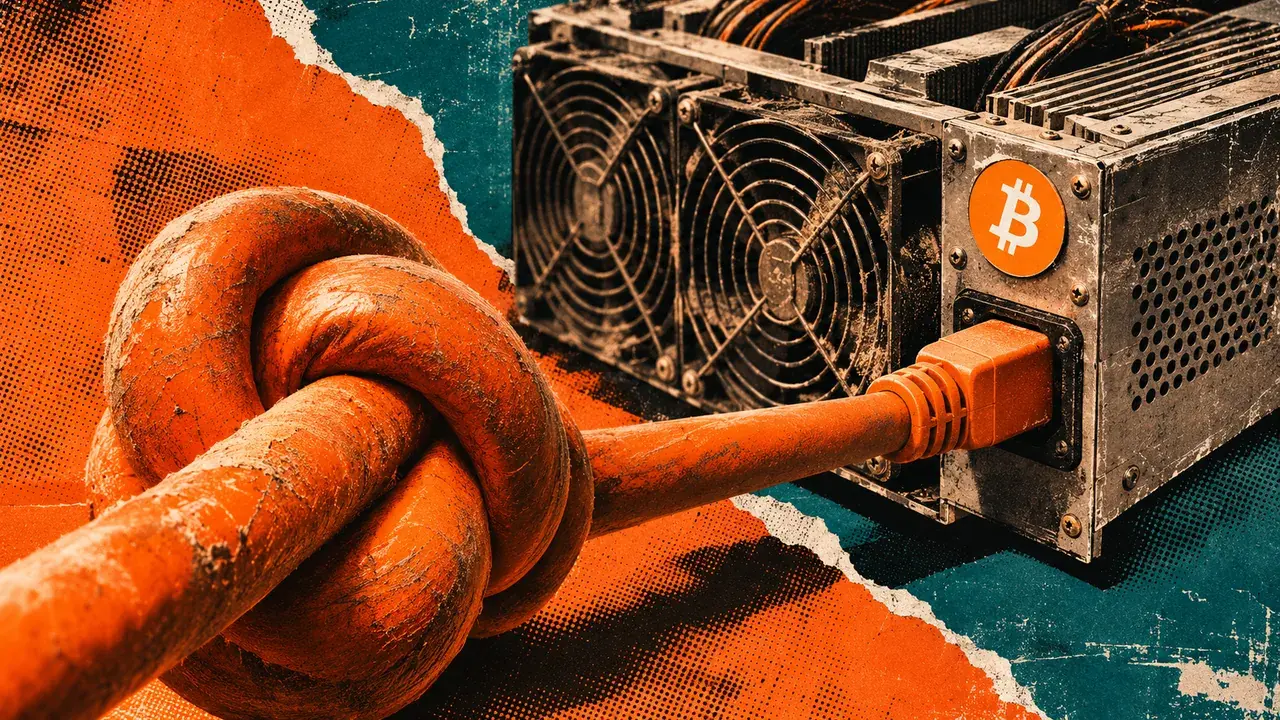
The mining world is about to get a very cold bucket of water dumped over its head. If you haven't been watching the hash rate charts, we are staring down the barrel of an 8.5% difficulty adjustment. For the uninitiated, this isn't just a technical metric; it is a fundamental shift in the cost of doing business in the Bitcoin ecosystem.
The Math of Survival
In simple terms, mining Bitcoin is a race where the track gets steeper every time the runners get faster. This projected jump in difficulty means the network is demanding more computational power to secure a block. When the difficulty goes up, the break-even price for electricity goes down. Even if the price of Bitcoin stays flat, your margins are about to get squeezed into a different zip code.
For the builders running operations on older gear, this is the profitability cliff. We are moving into an era where less efficient machines, like the older S19 series models, are becoming expensive space heaters. If your electricity costs are anything above the bottom-barrel industrial rates, you are essentially paying for the privilege of securing the network while losing money on every hash.
The Efficiency Trap
We often talk about Bitcoin as a decentralized miracle, but on the ground, it's a brutal hardware war. The reality of a high-difficulty environment is that it mandates capital expenditure. You cannot simply out-code a difficulty adjustment. You have to buy better silicon. This creates a cycle where only the most well-capitalized operations can survive, which is a bit of a bitter pill for those who believe in the hobbyist dream of mining.
Efficiency is no longer a goal; it is the baseline requirement for staying alive. When we see an 8.5% jump, we are looking at a market-wide filter. This filter removes the players who haven't optimized their cooling, their firmware, or their power purchase agreements. If you are a founder in this space, your primary job right now isn't looking at the Bitcoin price chart—it is looking at your joules per terahash.
Why This Matters for Builders
If you are building in the Bitcoin space, you need to understand that the security of the network is becoming more concentrated in the hands of the hyper-efficient. This has downstream effects on everything from transaction fees to the speed of blocks. When miners under stress begin to shut off their machines, we see fluctuations in hash rate that can impact the user experience of the chain.
Furthermore, this pressure drives innovation in energy. We are seeing more miners move toward stranded energy sources—natural gas flaring, hydro, and solar—not because they are environmentalists, but because they have no choice. The grid is becoming too expensive for Bitcoin. As a builder, if your project relies on a stable and cheap mining layer, you need to be aware that the layer is currently undergoing a massive structural reorganization.
The Risk of Consolidation
There is a skeptical side to this that we have to address. Every time the difficulty spikes and the margins thin, the "little guy" gets pushed out. This isn't a conspiracy; it's just math. However, the more we consolidate mining power into a few massive publicly traded companies, the more we risk the very censorship resistance that makes Bitcoin valuable in the first place.
For founders, this is the time to think about layer-2 solutions and off-chain scaling. If the base layer is becoming an expensive playground for the hardware elite, we need to ensure that the utility of Bitcoin can still reach the average person without requiring a direct interaction with a high-fee, high-difficulty mainnet every single time.
- Energy is the only moat: If you don't own your power source or have a locked-in rate, you are at the mercy of the network.
- Hardware is a liability: Today's top-tier rig is tomorrow's e-waste. Treat your hardware cycles like a ticking clock.
- Watch the hash rate: An 8.5% jump is a signal that the big players are plugging in new, more efficient machines, raising the barrier to entry for everyone else.
The Strategic Pivot
What should you do if you're caught on the wrong side of this adjustment? The first step is honesty. Many miners hold on to losing positions because they believe the price of Bitcoin will bail them out. Hope is not a business strategy. If your machines are losing money at current difficulty levels, they will lose more money tomorrow.
The smart move for builders in the mining niche is to look at heat reuse and grid stabilization. If you can turn your "waste" heat into a product or get paid by the grid to turn off during peak hours, you change the math of your electricity cost. This is where the real innovation is happening. It's not about the Bitcoin; it's about the energy arbitrage.
The Takeaway
We are entering a phase of the market where being "good enough" will get you liquidated. The 8.5% difficulty increase is a warning shot. It tells us that despite the noise and the politics, the network is becoming more competitive than ever. For those building the next generation of infrastructure, the focus must remain on extreme efficiency and energy sovereignty. If you can't control your costs, you can't control your future. The cliff is here—make sure you have a parachute or a very fast engine.
Read the original at CryptoSlate →